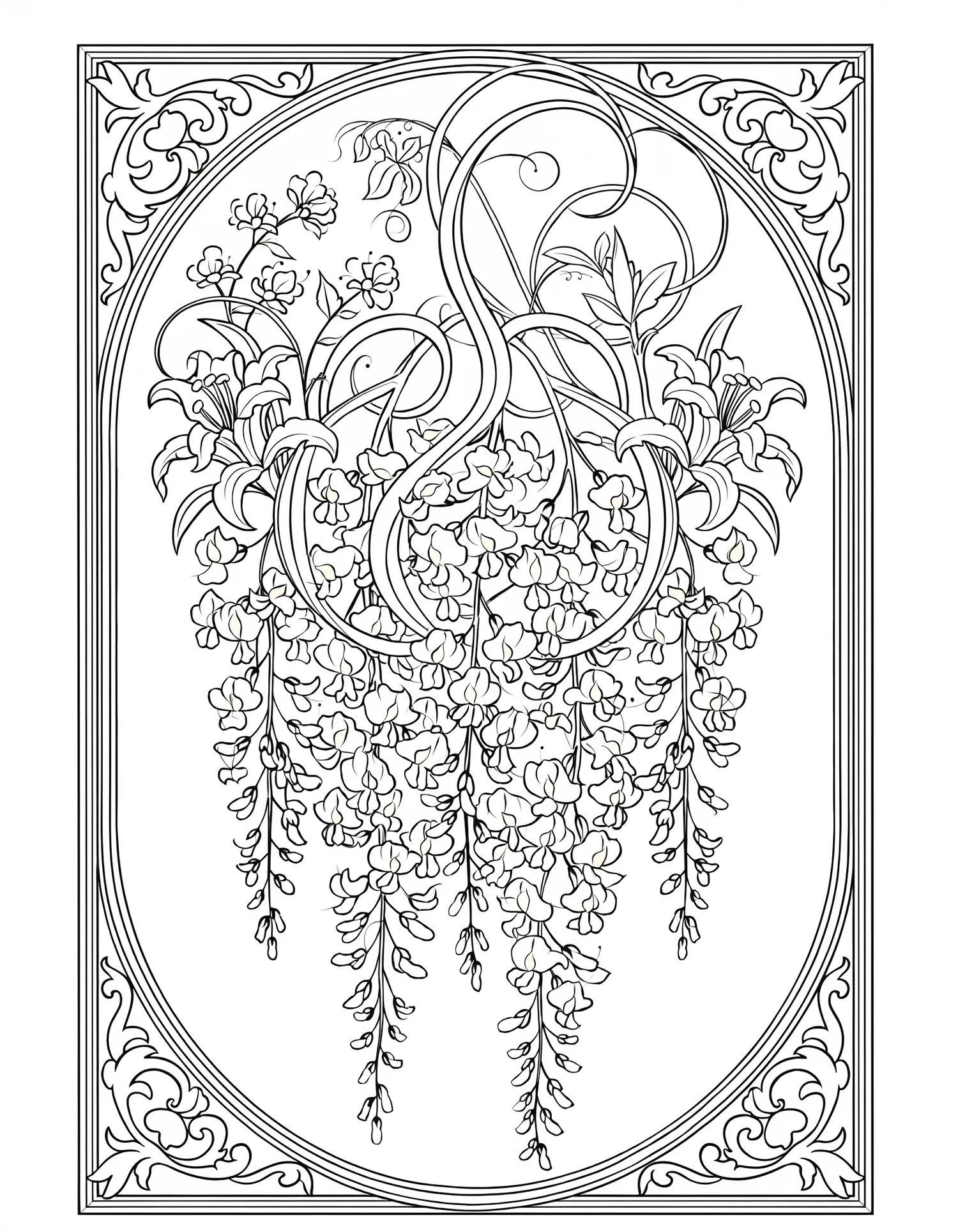
Delicate Bridal Bouquet
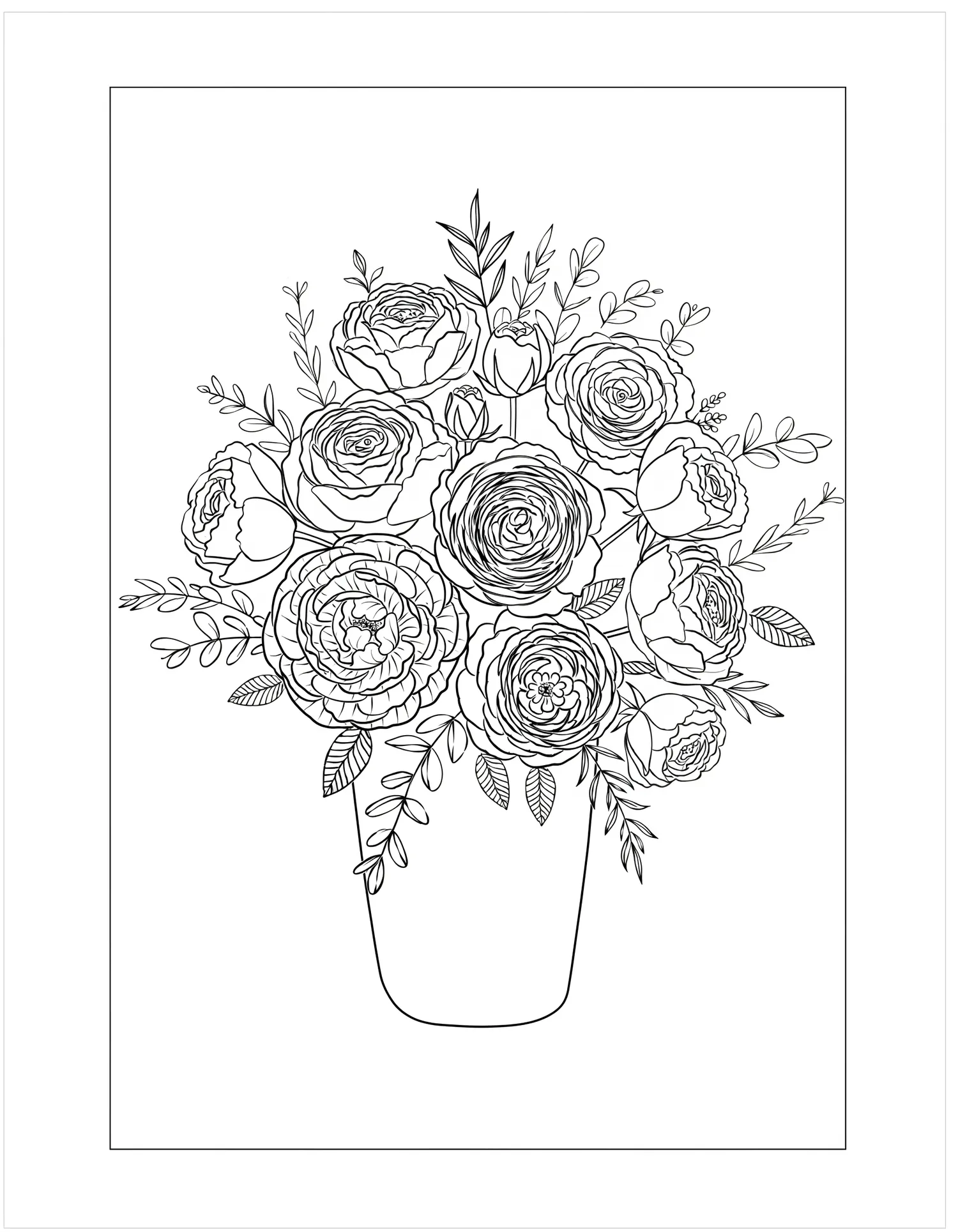
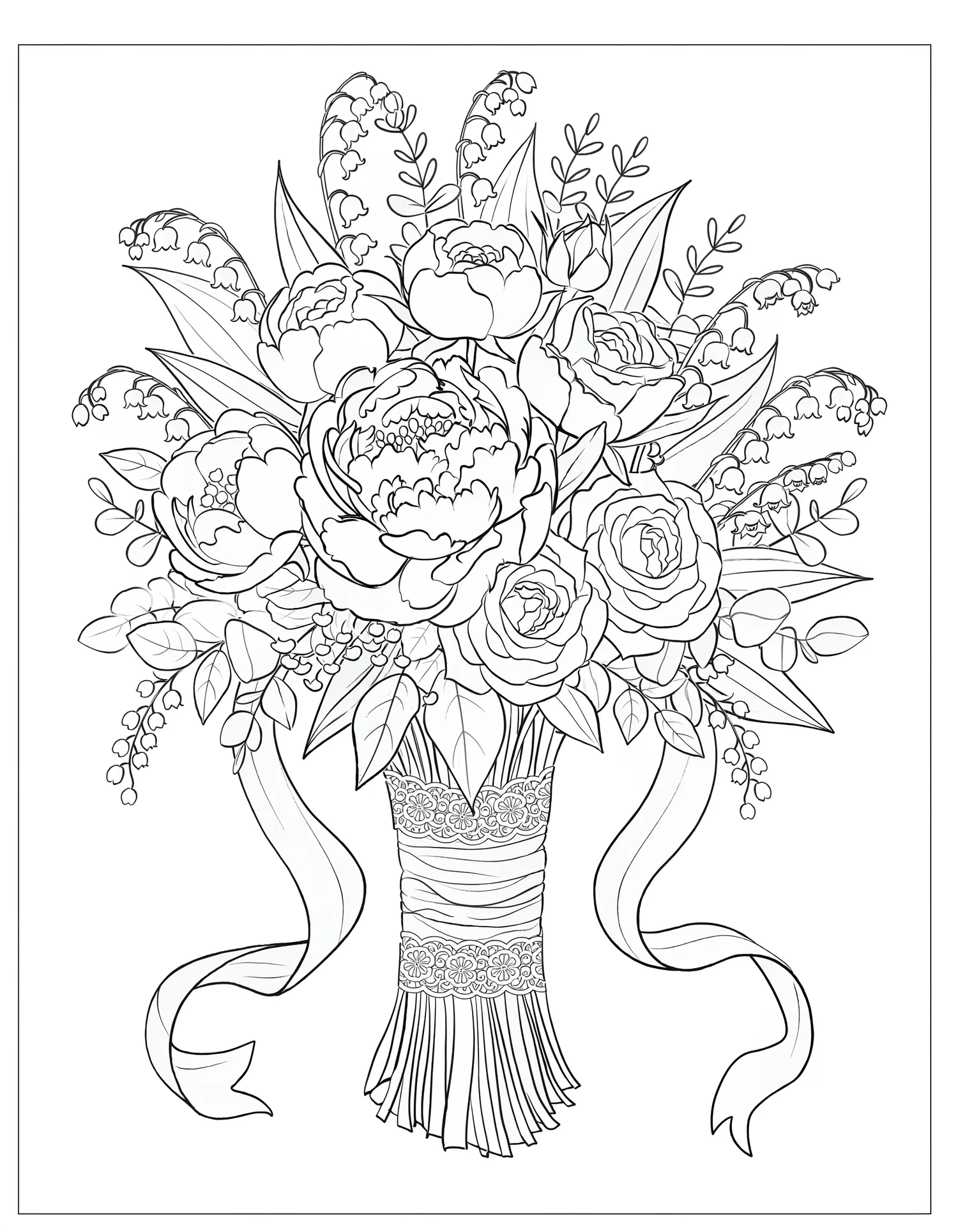
Bridal bouquet composed of delicate flowers and fine foliage, for a romantic and refined flower coloring page.

Print our 61 flower coloring pages for free, as PDF: bouquets, roses, tulips, sunflowers, peonies, lilies, daisies, poppies, flower gardens and cacti. Easy flower drawings for beginners and detailed compositions for experienced colorists, to print on A4 or letter paper.
A flower coloring page is a black-and-white line drawing that you print and then fill with color. Flowers are among colorists' favorite subjects: petals, leaves and stems offer varied shapes, from the simplest to the most detailed. Our printable flower drawings download as PDFs, free and with no sign-up, ready to print on A4 or letter paper.
From 18th-century botanical plates to the floral motifs of Art Nouveau, flowers hold a central place in art history. Our coloring pages follow this tradition of careful observation: every petal, leaf and stem is drawn with care, from roses and tulips to country bouquets.
Some designs have large petals and few details, like the big daisy, the tulips in a pot or the nasturtium: perfect to get started. Others, like the protea, the heliconia or the Art Nouveau compositions, call for more precision and patience. Choose your level, with colored pencils, markers or watercolor.
61 free printable flower coloring pages for adults, sorted by theme: bouquets, roses, tulips and sunflowers, peonies, lilies and orchids, spring flowers, wildflowers, flower gardens, exotic and detailed flowers, cacti and succulents, and easy flowers for beginners. Click a drawing to enlarge it, then download the PDF, ready to print on A4 or letter paper.
A bridal bouquet, a flower cup seen from above, peonies and roses in a porcelain vase, a country bouquet tied with a ribbon, a spring bouquet in a watering can, a kitchen garden bouquet and wildflowers in a mason jar: our flower bouquet coloring pages, the most downloaded of the collection.
Bridal bouquet composed of delicate flowers and fine foliage, for a romantic and refined flower coloring page.
Floral composition viewed from above with generous, well-defined areas, ideal for beginners starting floral coloring.
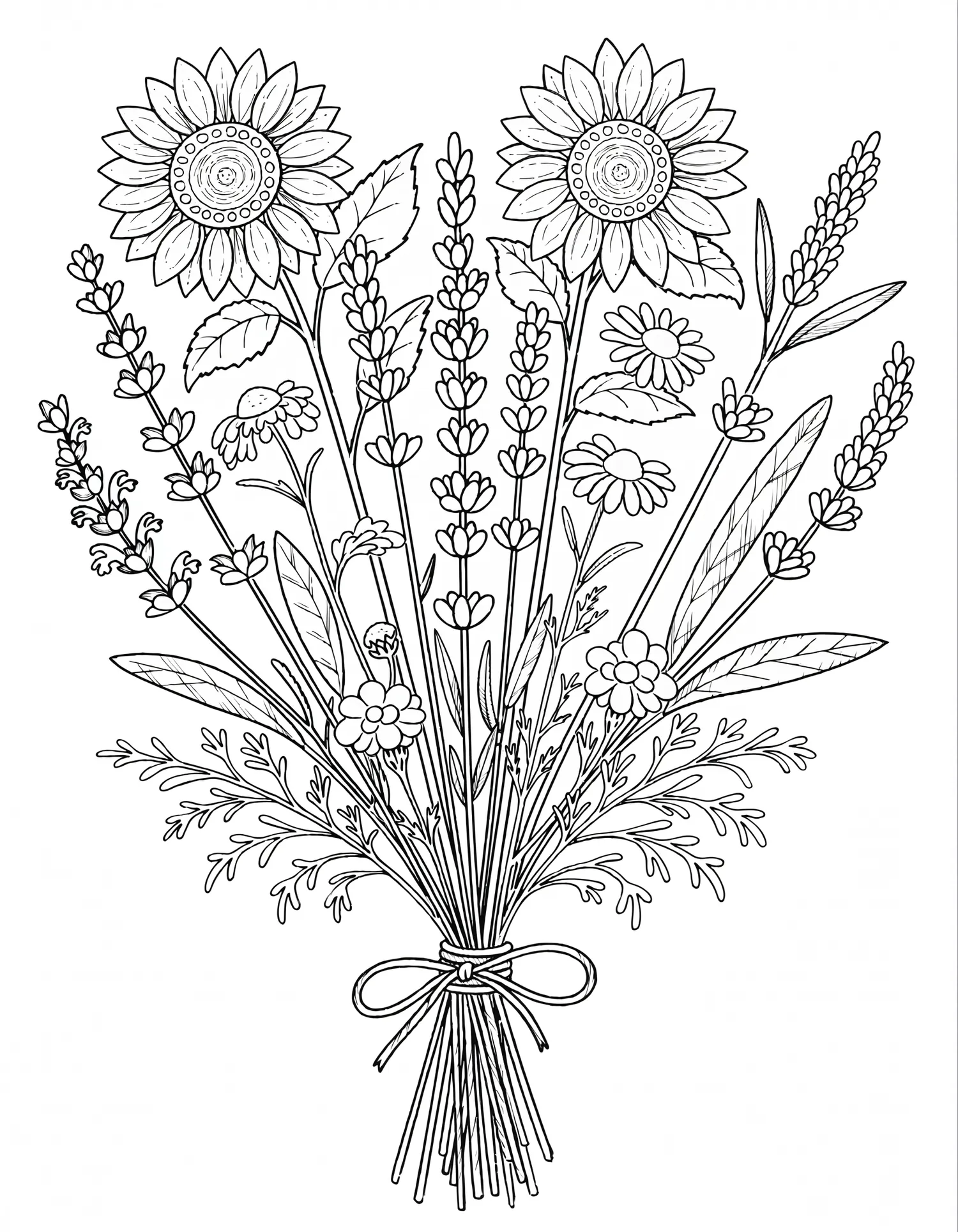
Rustic kitchen garden bouquet mixing flowers and aromatic herbs, a countryside composition for a generous and natural coloring page.
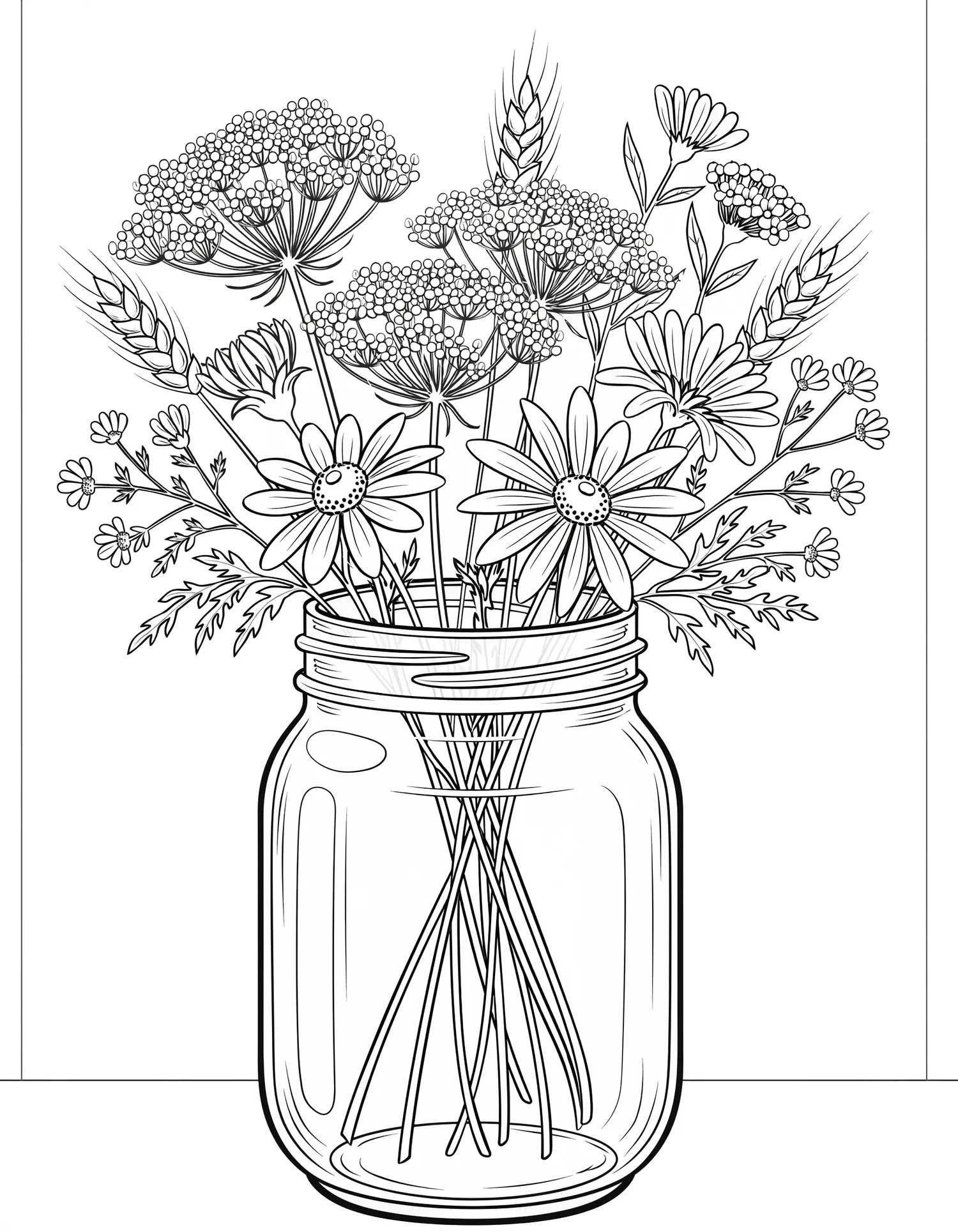
Wildflower bouquet in a rustic Mason jar, an authentic countryside composition for a simple and charming nature coloring page.
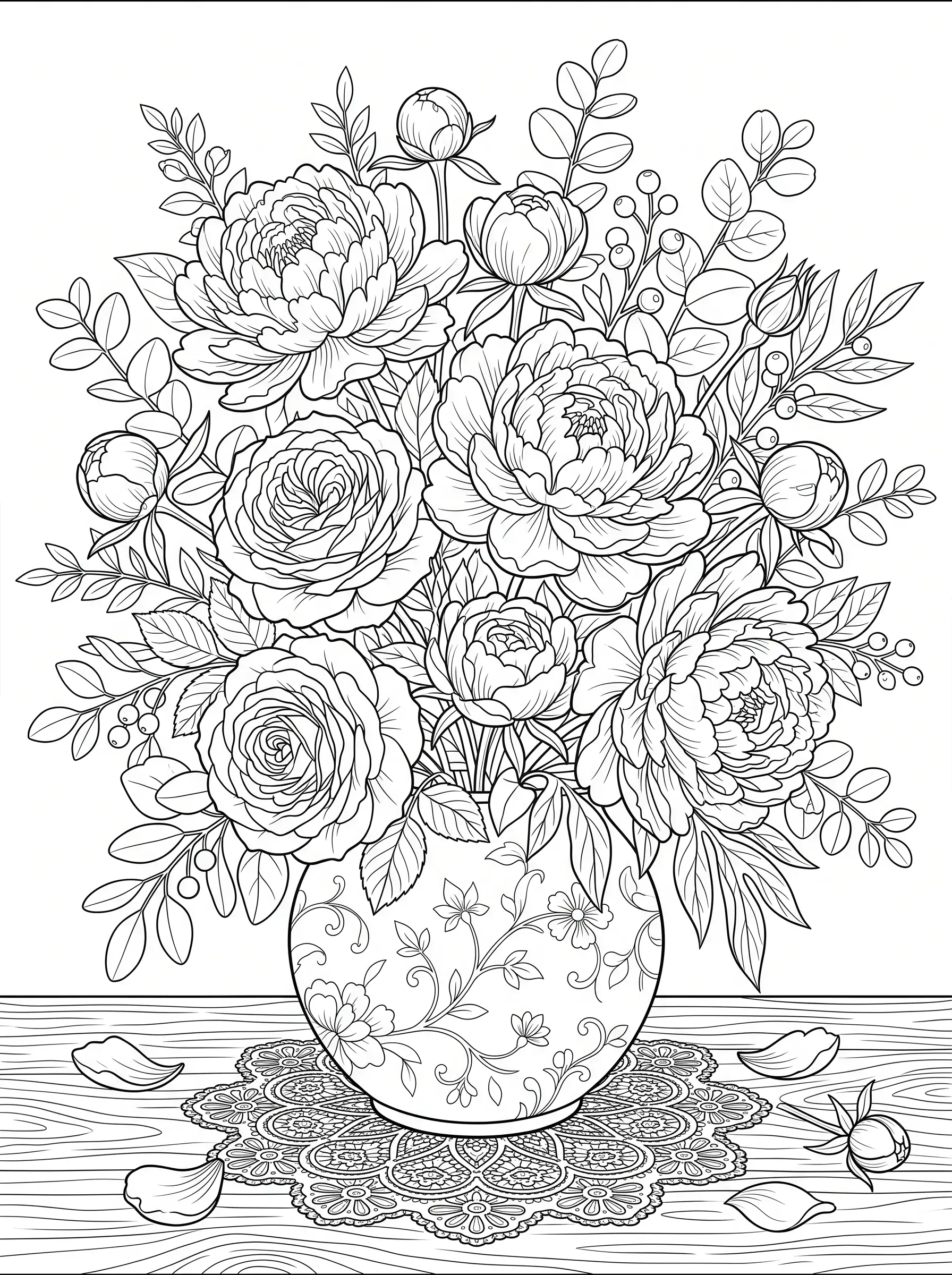
A generous bouquet of open peonies and roses, with buds, berries and eucalyptus, in a round porcelain vase decorated with scrollwork. A lace doily and fallen petals on the wooden table.
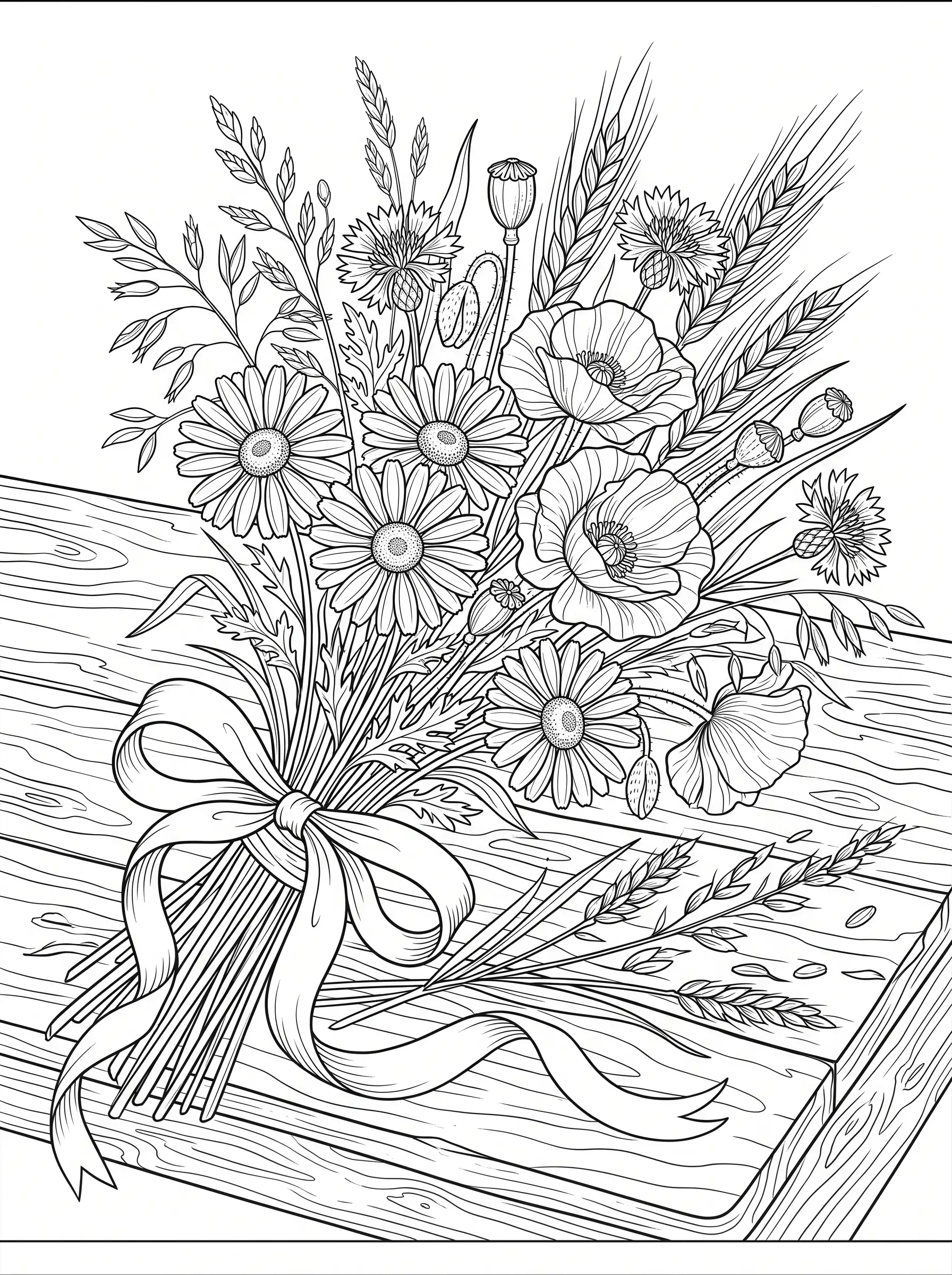
Daisies, poppies, cornflowers, wheat ears and grasses tied with a long ribbon, lying on a wooden table. A wildflower bouquet to color petal by petal.
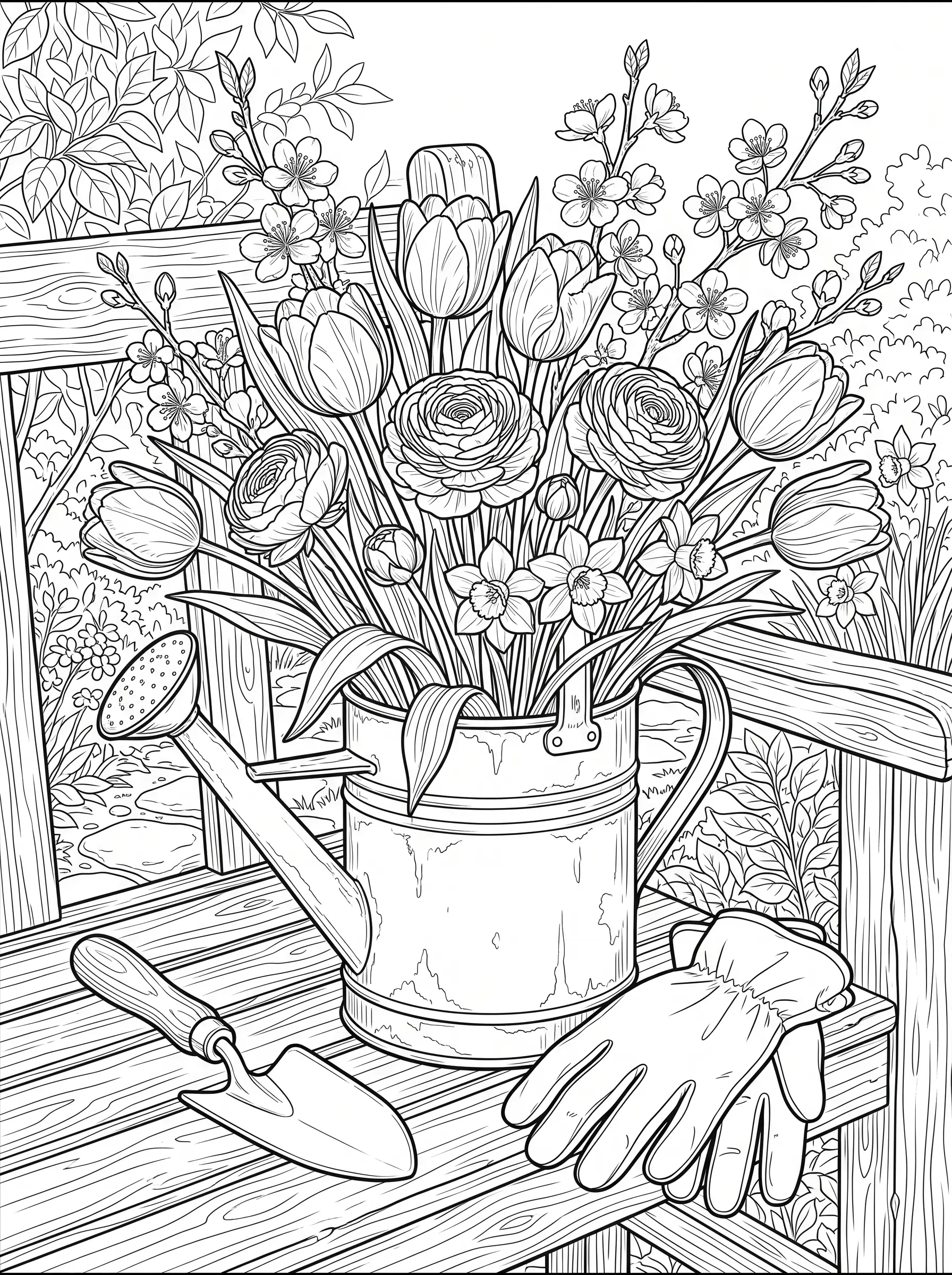
Tulips, ranunculus, daffodils and cherry blossom branches in an old watering can, on a garden bench beside a trowel and gloves. A garden in bloom in the background.
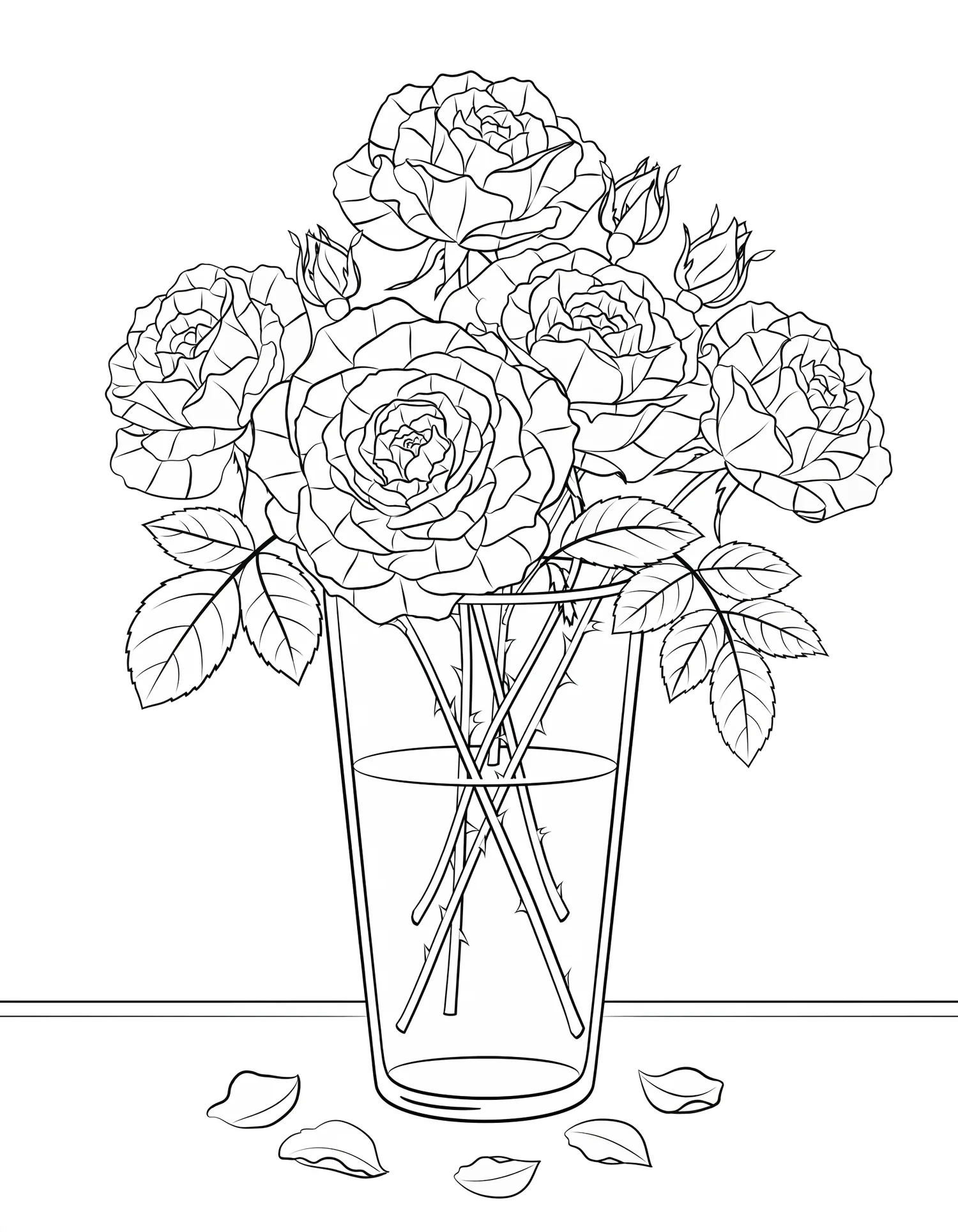
A blooming rose, a rose bud, climbing roses on a stone wall, roses and butterflies, heritage roses, tulips close up, in a pitcher or in a field, sunflowers in a vase, in a bouquet or in a whole field: the most-loved flowers, as printable flower drawings.
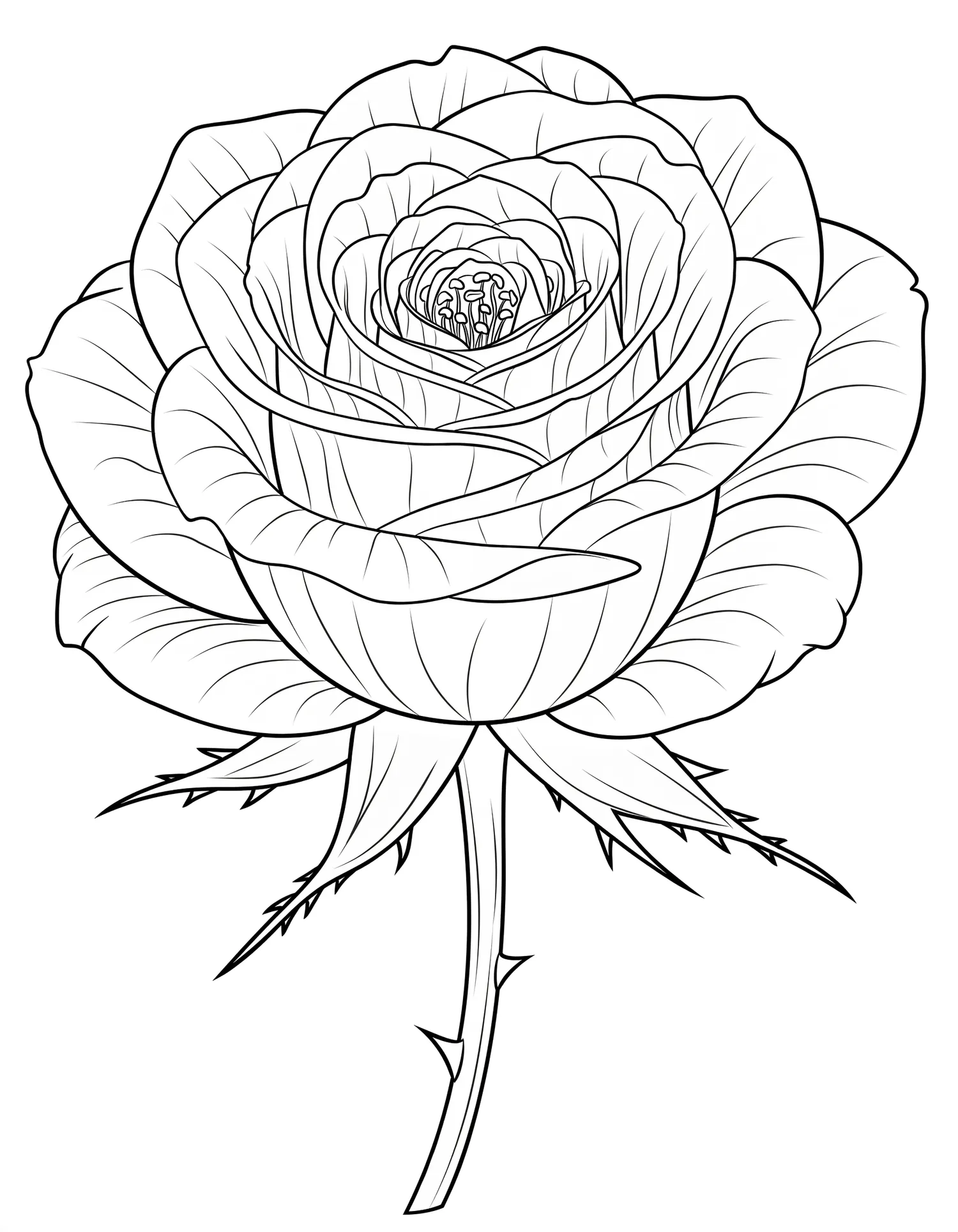
Blooming rose in close-up with velvety petals and pink gradients, the quintessential romantic symbol for an elegant floral coloring page.
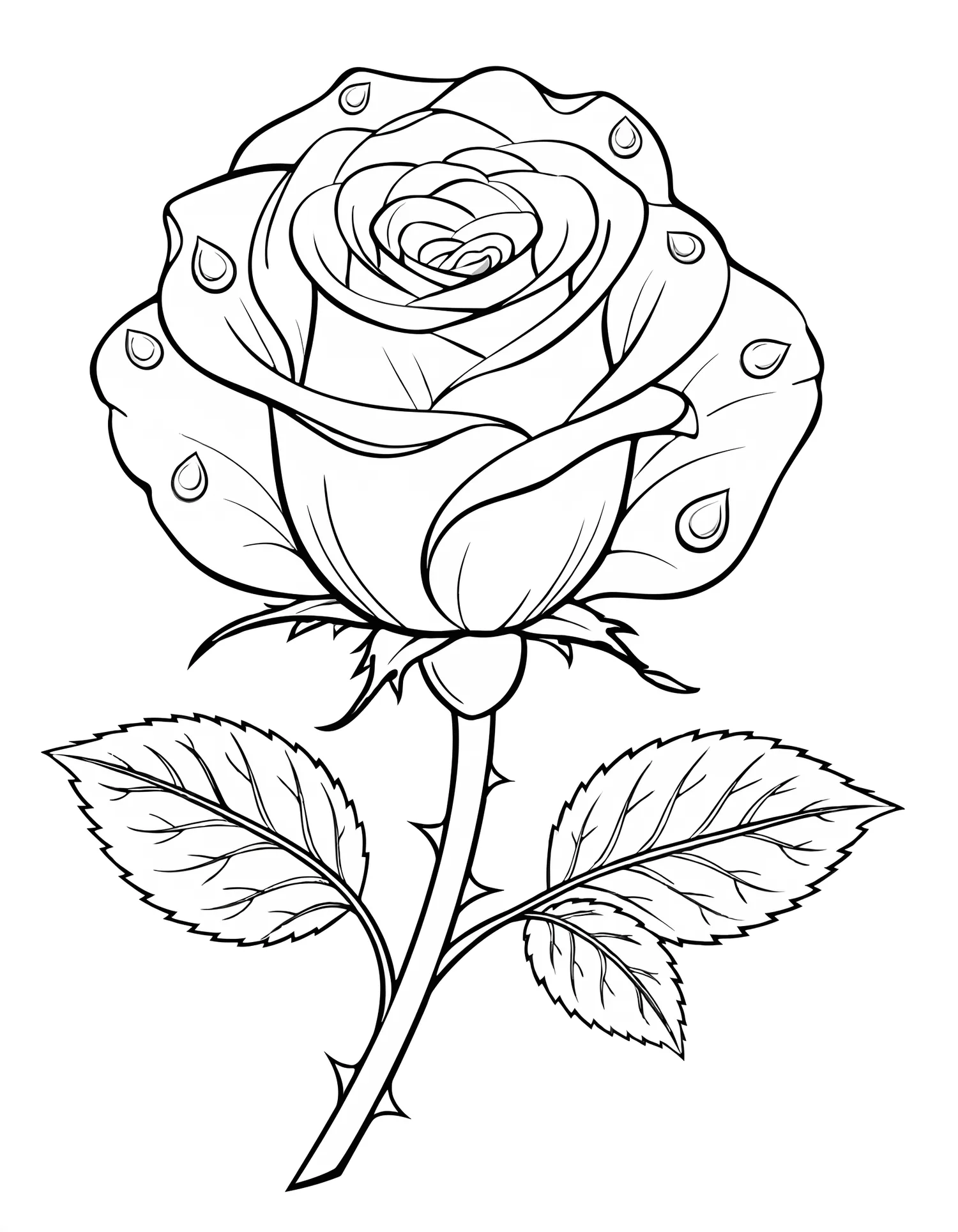
Rose bud covered in dewdrops with simple, rounded shapes — ideal for an easy and poetic first rose coloring page.
Heritage rose bouquet with layered petals and delicate nuances, a complex composition inspired by Renaissance gardens for experienced colorists.
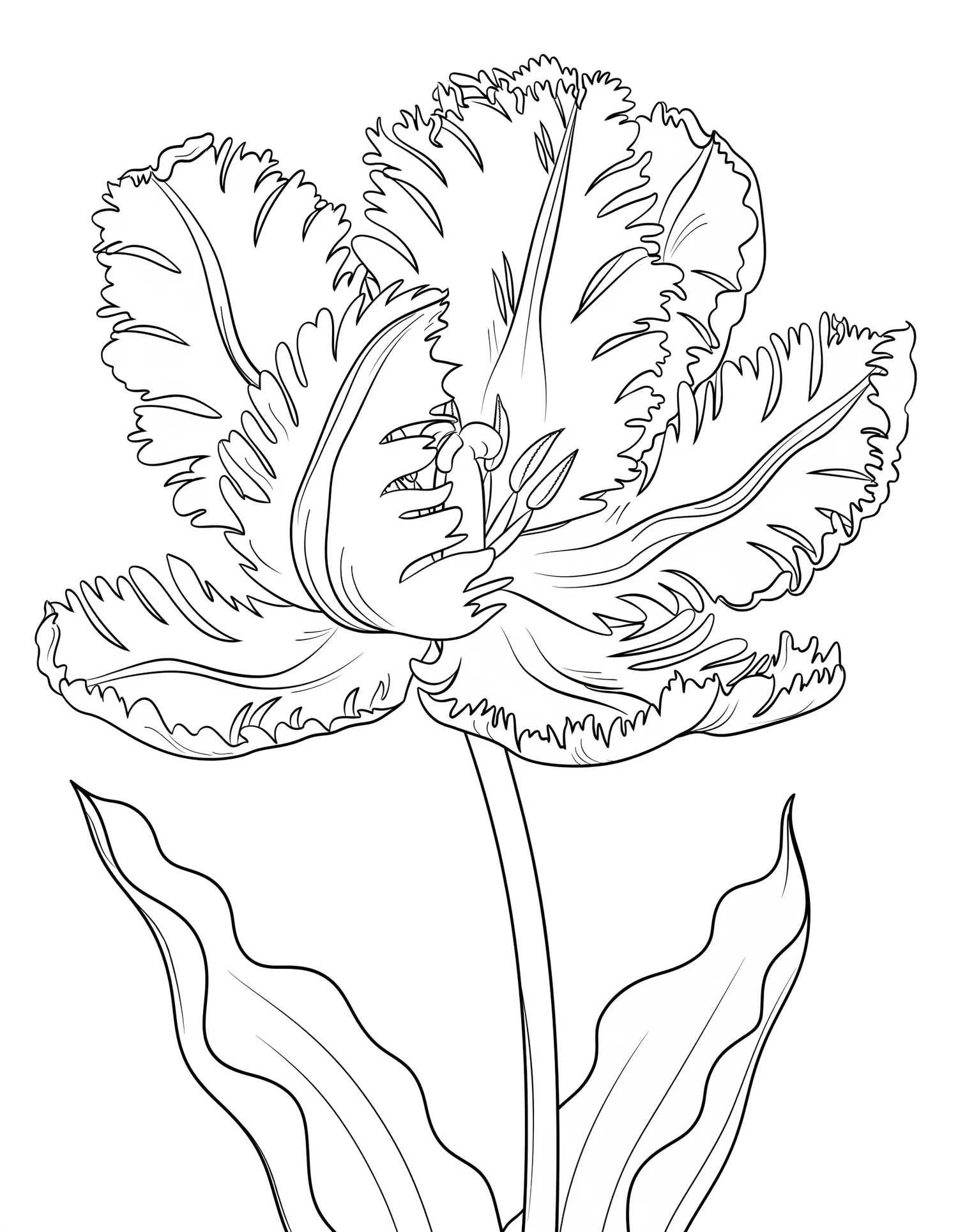
Parrot tulip with fringed and ruffled petals, a spectacular variety for a vibrant and colorful spring coloring page.
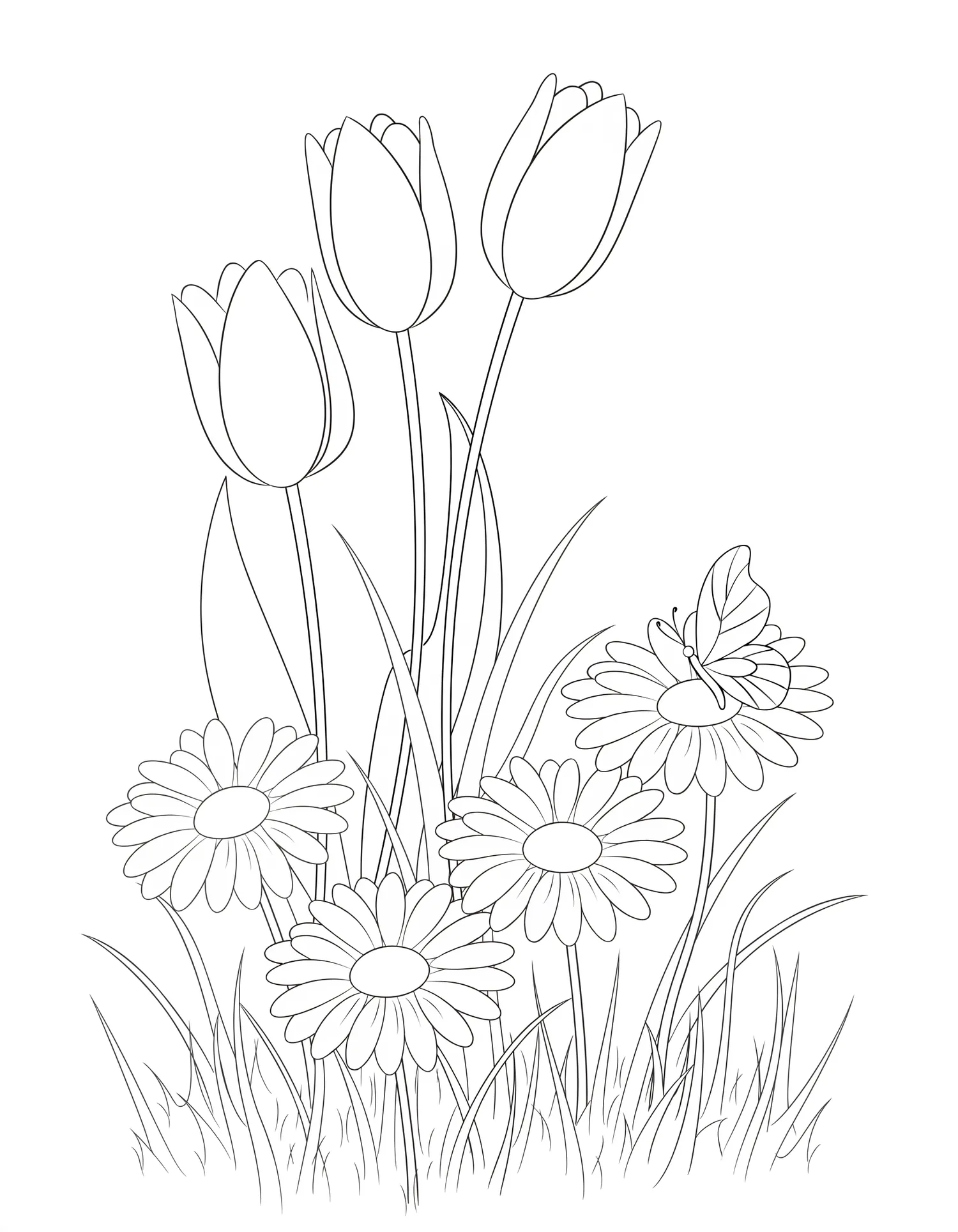
Tulips and daisies in a simple, cheerful spring composition — perfect for an easy flower coloring page full of freshness.
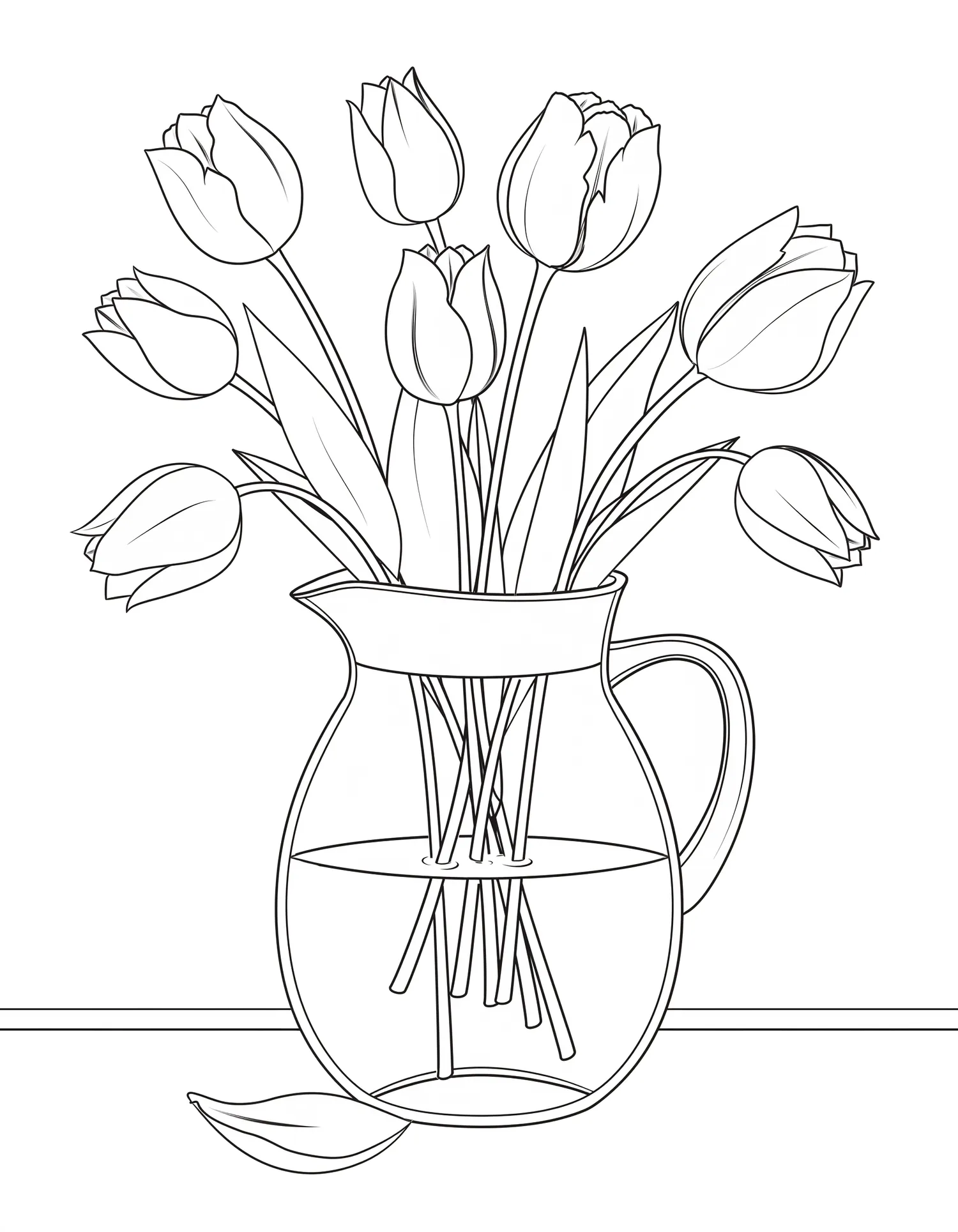
Colorful tulip bouquet in a rustic pitcher, a spring still life for a warm and detailed floral coloring page.
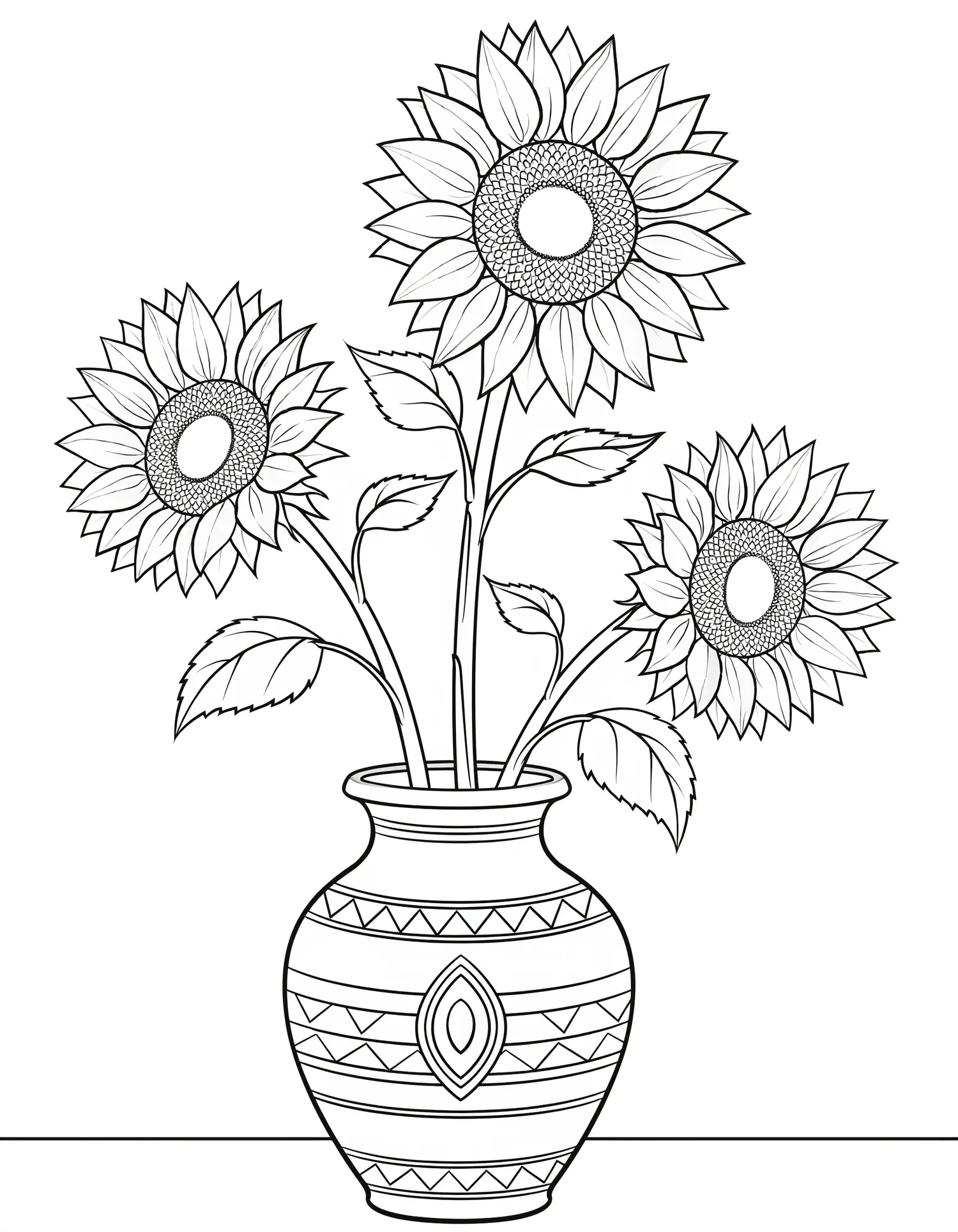
Three sunflowers in a vase with large centers and radiating petals, a luminous composition inspired by Van Gogh for a sunny coloring page.
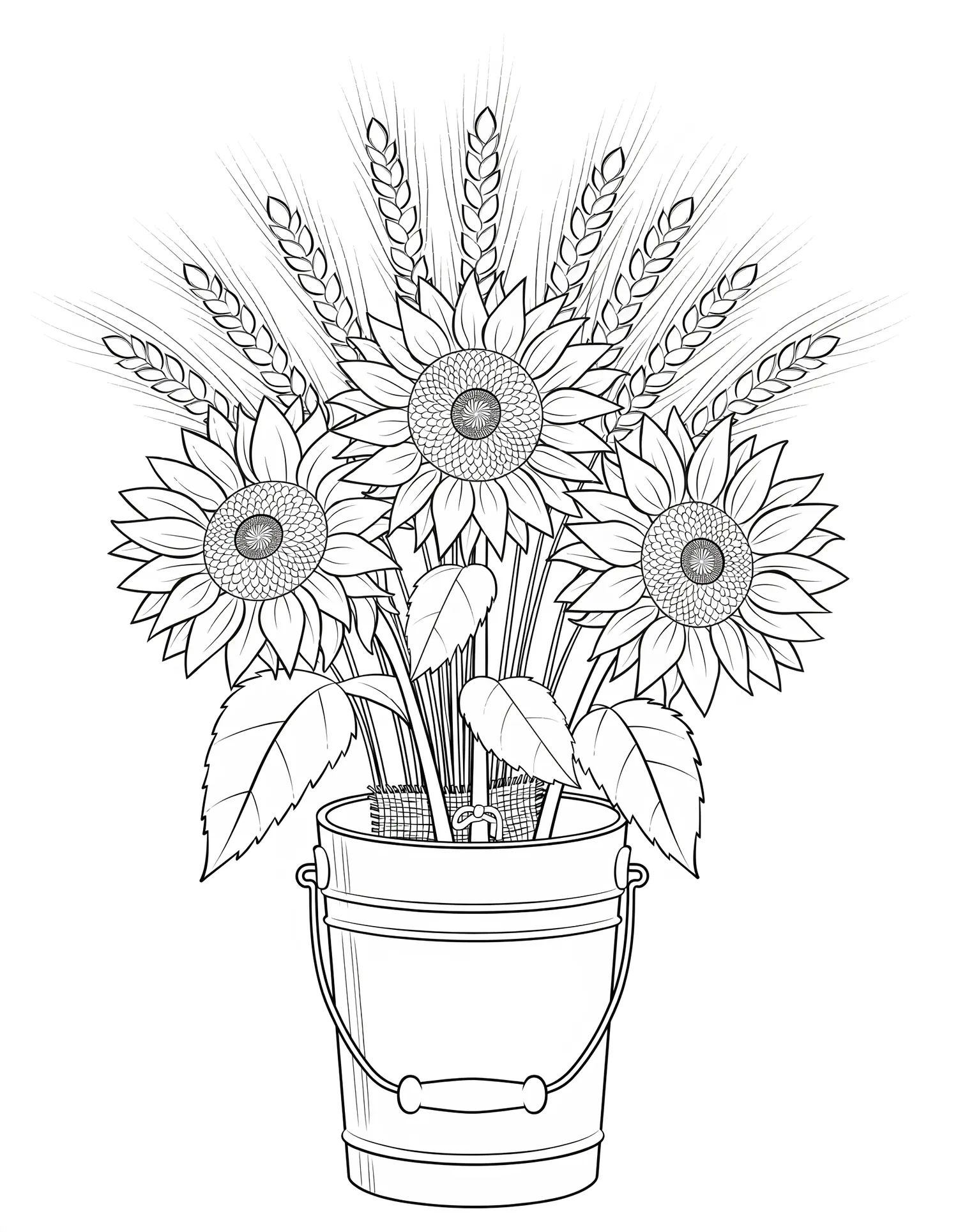
Rustic bouquet of sunflowers and wheat ears, a harvest composition with varied textures for a complex and generous floral coloring page.
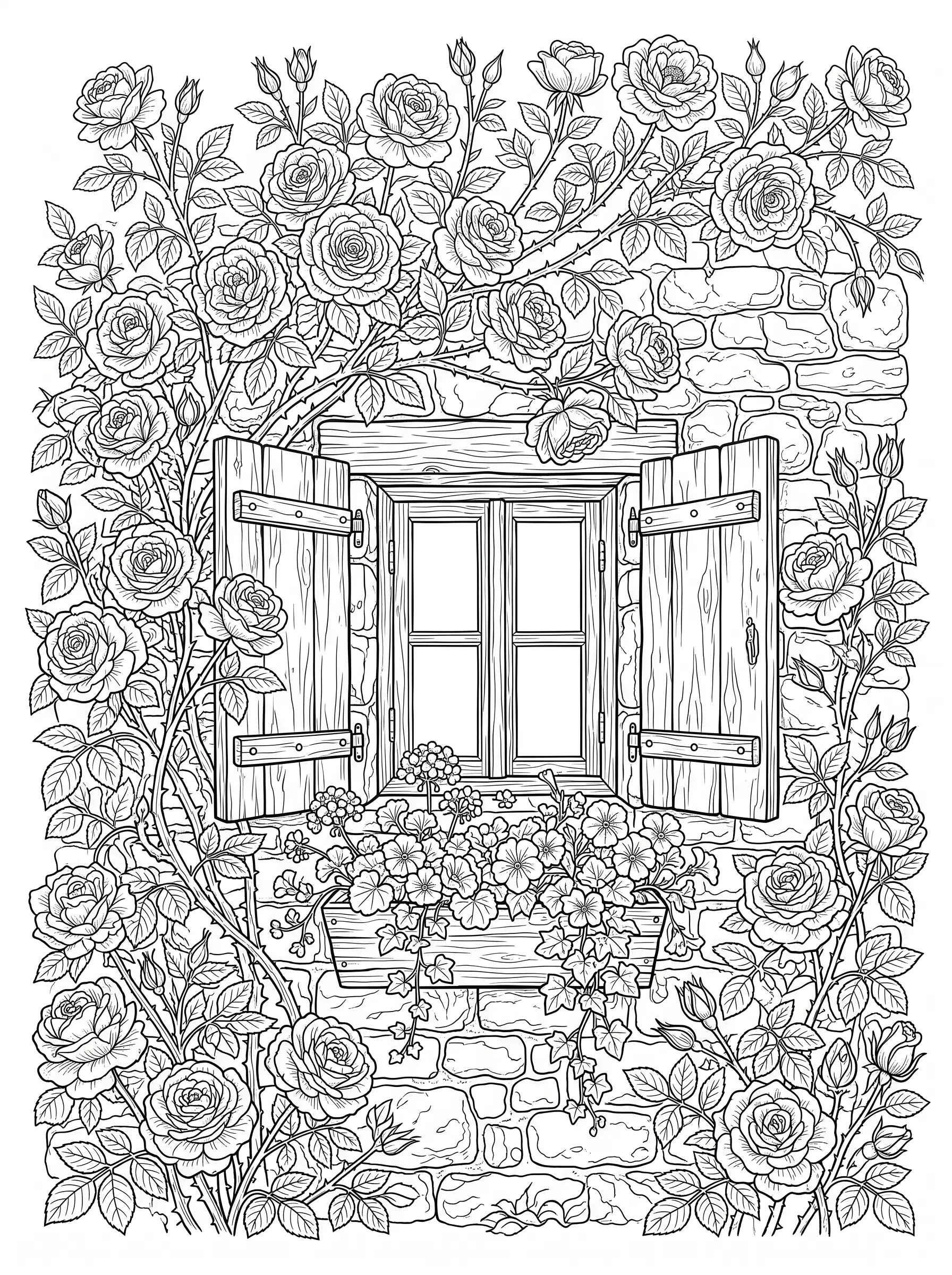
A climbing rose covers an old stone wall around a window with open wooden shutters, a flower box and trailing ivy. Dozens of roses and buds to color.
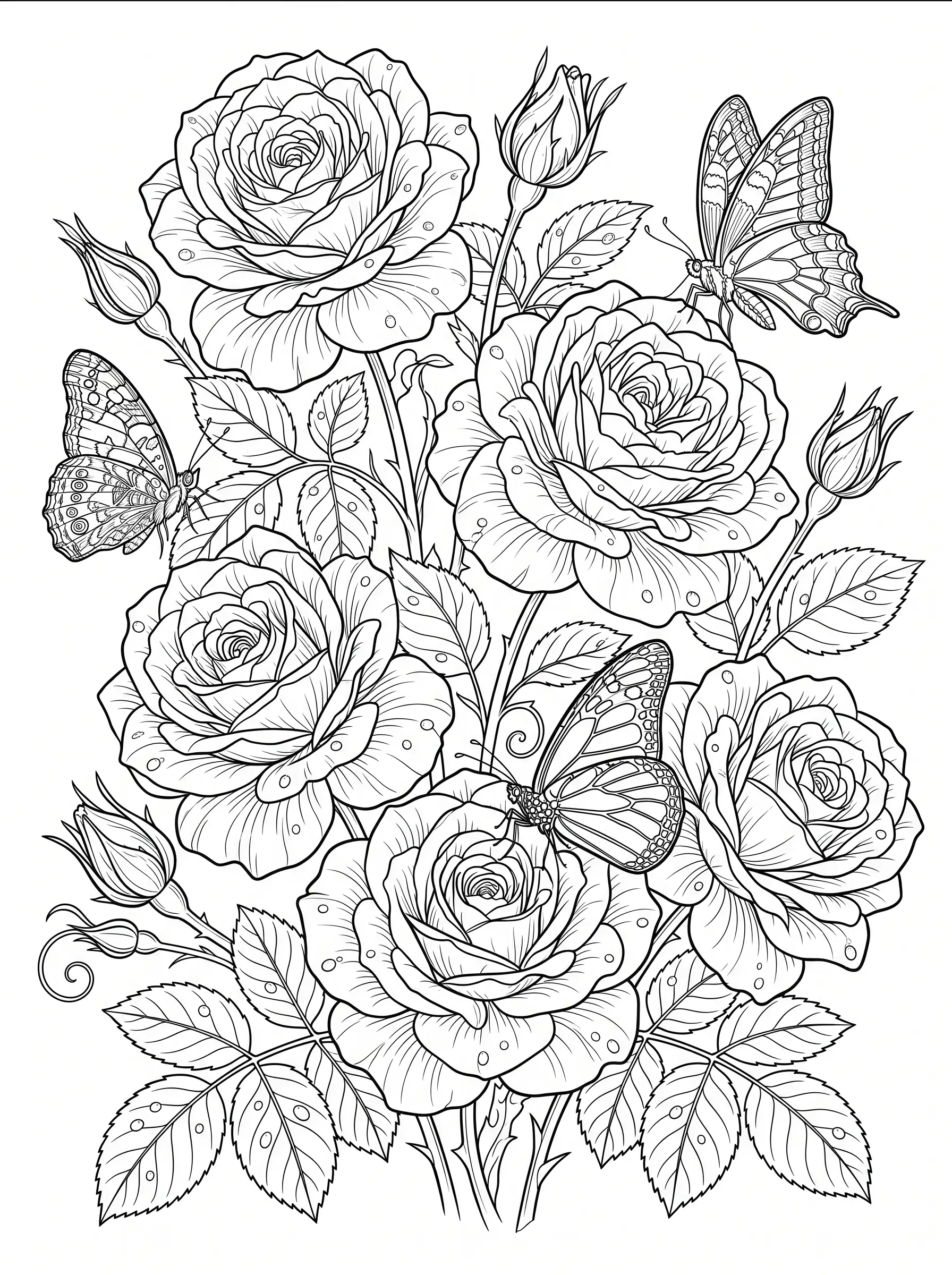
Six large open roses, their buds and serrated leaves, with three butterflies with ornate wings resting or in flight. Dewdrops on the petals.
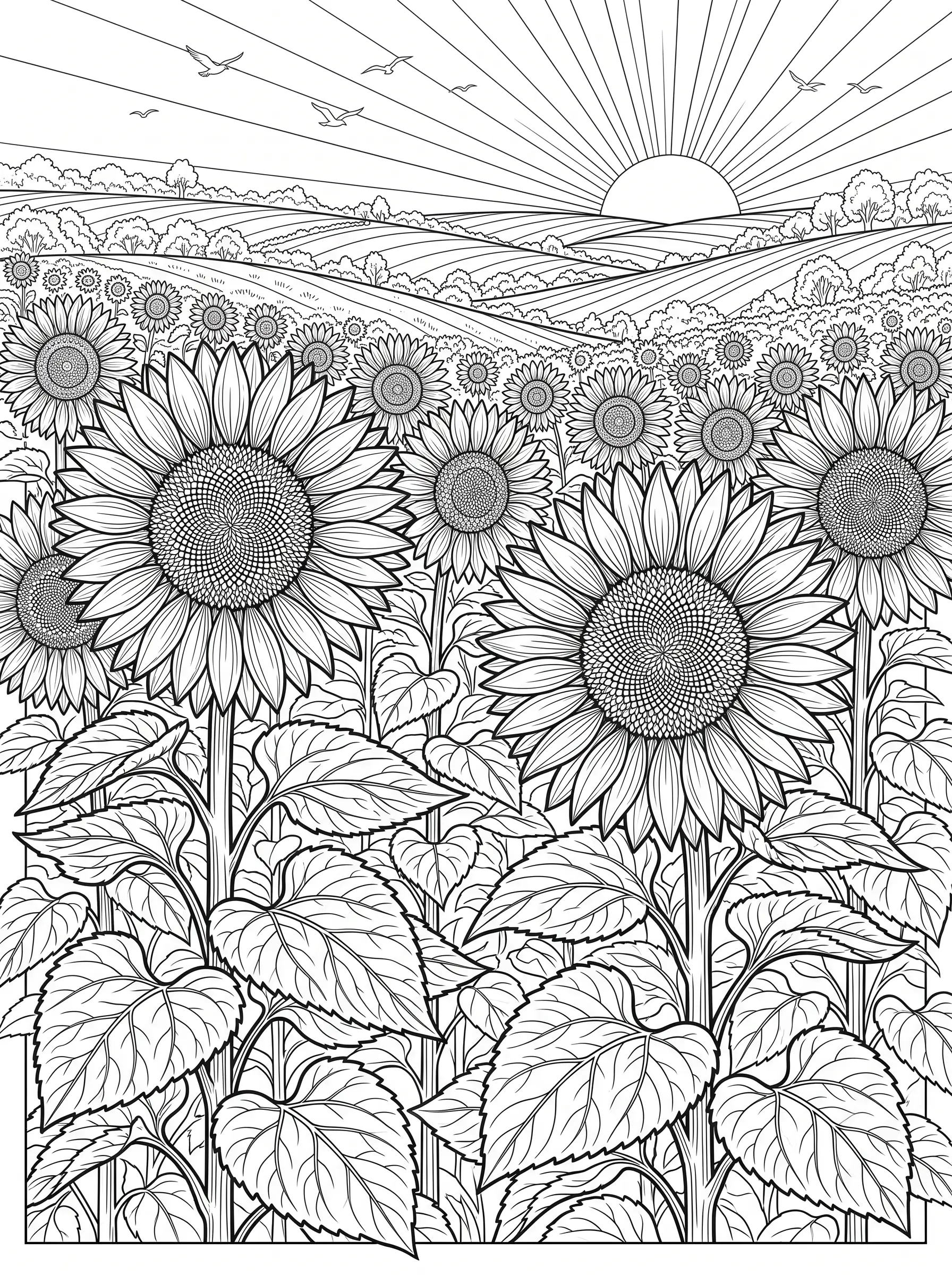
Tall sunflowers in the foreground, their centers drawn seed by seed, then rows of sunflowers up to the hills, under a setting sun and a few birds.
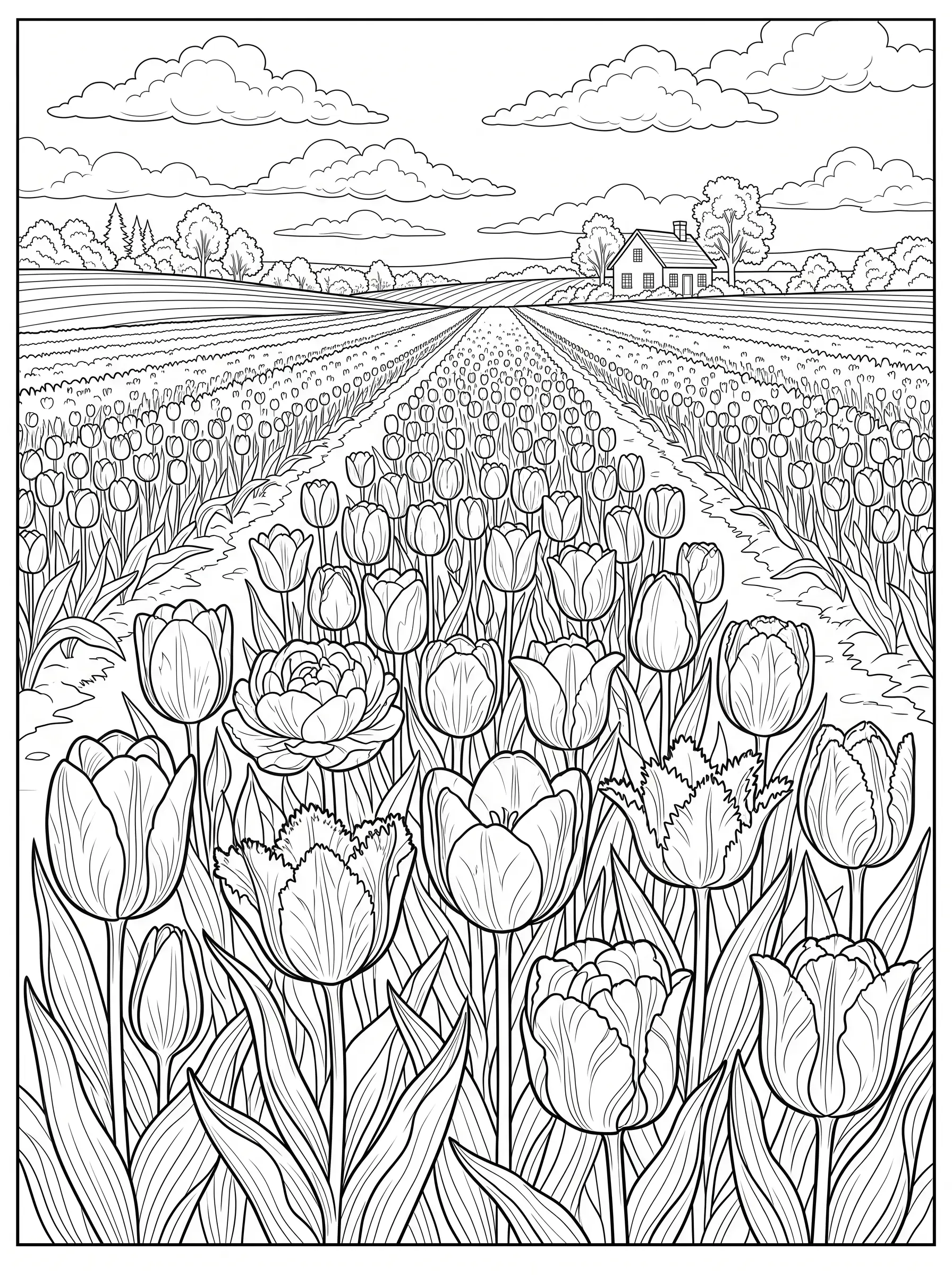
Single, double and fringed tulips in the foreground, then long rows leading to a farmhouse and a few trees. A spring landscape to color row by row.
Peony, anemone, amaryllis, calla lily, camellia, orchid, a lily bouquet and a Victorian composition: elegant flower coloring pages with generous shapes, ready to print as PDF.
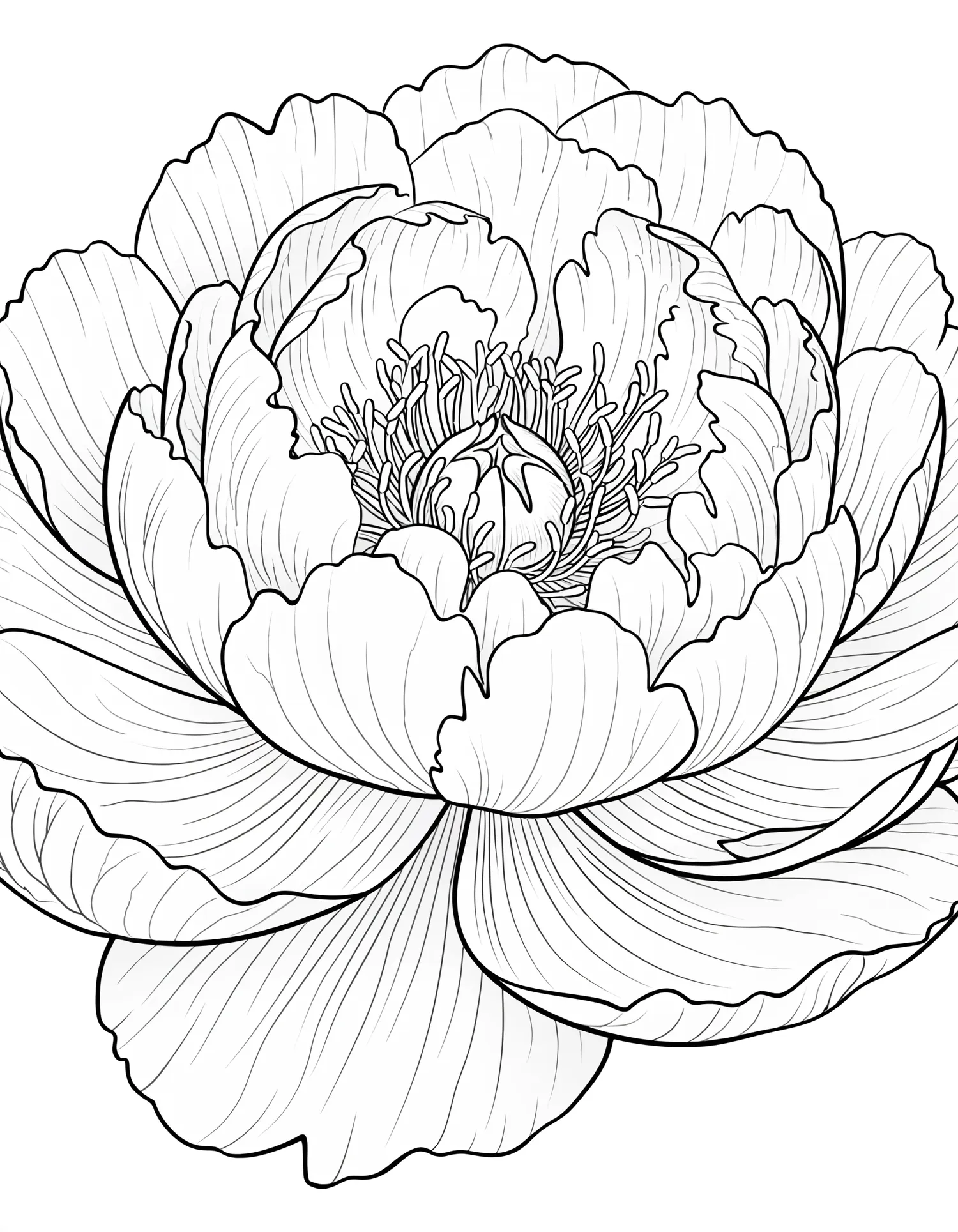
Full peony with silky petals, a symbol of floral elegance and botanical richness in European gardens.
Anemone in detailed botanical portrait with delicate petals and its characteristic dark center with fine stamens.
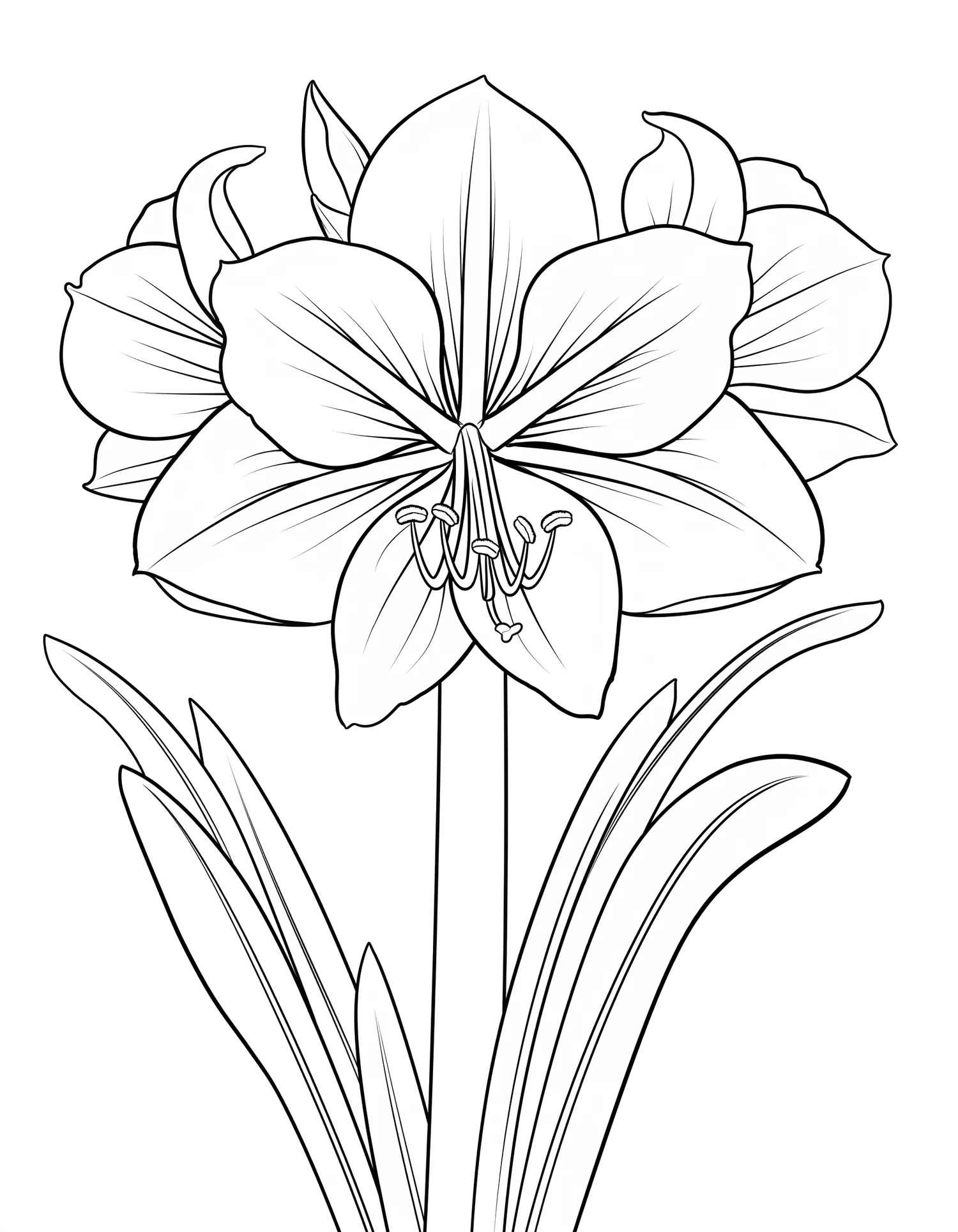
Royal amaryllis with majestic trumpet-shaped flowers, a symbol of pride and elegance for a sophisticated floral coloring page.
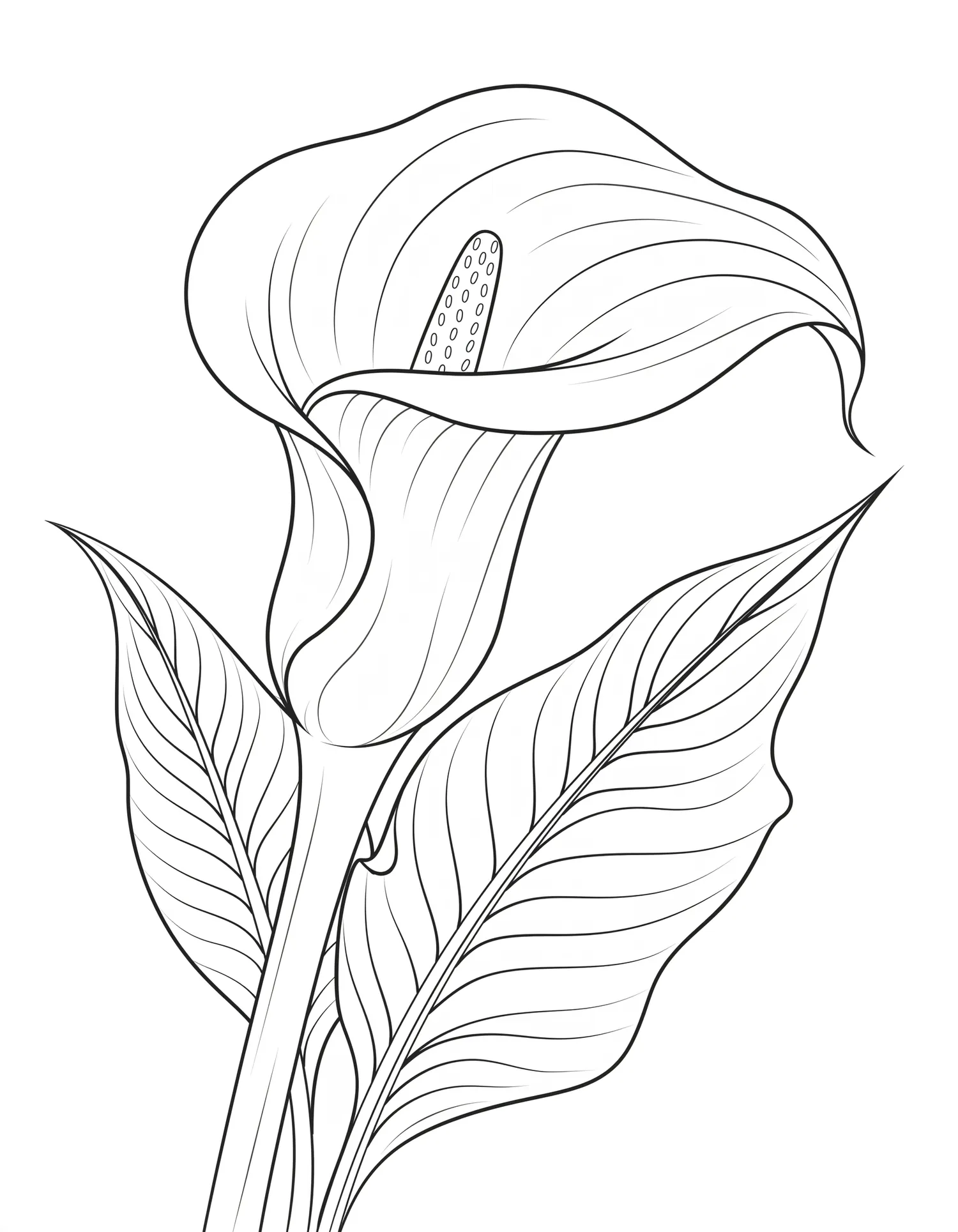
Calla lily with clean lines and elegant spiral, an architectural flower perfect for a zen and minimalist coloring page.
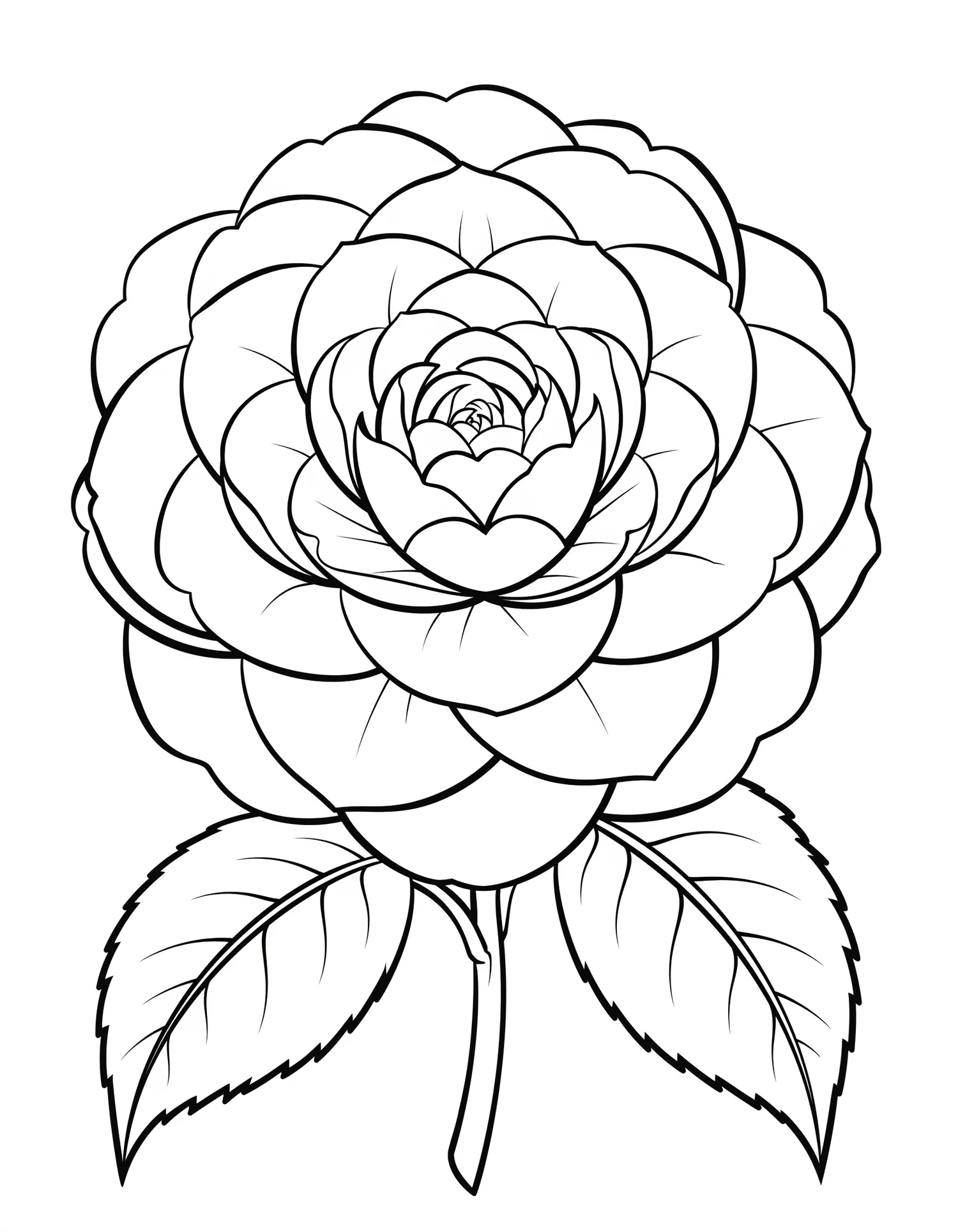
Japanese camellia with perfectly arranged multiple petals, a classic flower with geometric beauty for patient colorists.
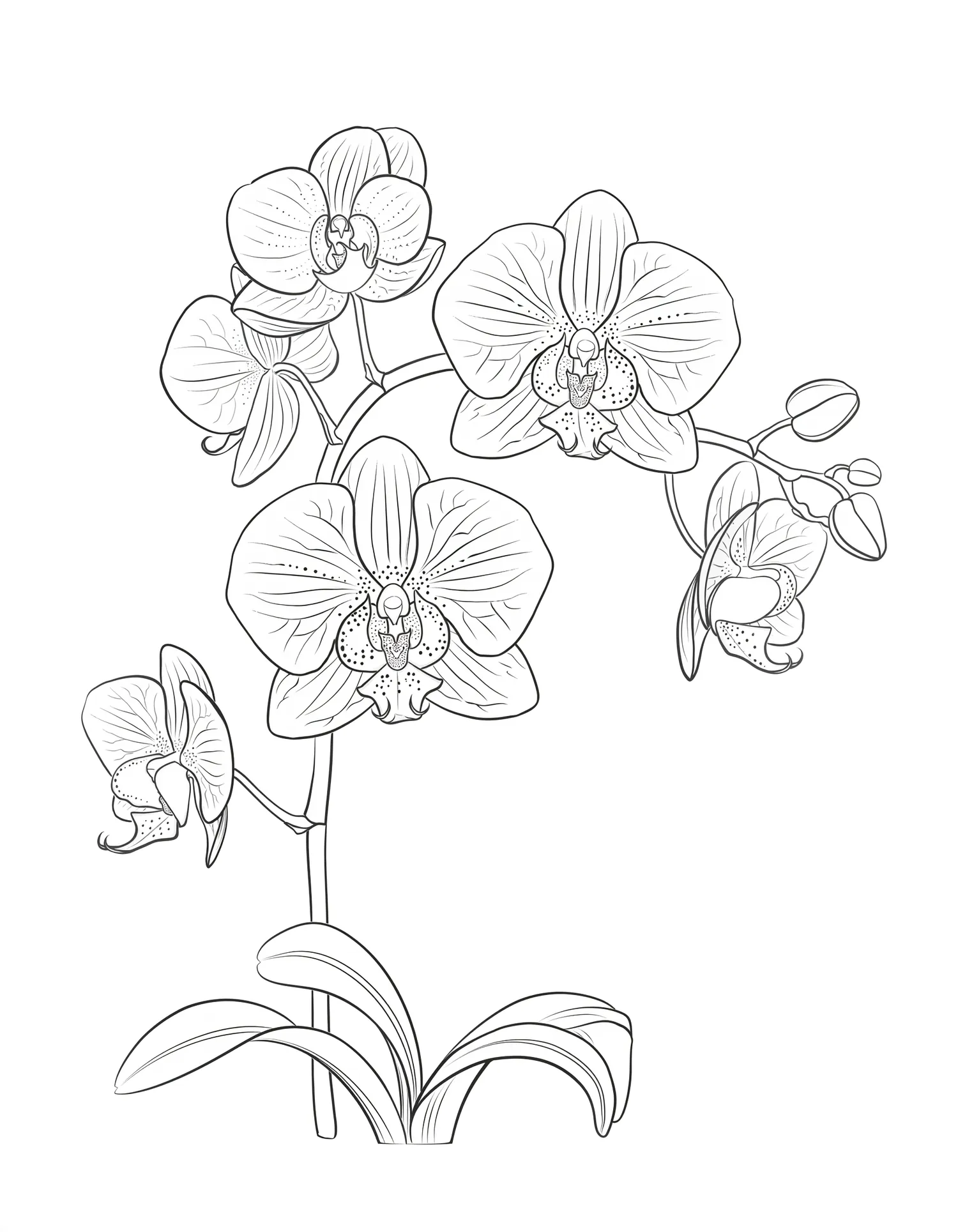
Phalaenopsis orchid in graceful cascade, a refined indoor flower with delicate forms for an elegant coloring page.
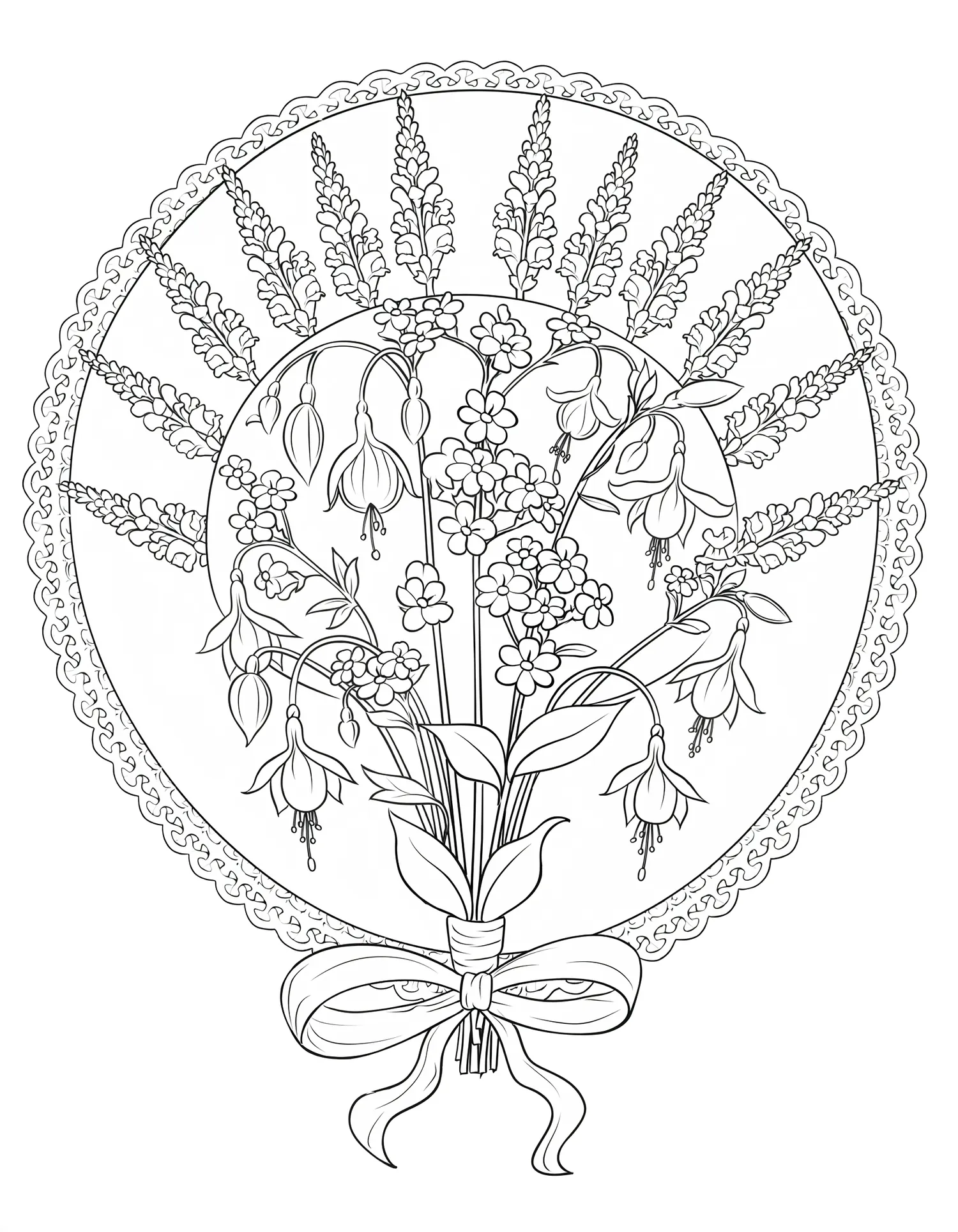
Victorian floral composition richly detailed with historical influences, for a romantic and sophisticated period coloring page.
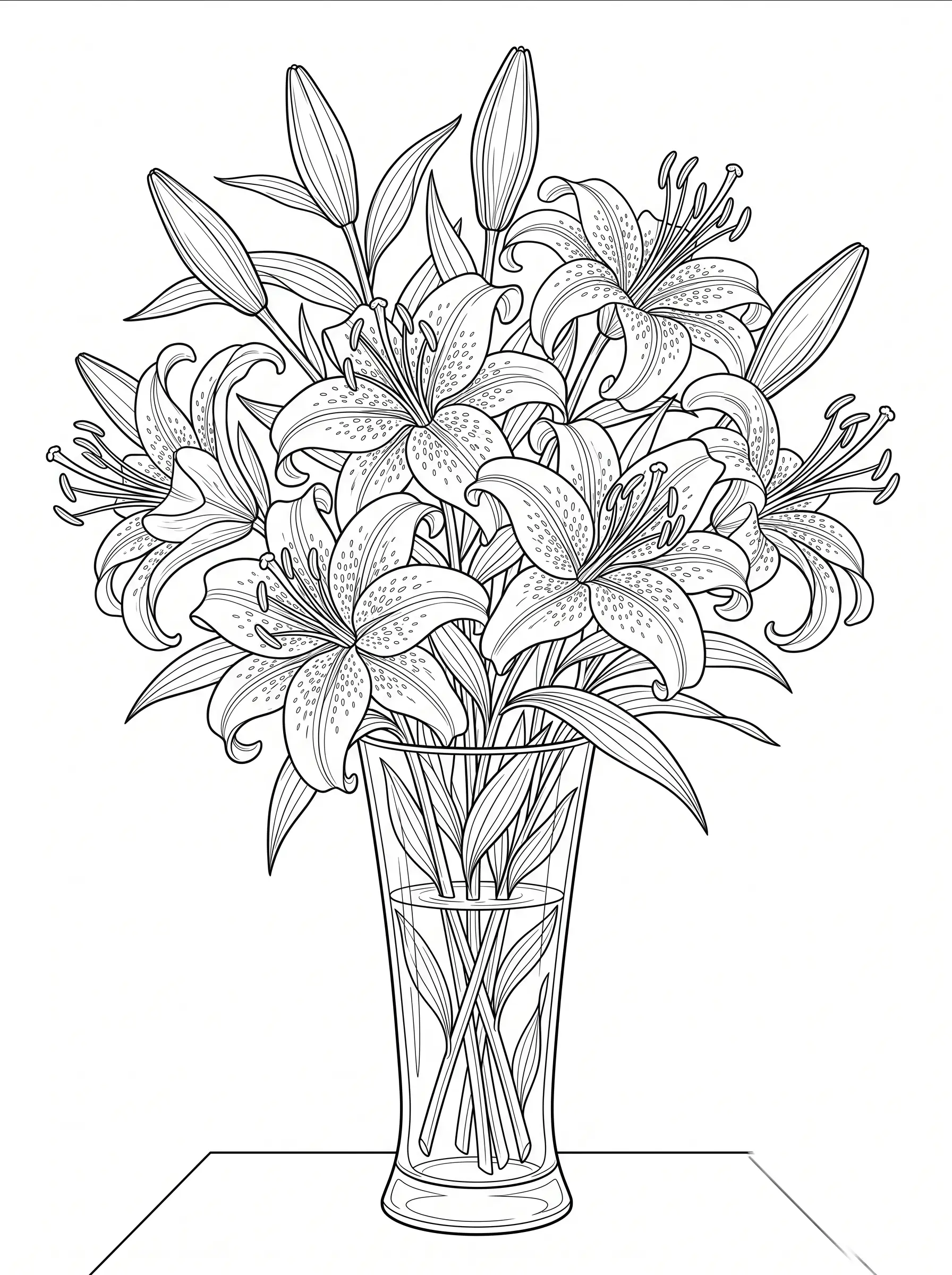
Lilies with curled, speckled petals, long stamens and closed buds, in a tall glass vase where the stems show through.
Cherry blossom, lily of the valley in the woods, hyacinth, daffodils, star magnolia, auricula primrose and Siberian squill: spring flower coloring pages to welcome the sunny days.
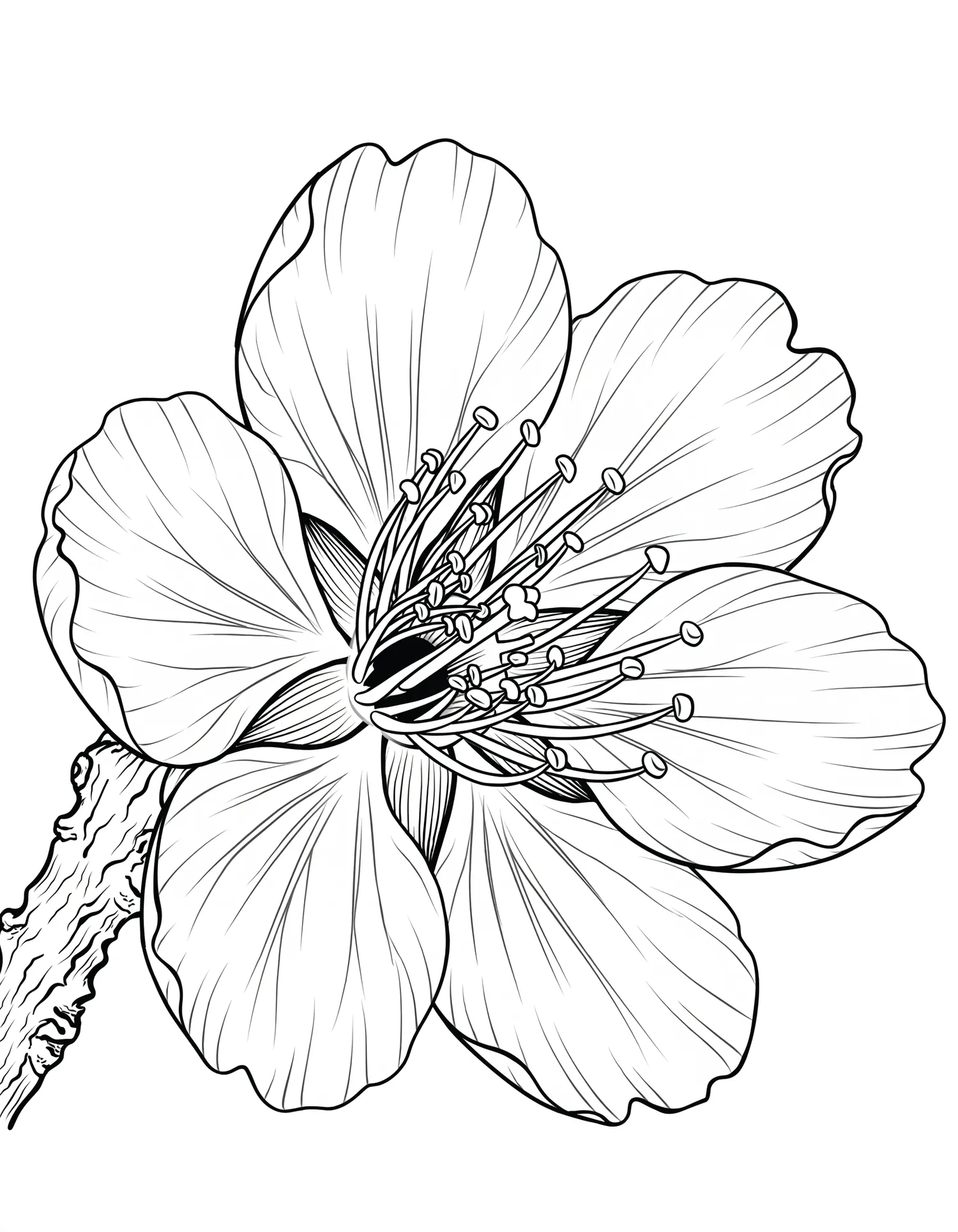
Japanese cherry blossom in close-up macro detail, a spring coloring page inspired by the Japanese Hanami aesthetic.
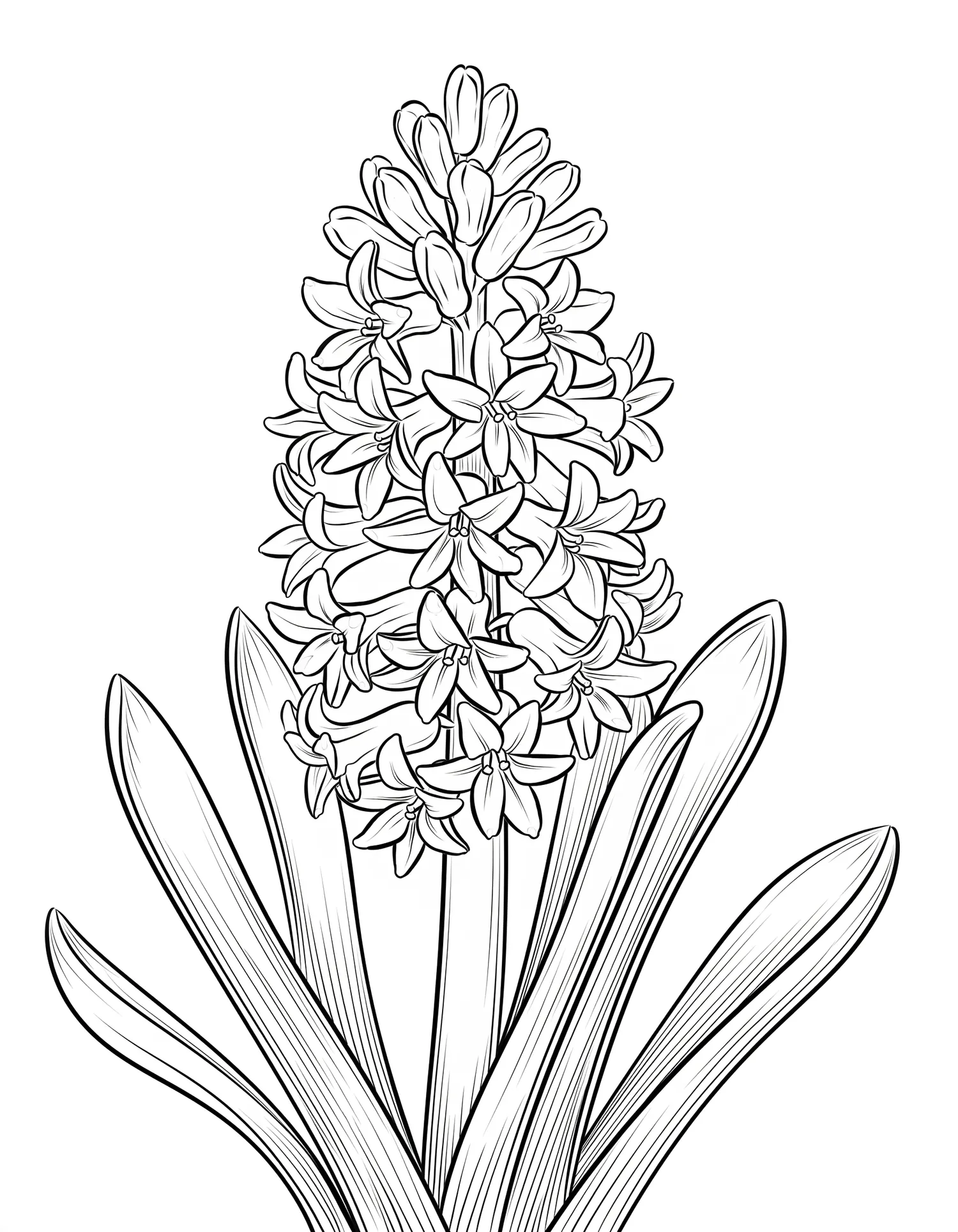
Hyacinth in a dense cluster of small bell-shaped florets, an emblematic spring flower to color with patience.
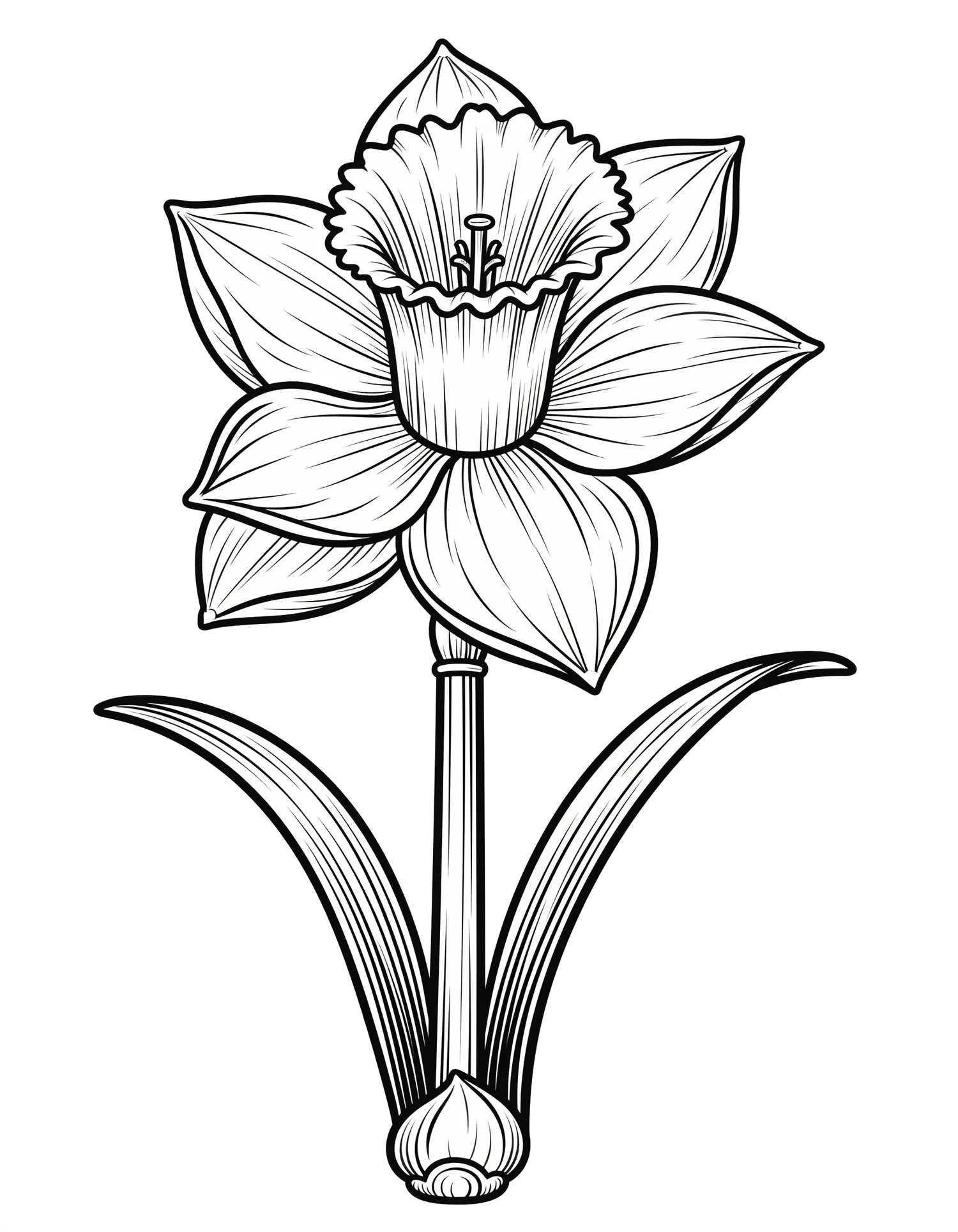
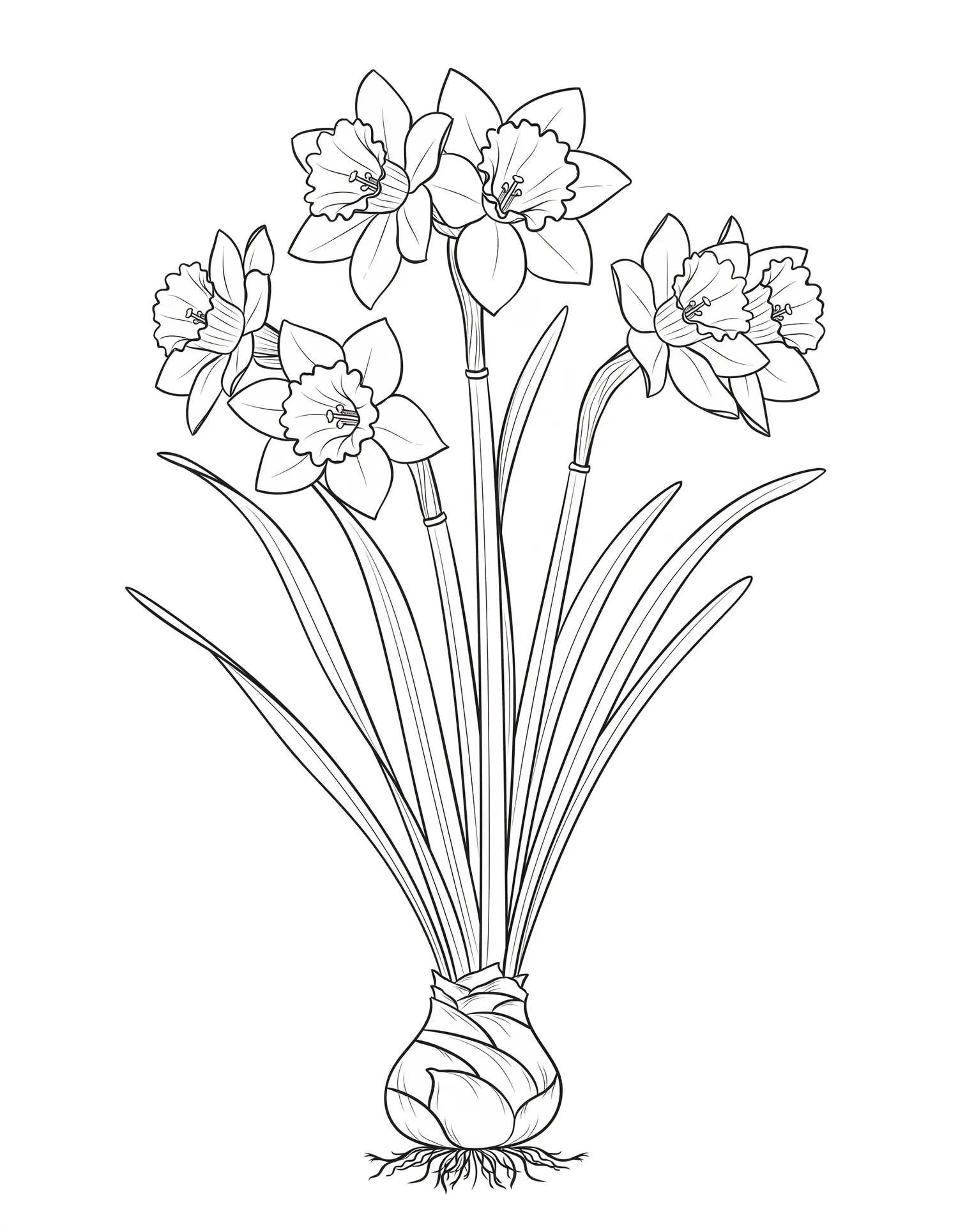
Trumpet daffodil with simple, recognizable forms, perfect as an easy introduction to spring flower coloring pages.
Multi-headed Cheerfulness daffodil variety, a joyful spring jonquil with double fragrant flowers for a bright coloring page.
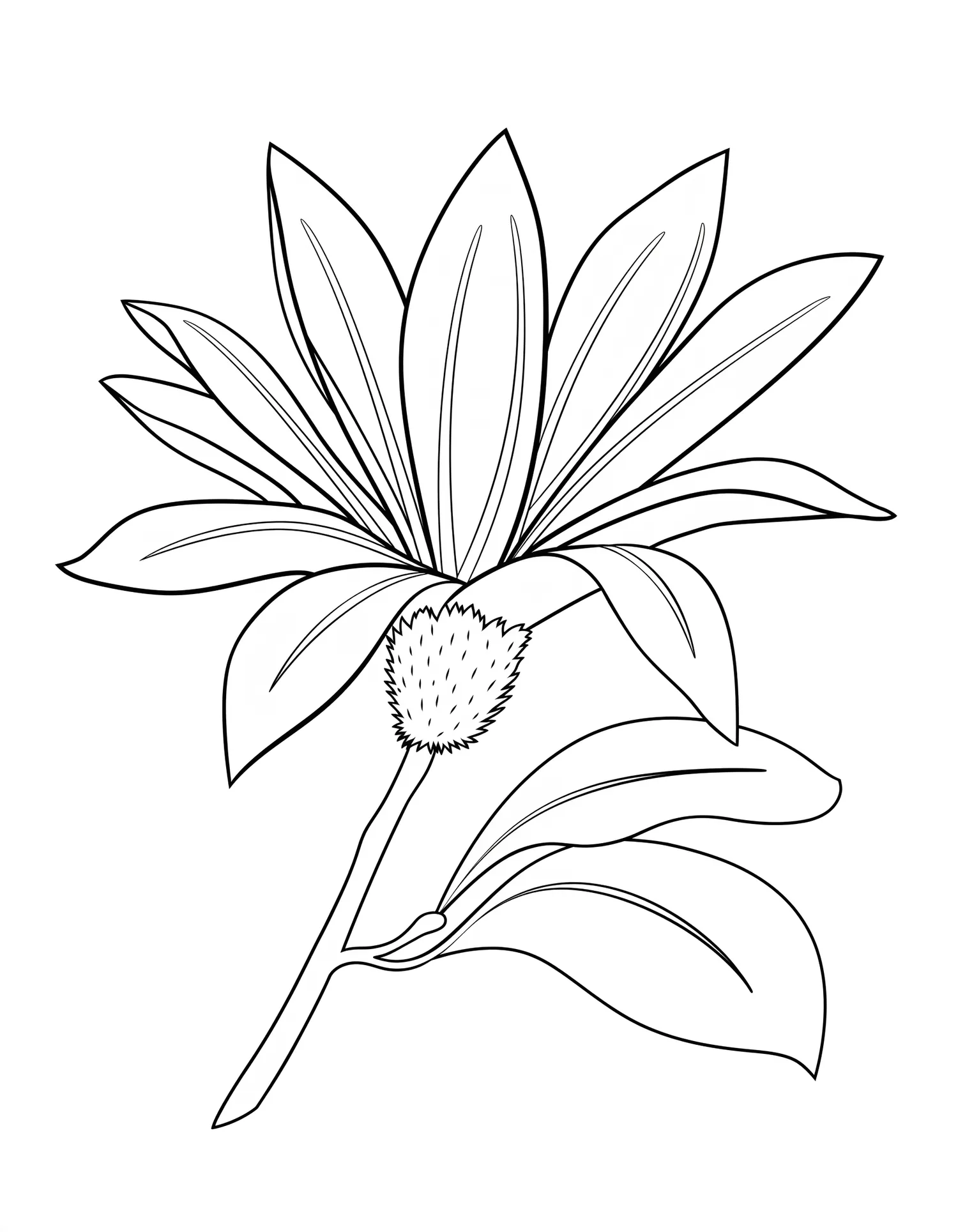
Star magnolia in full bloom with delicate white petals, the first messenger of spring for a pure and poetic coloring page.
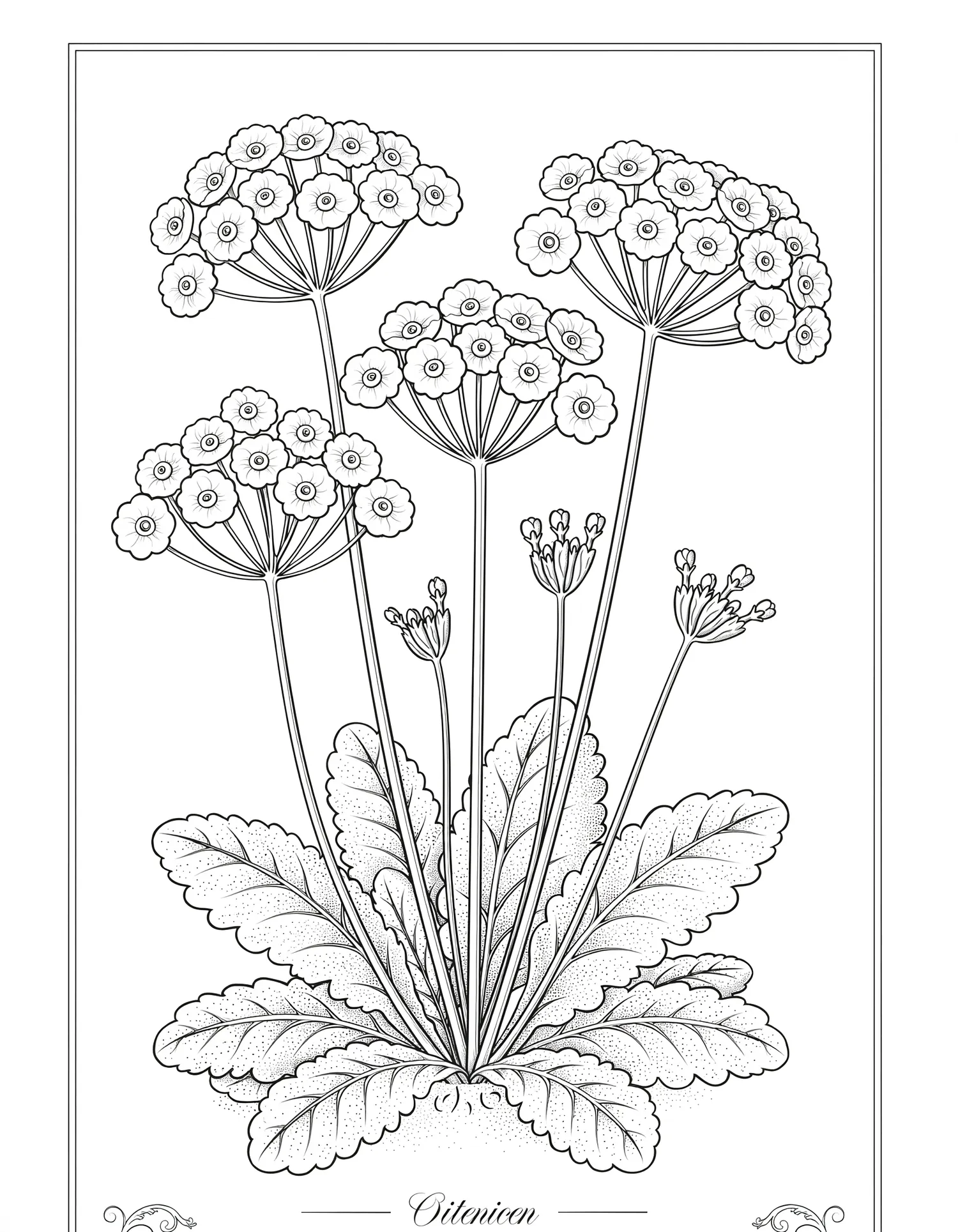
Alpine auricula primrose with complex patterns and contrasting colors, a collector's flower for experienced colorists passionate about botany.
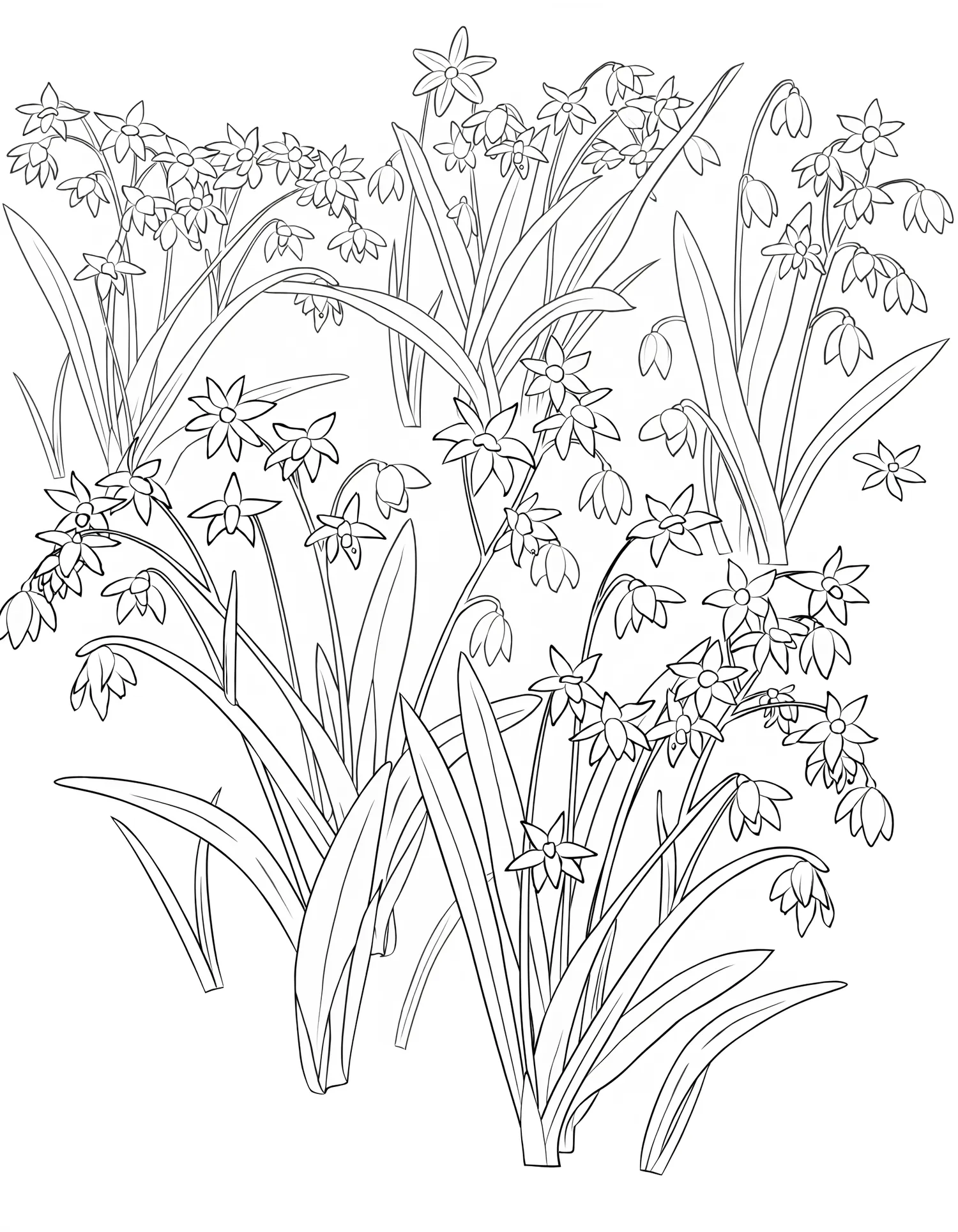
Siberian squill in luminous blue carpet, an early spring bulb forming floral blankets for a refreshing coloring page.
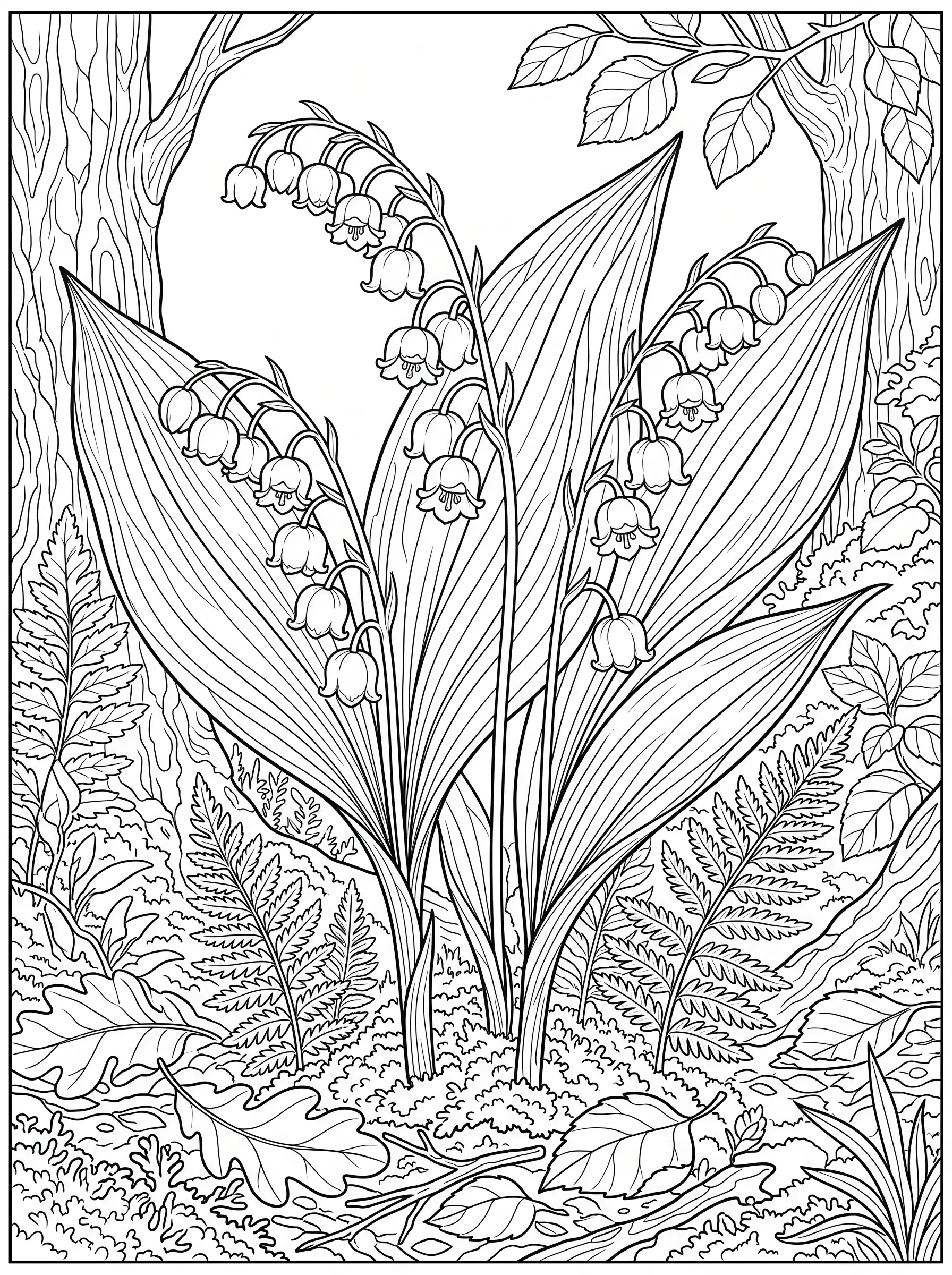
Sprigs of lily of the valley with rows of little bells on arching stems, among broad leaves, at the foot of a tree. Ferns, moss and fallen leaves complete this spring coloring page.
A daisy meadow, a poppy field, butterflies on lavender, nasturtium, chicory and cornflowers, love-in-a-mist, Oriental poppy, yarrow and goldenrod: wildflower coloring pages, from close-ups to landscapes.
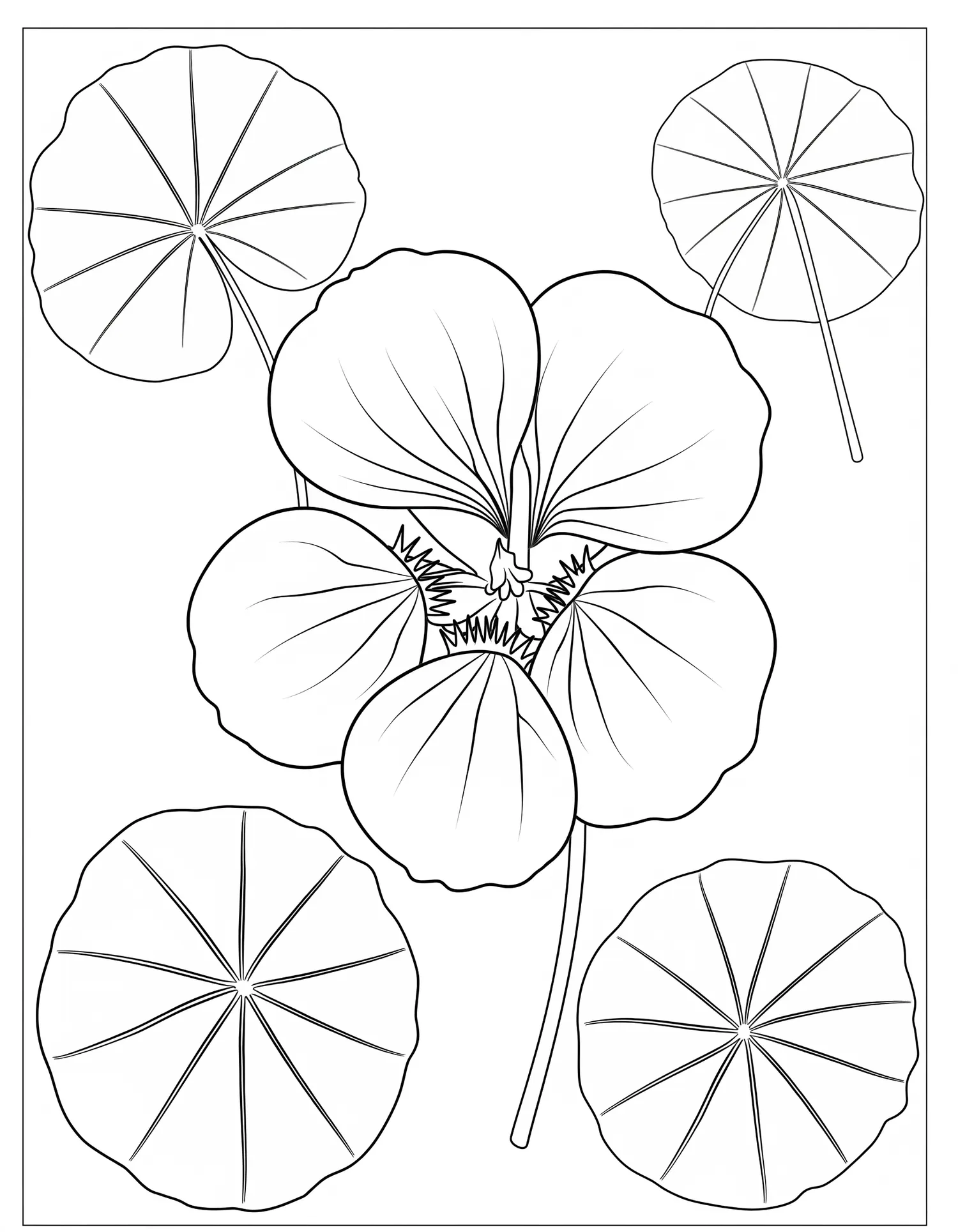
Nasturtium seen from above with rounded petals and clear lines, ideal for an easy and colorful floral coloring page.
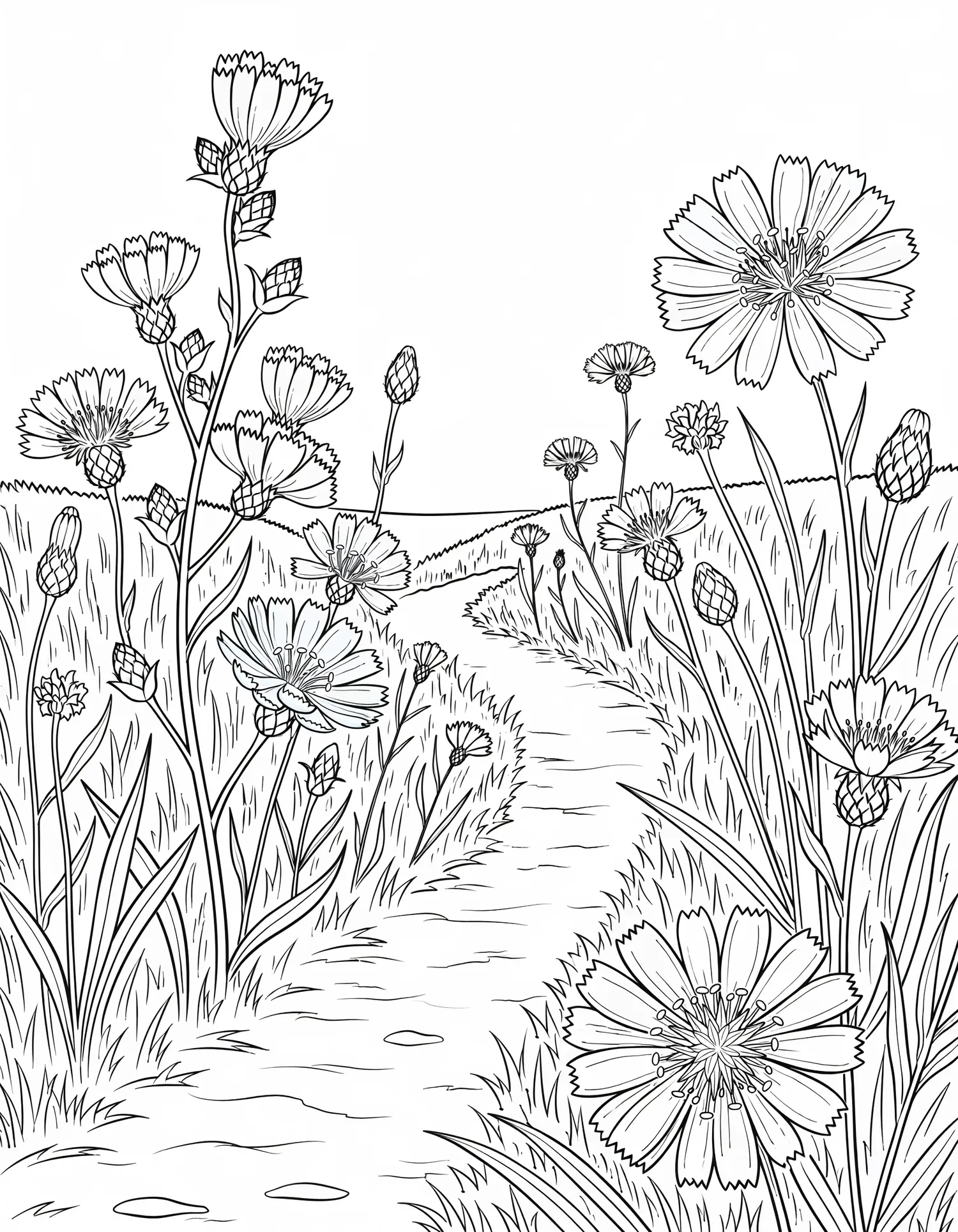
Countryside composition of chicory and cornflowers along a path border, a nature coloring page with authentic wild species.
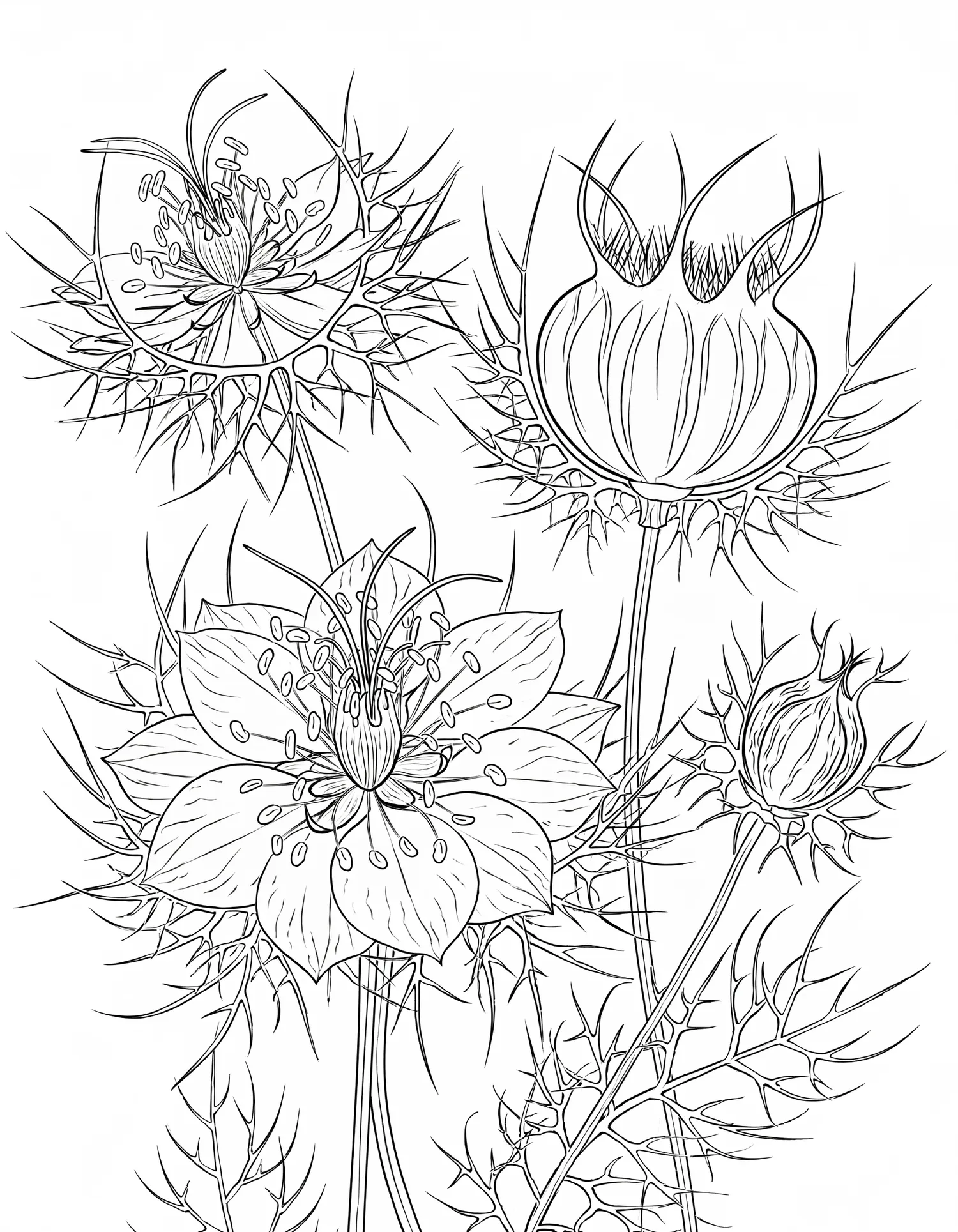
Love-in-a-mist (Nigella) with lacework petals and thread-like foliage, a wildflower of remarkable botanical elegance.
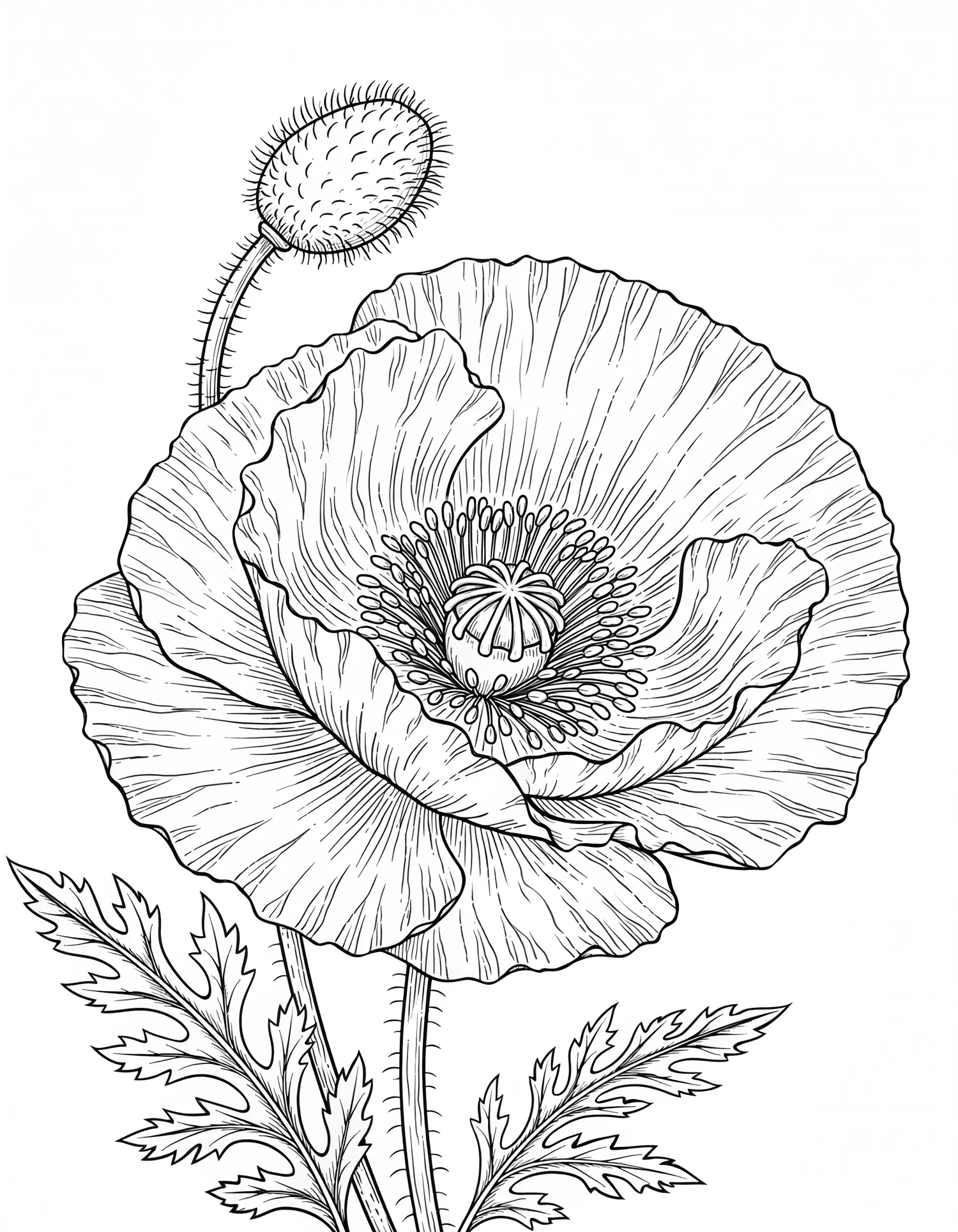
Oriental poppy with large, crinkled and textured petals, a cousin of the classic poppy for a generous, expressive coloring page.
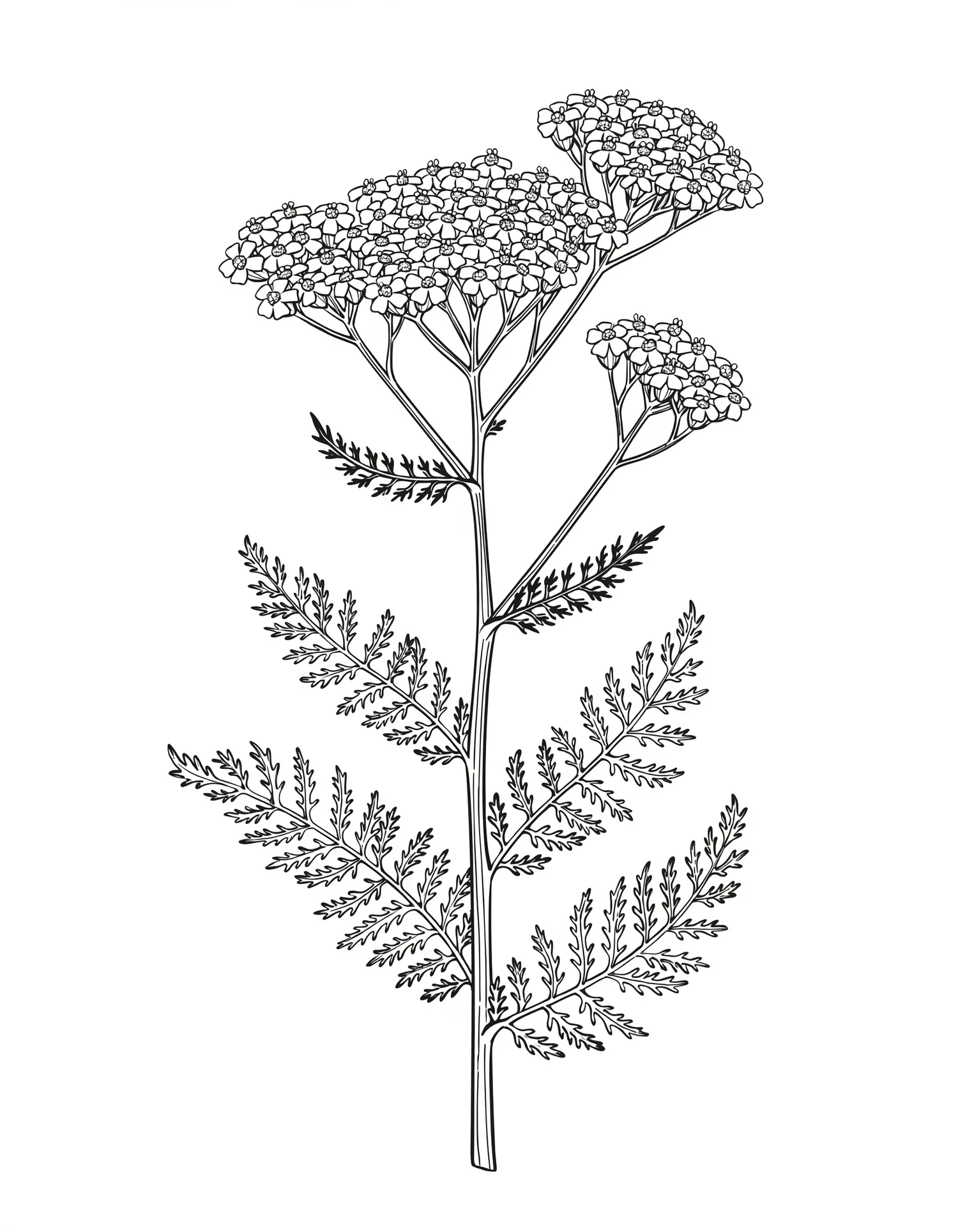
Yarrow in dense plateau with multiple tiny flowers, a medicinal countryside plant for an authentic nature coloring page.
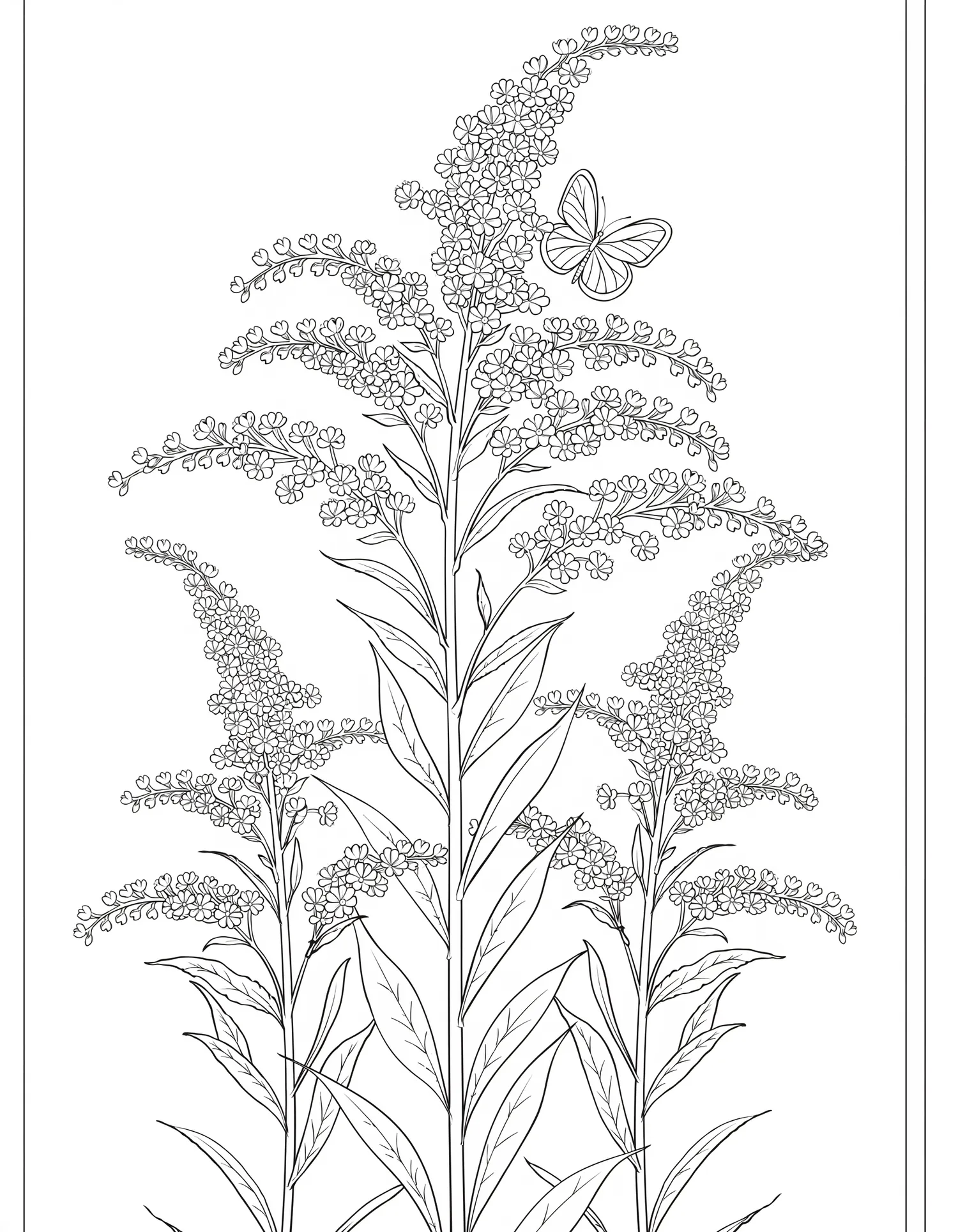
Goldenrod in golden autumn plumes, a wild plant with feathery inflorescences for a countryside coloring page in warm tones.
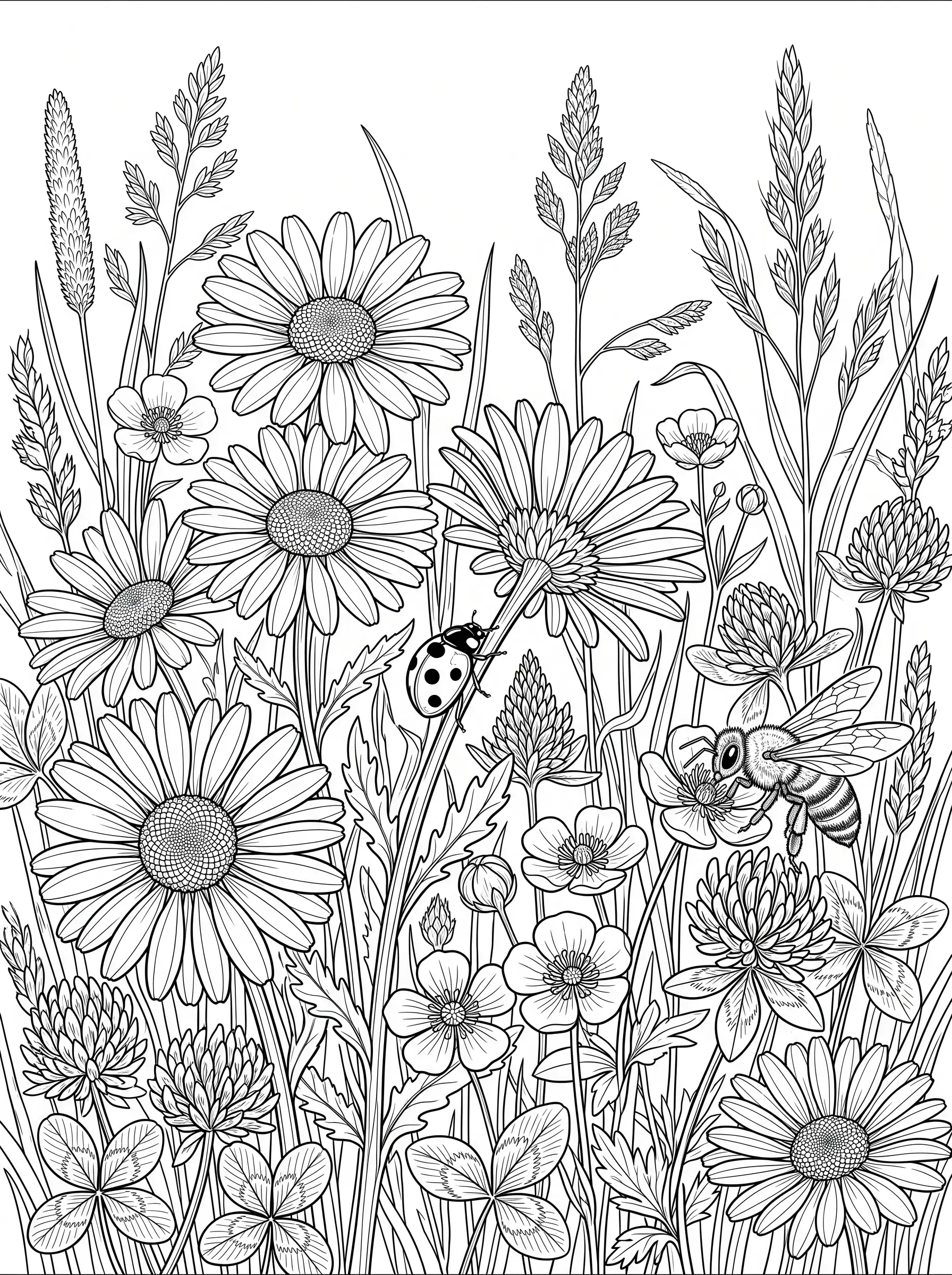
Daisies of every size, seen face-on or in profile, among buttercups, clover and tall grasses, with a ladybug and a bee.
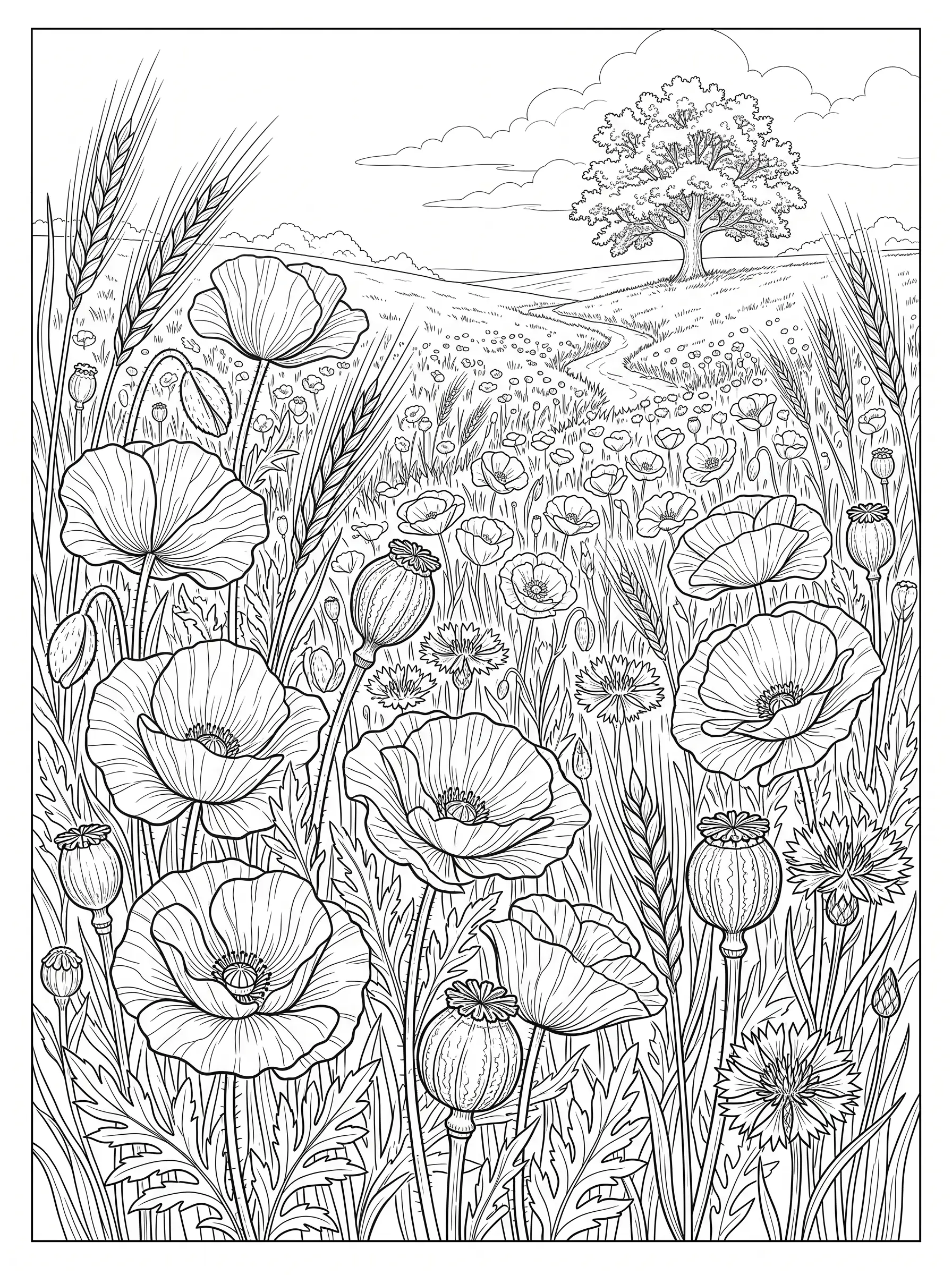
Large poppies and seed pods in the foreground, mixed with cornflowers and wheat ears, then a whole field in bloom up to a lone tree on the hill.
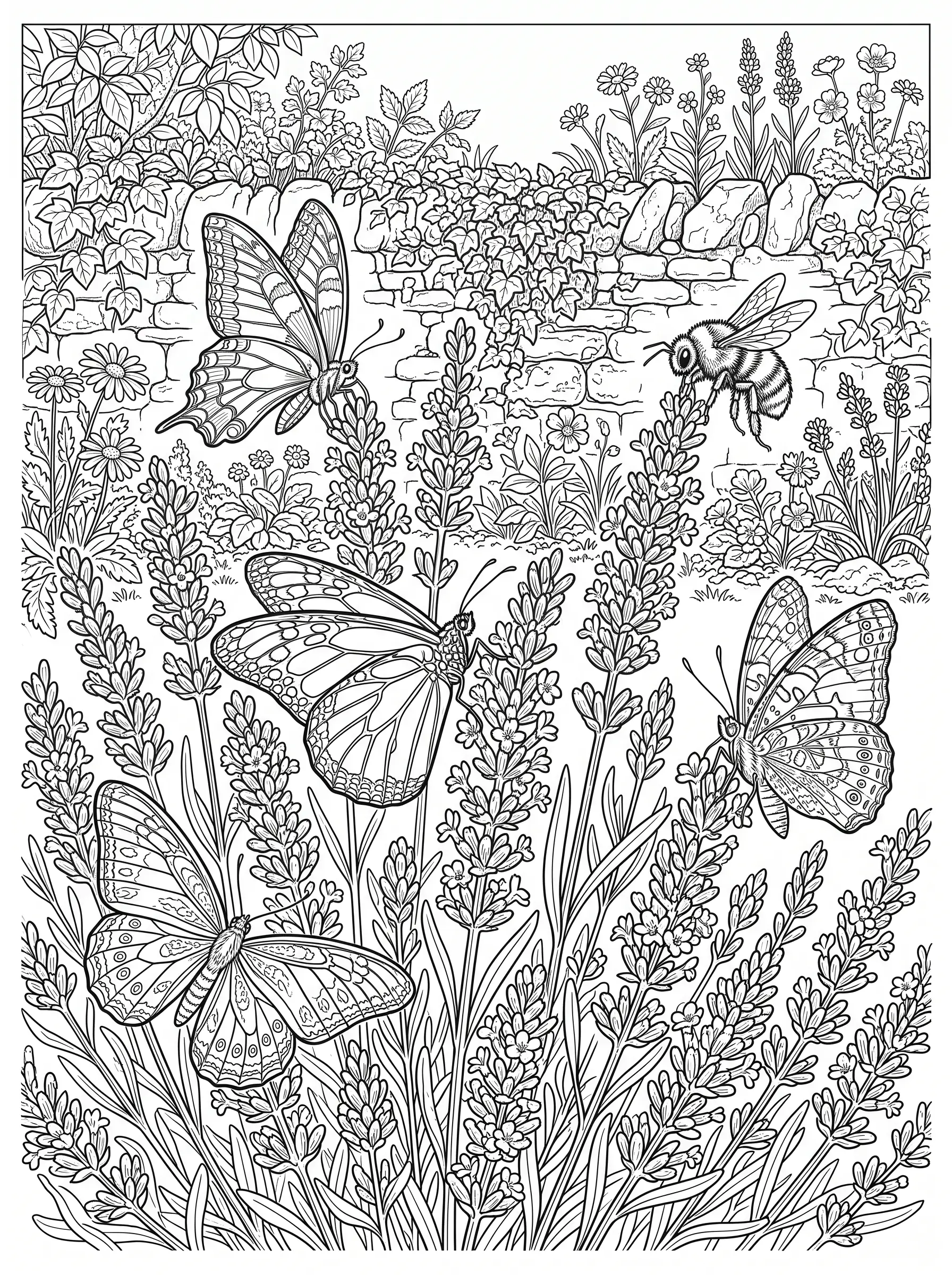
Four butterflies with richly patterned wings and a bumblebee visit blooming lavender bushes, in front of a low stone wall covered in ivy and flowers.
A cottage garden with its rose arch, an old greenhouse full of potted flowers and a pond with water lilies and lotus flowers: detailed garden coloring pages.
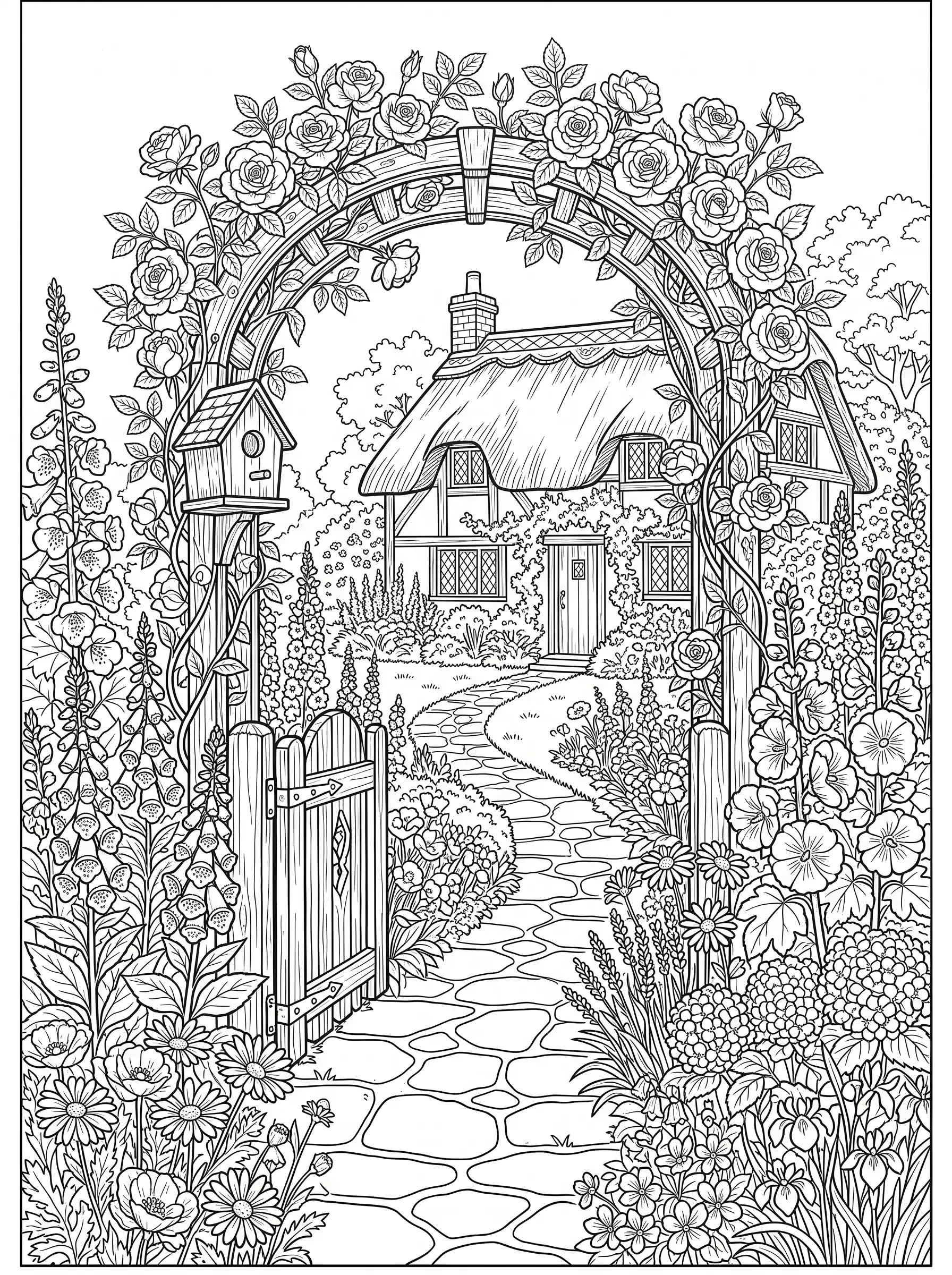
A stone path runs under an arch covered in roses toward a thatched cottage, among foxgloves, hollyhocks, daisies and hydrangeas. A wooden gate and a birdhouse complete the scene.
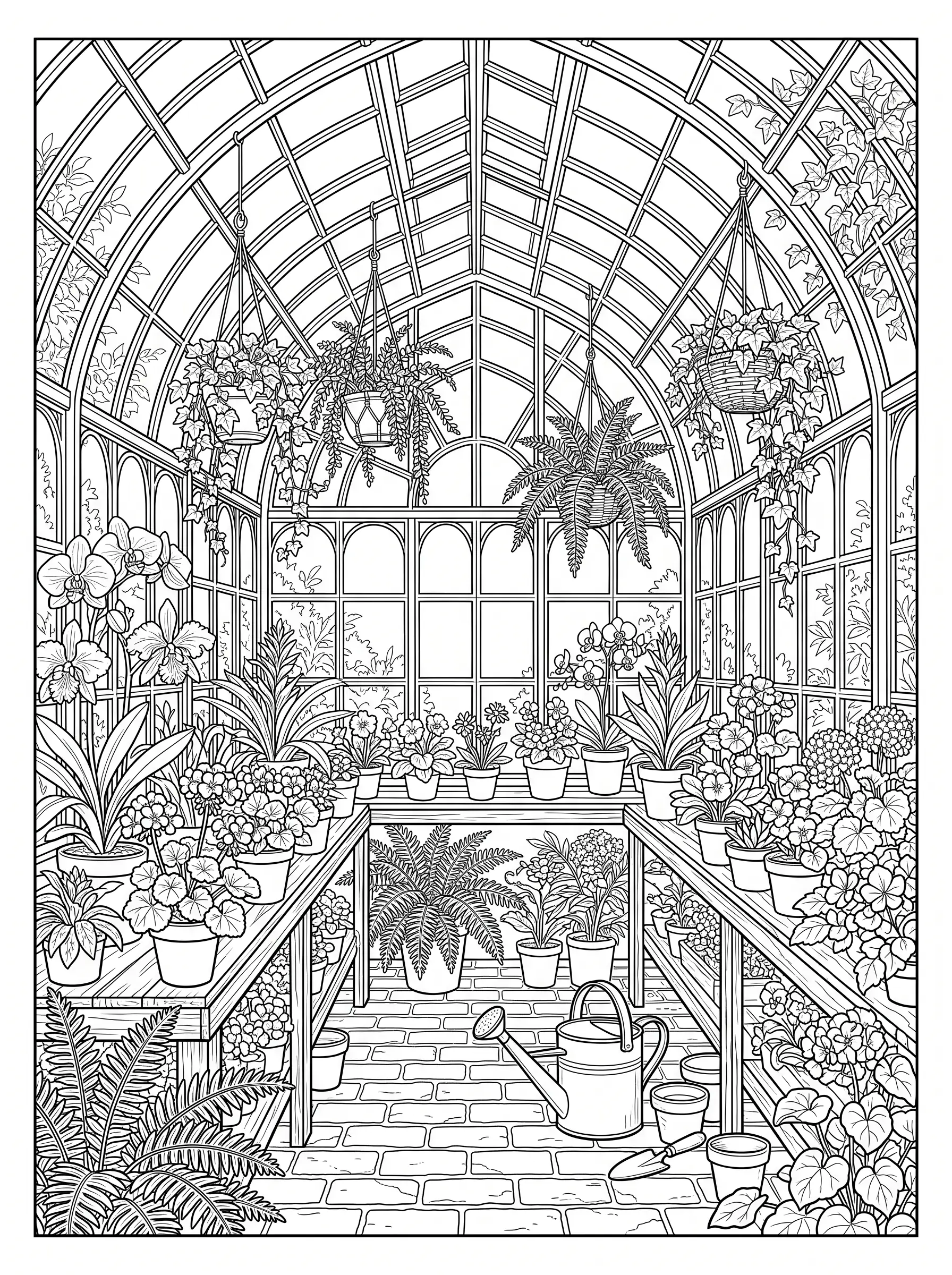
Inside a glass and wrought-iron greenhouse: orchids, geraniums, hydrangeas and ferns in pots on tables, hanging baskets of trailing plants and a watering can on the brick floor.
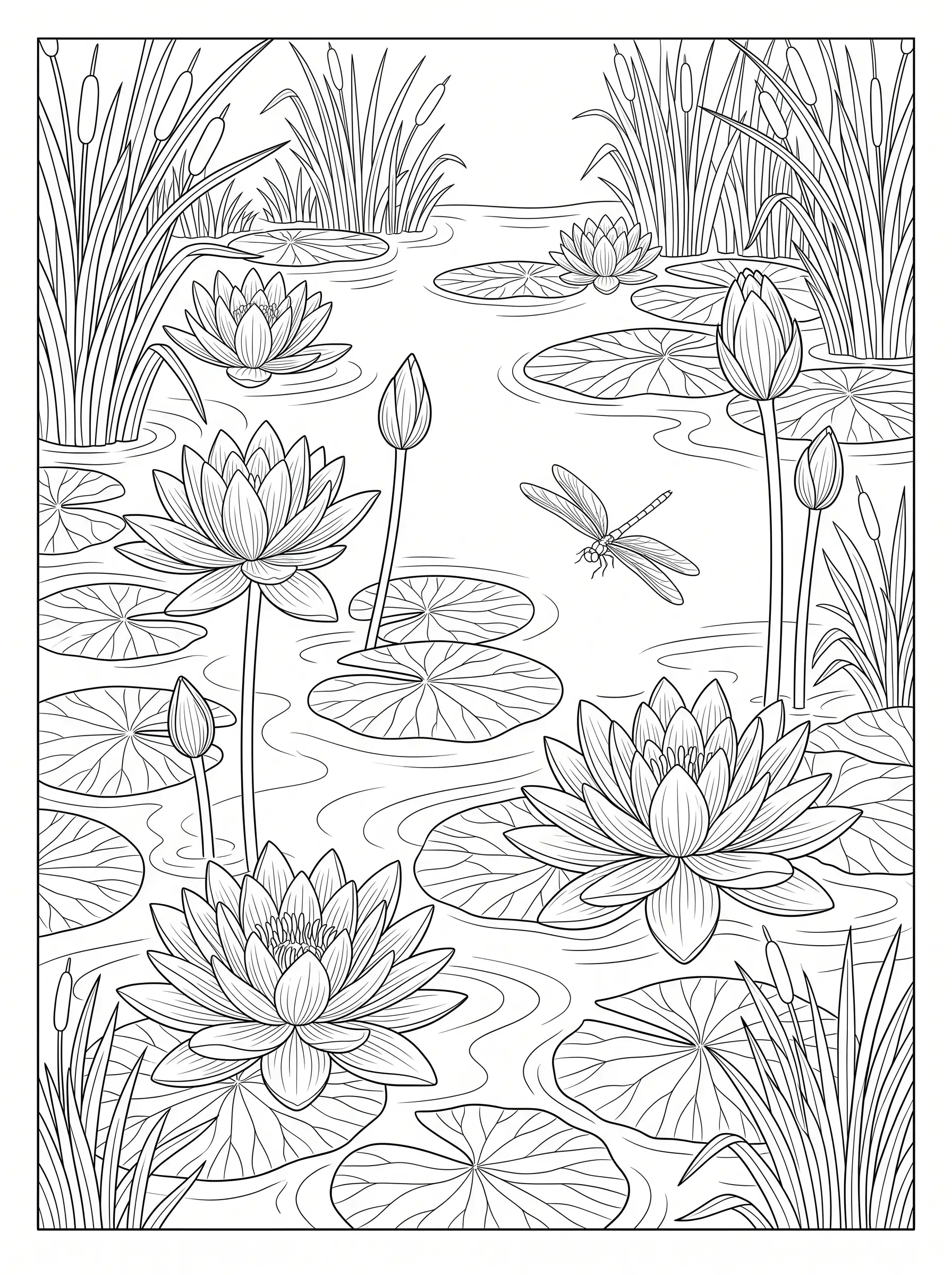
Water lilies and lotus flowers with layered petals float among round pads, with buds on tall stems, reeds, a dragonfly and rippling water.
Hibiscus, heliconia, protea, poinsettia, foxgloves and Art Nouveau or Art Deco compositions: detailed flower coloring pages for colorists who enjoy a challenge.
Floral composition in the Art Nouveau spirit with interlaced stems, curved foliage and stylized flowers for expert colorists.
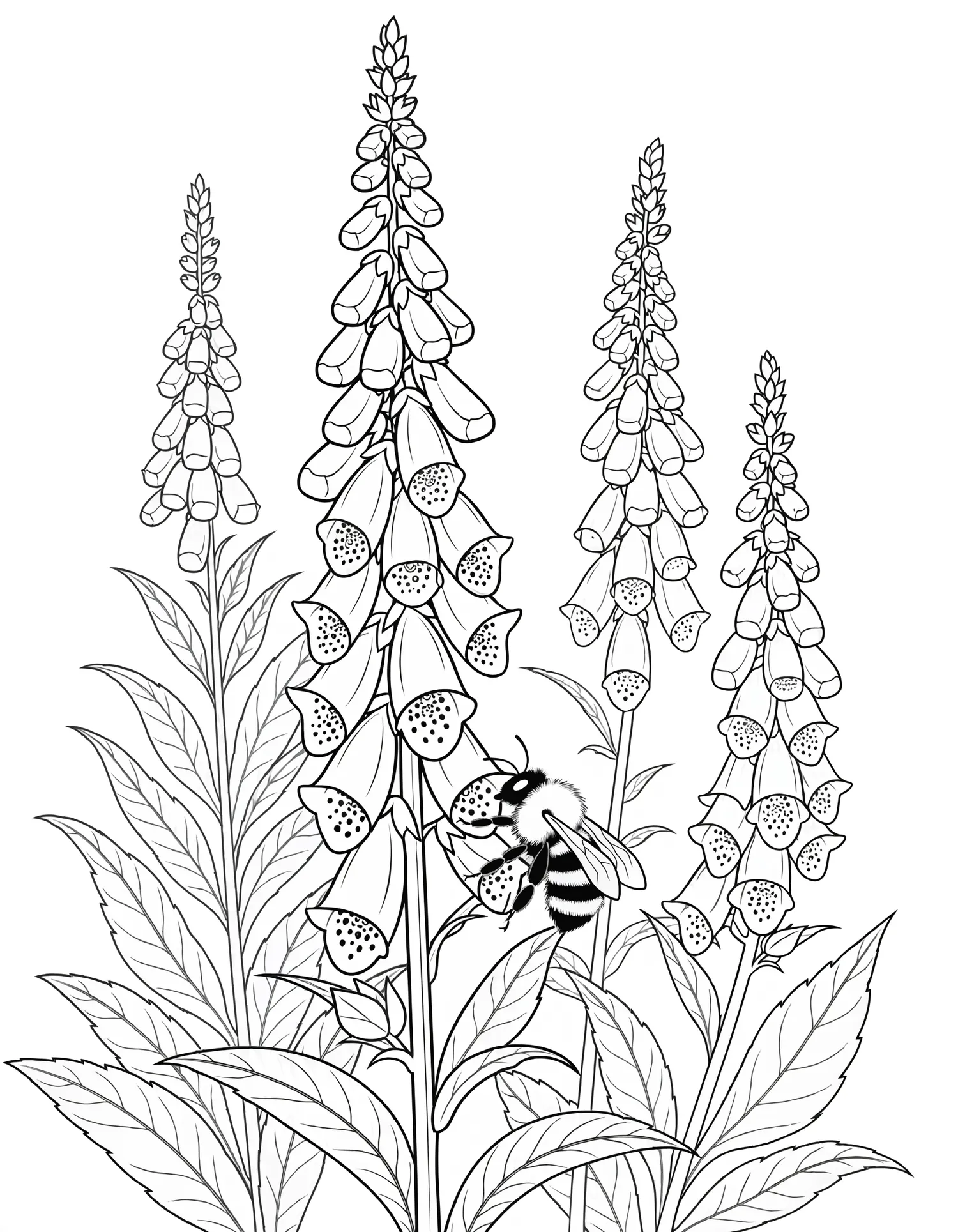
Purple foxgloves on a majestic floral spike with numerous spotted bell-shaped flowers, for a precise coloring page.
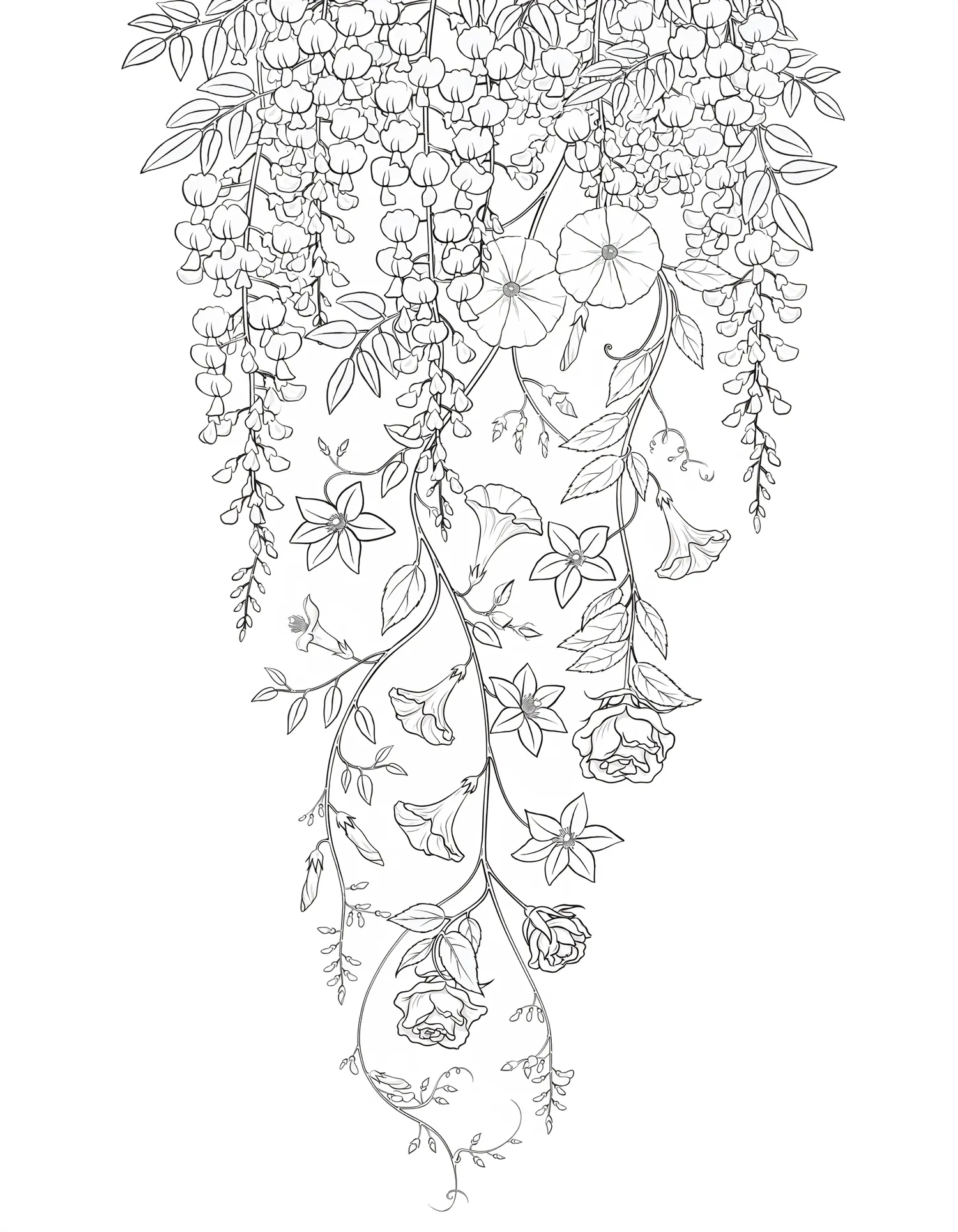
Cascading varied flowers in a vertical composition, for a complex floral coloring page with many layered botanical details.
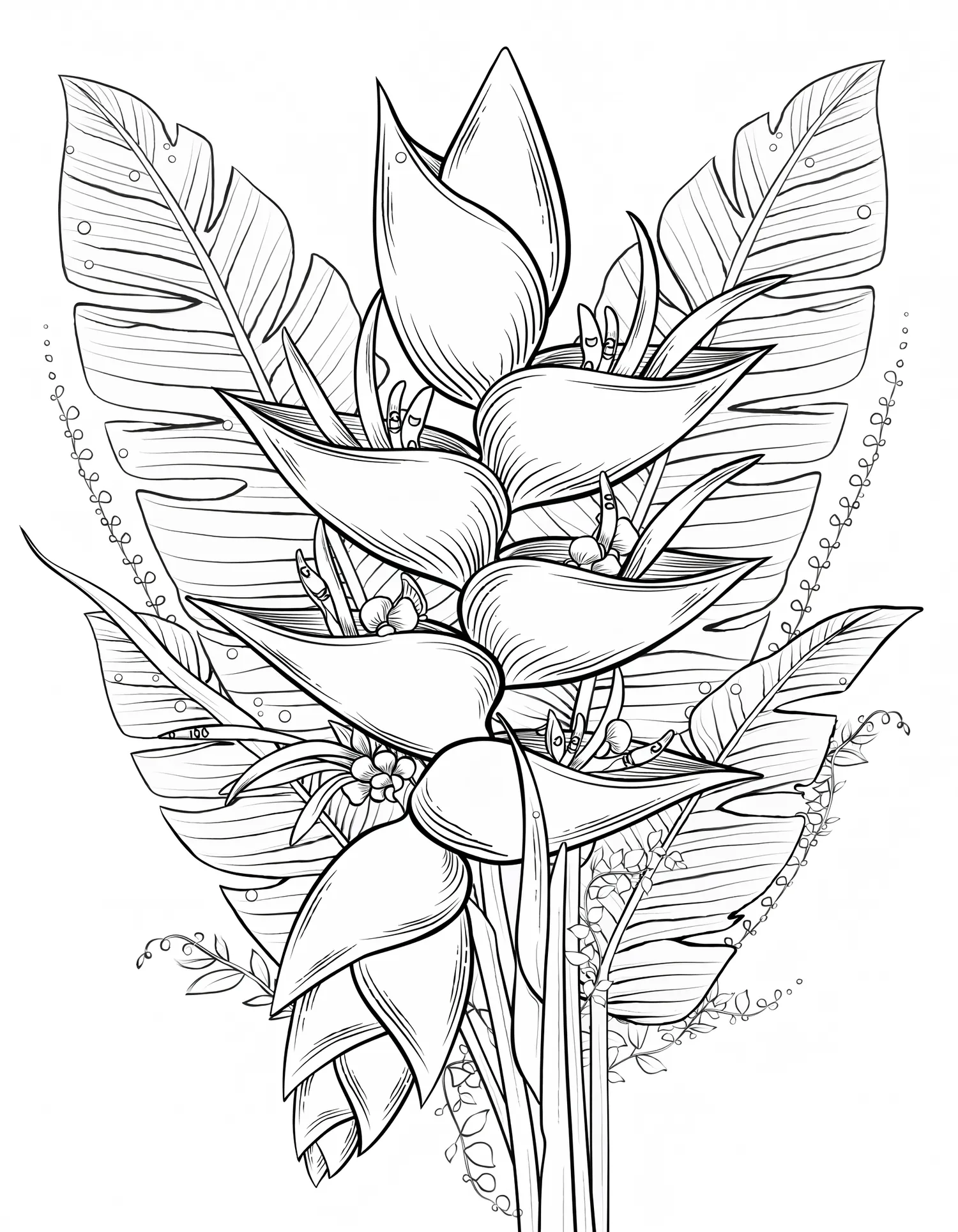
Tropical heliconia with spectacular architectural bracts, an exotic flower from Central America for an immersive coloring page.
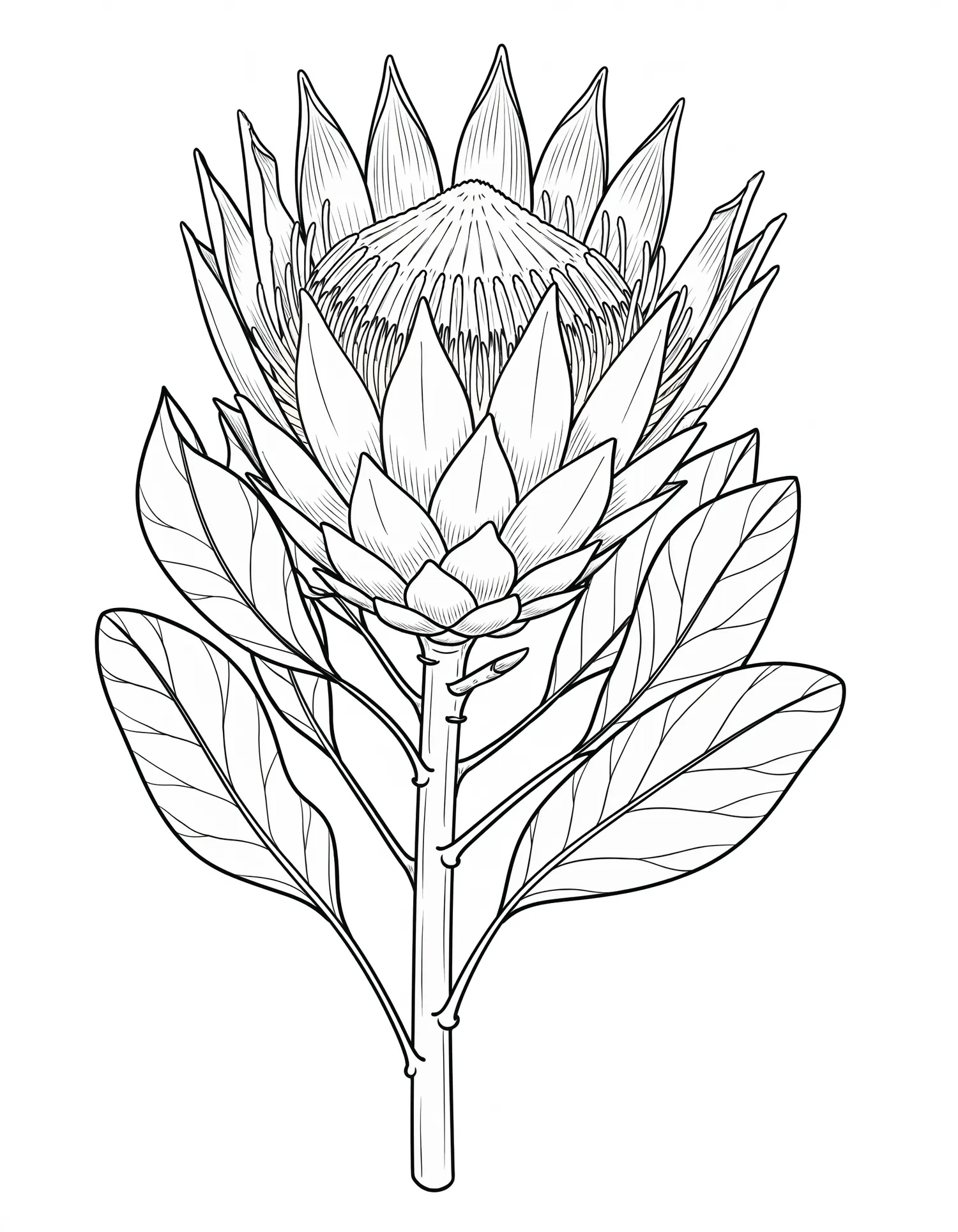
King Protea, the national flower of South Africa with unique architectural lines, for a highly detailed exotic botanical coloring page.
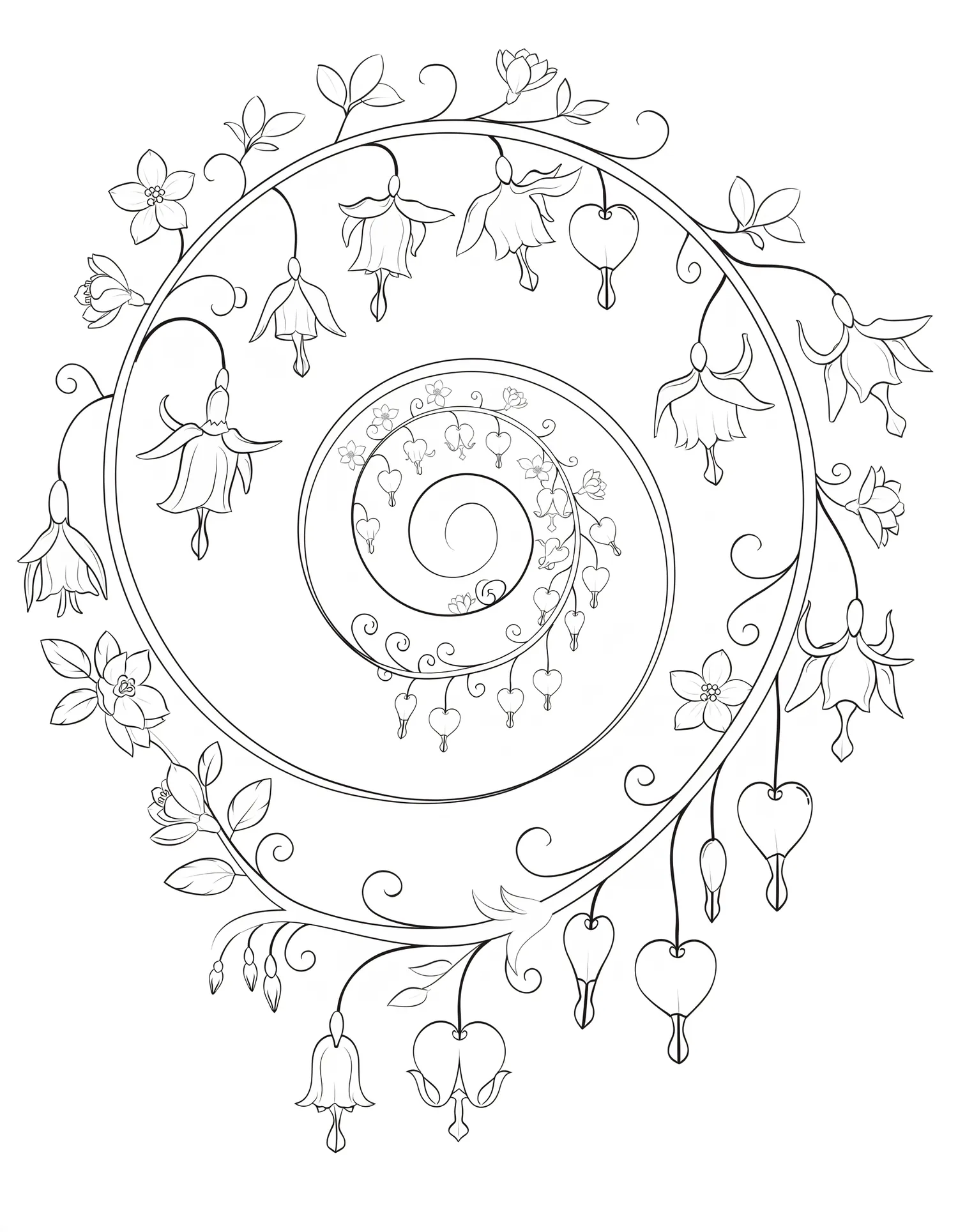
Spiral floral cascade with dynamic fluid movements, an artistic composition for a complex and modern floral coloring page.
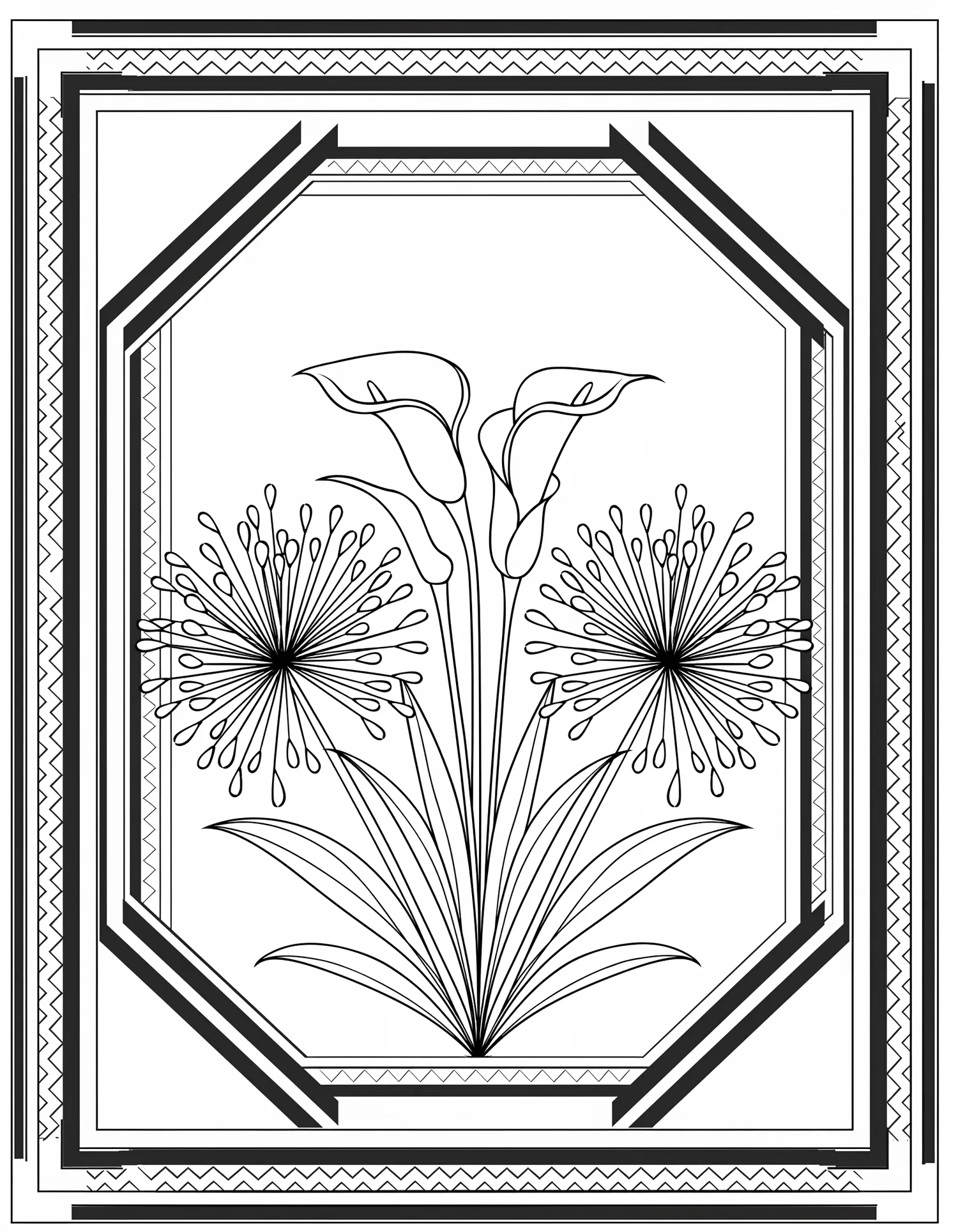
Art Deco floral composition with geometric lines and 1920s symmetries, a sophisticated design for expert colorists passionate about architecture.
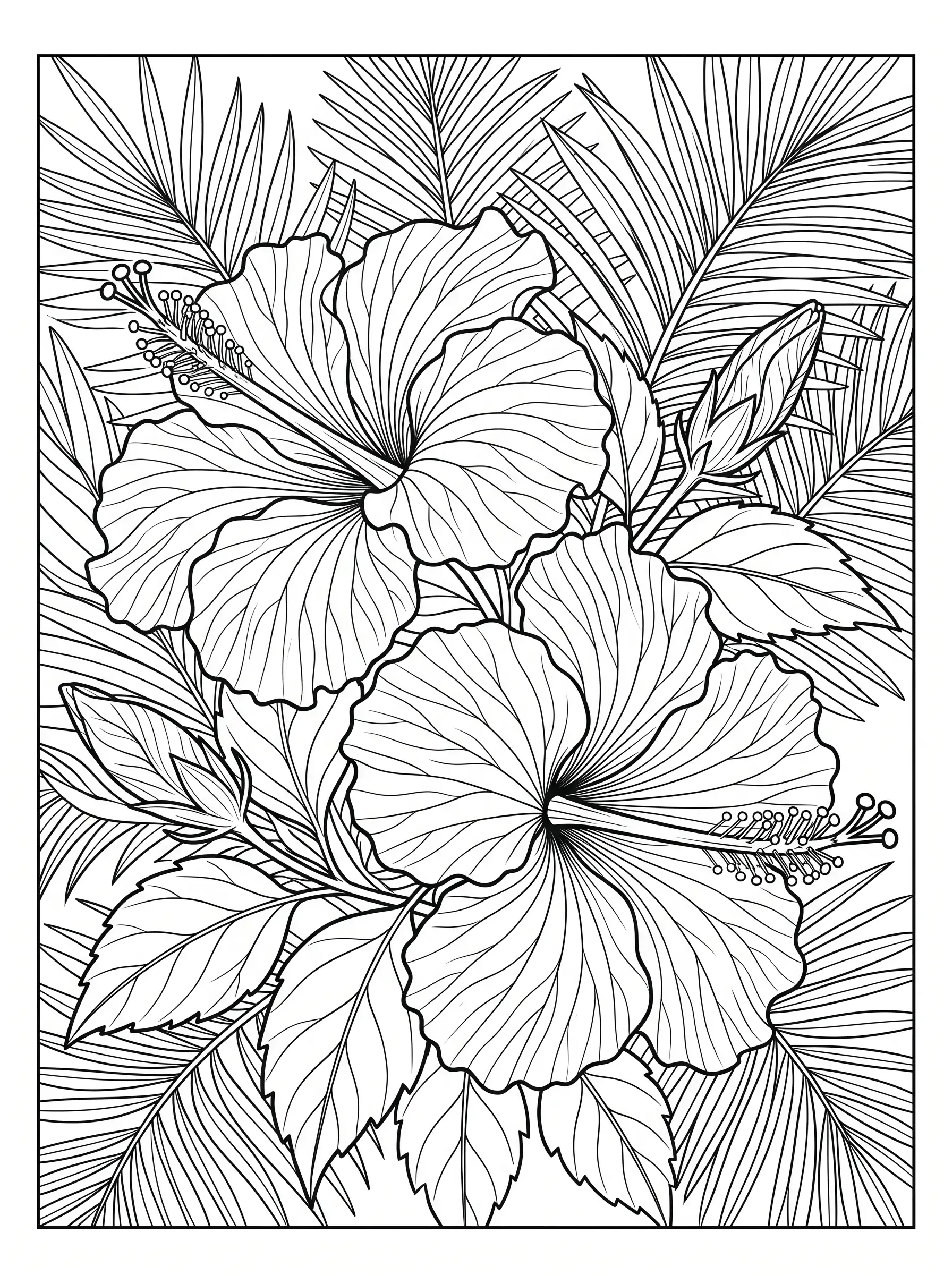
Two large hibiscus flowers with veined petals and long stamens, a bud and glossy leaves, against a background of tropical palm fronds.
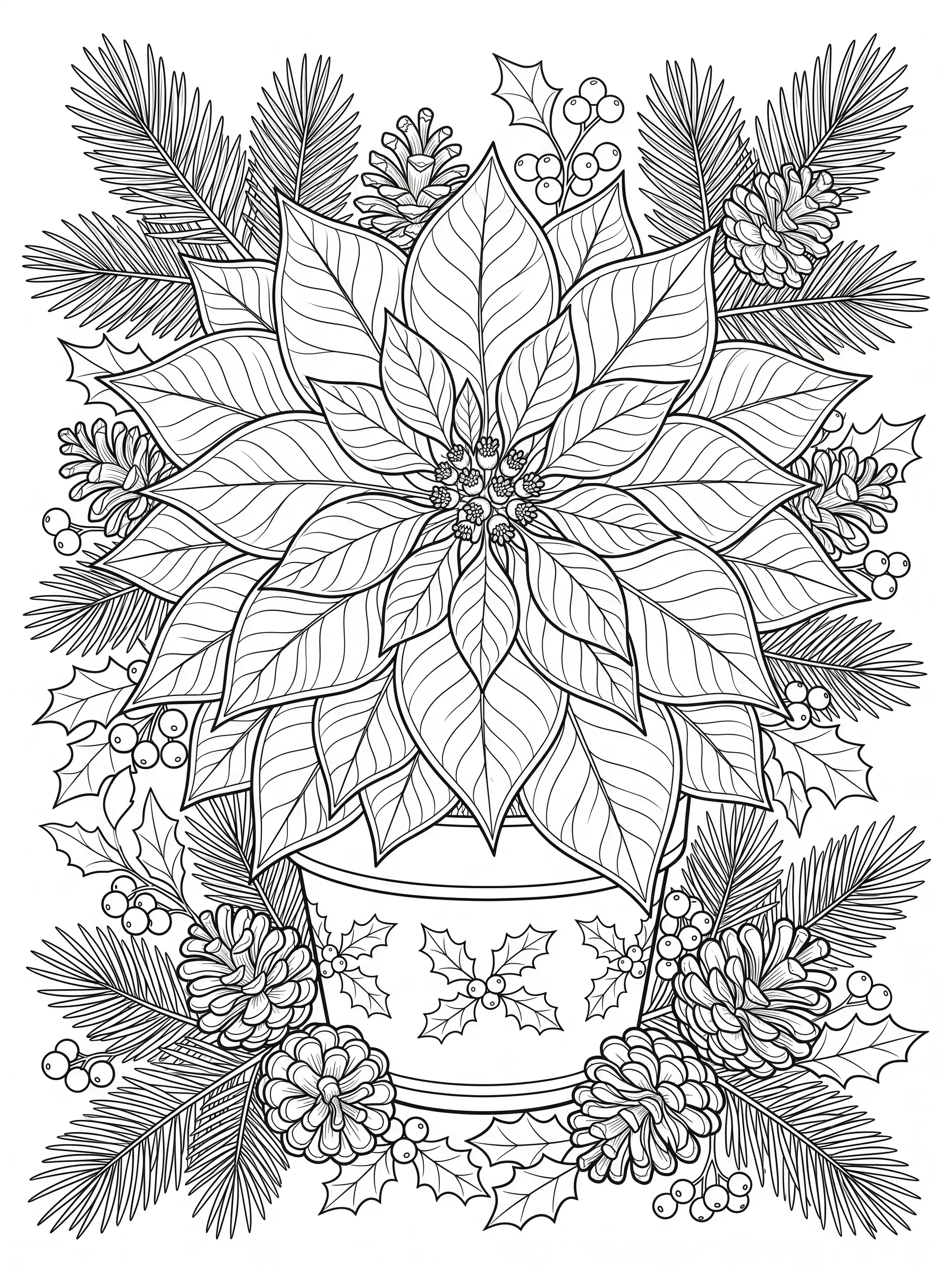
A large poinsettia with pointed bracts, in a pot decorated with holly, surrounded by pine branches, pine cones and berries. A flower to color for the holidays.
Blooming cacti in terracotta pots and a bowl of succulents with geometric leaves: cactus coloring pages full of textures, spines and rosettes.
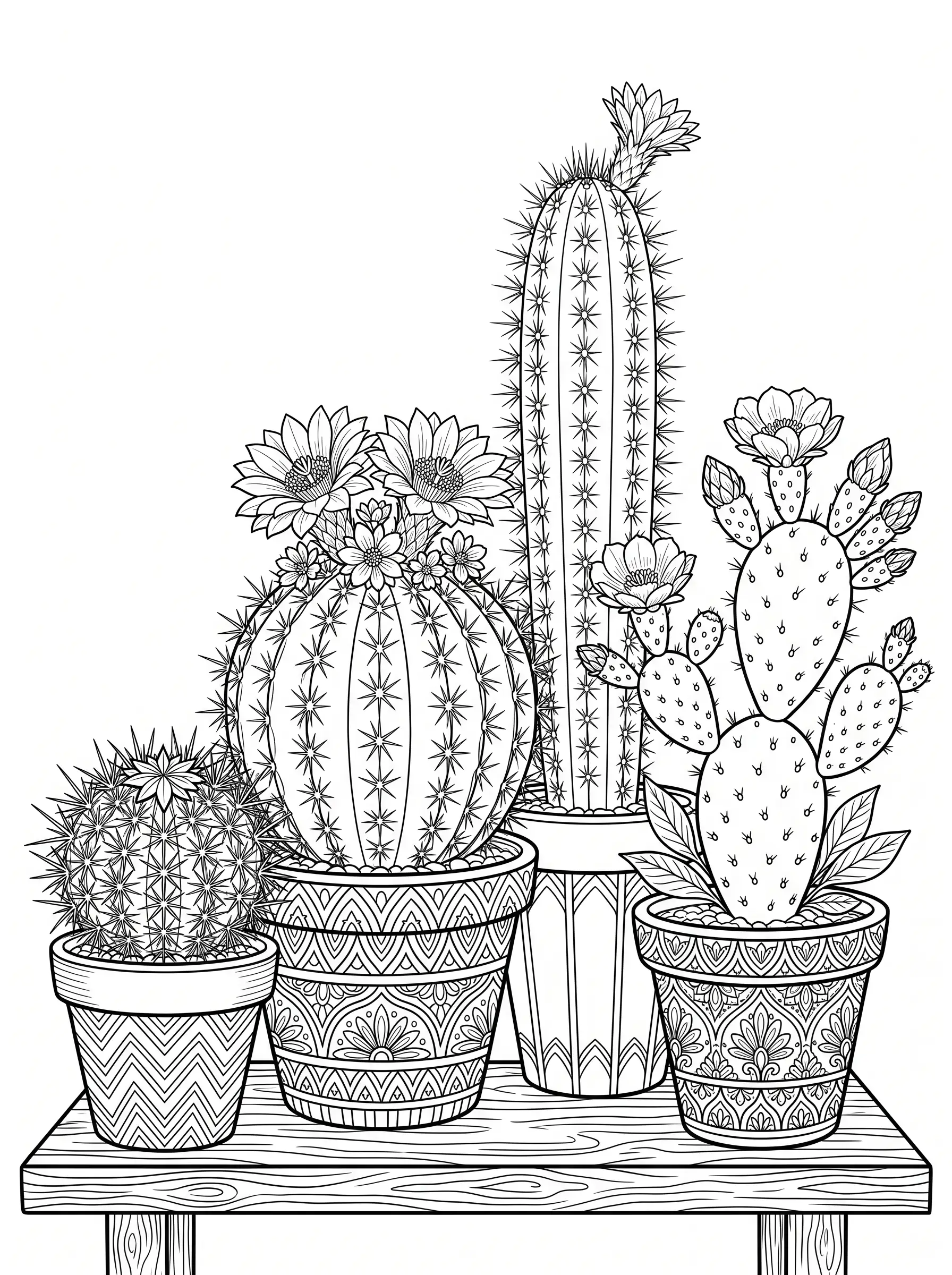
Four flowering cacti on a wooden shelf: a spiny barrel, a column cactus, a prickly pear and a small cactus, in pots with geometric patterns.
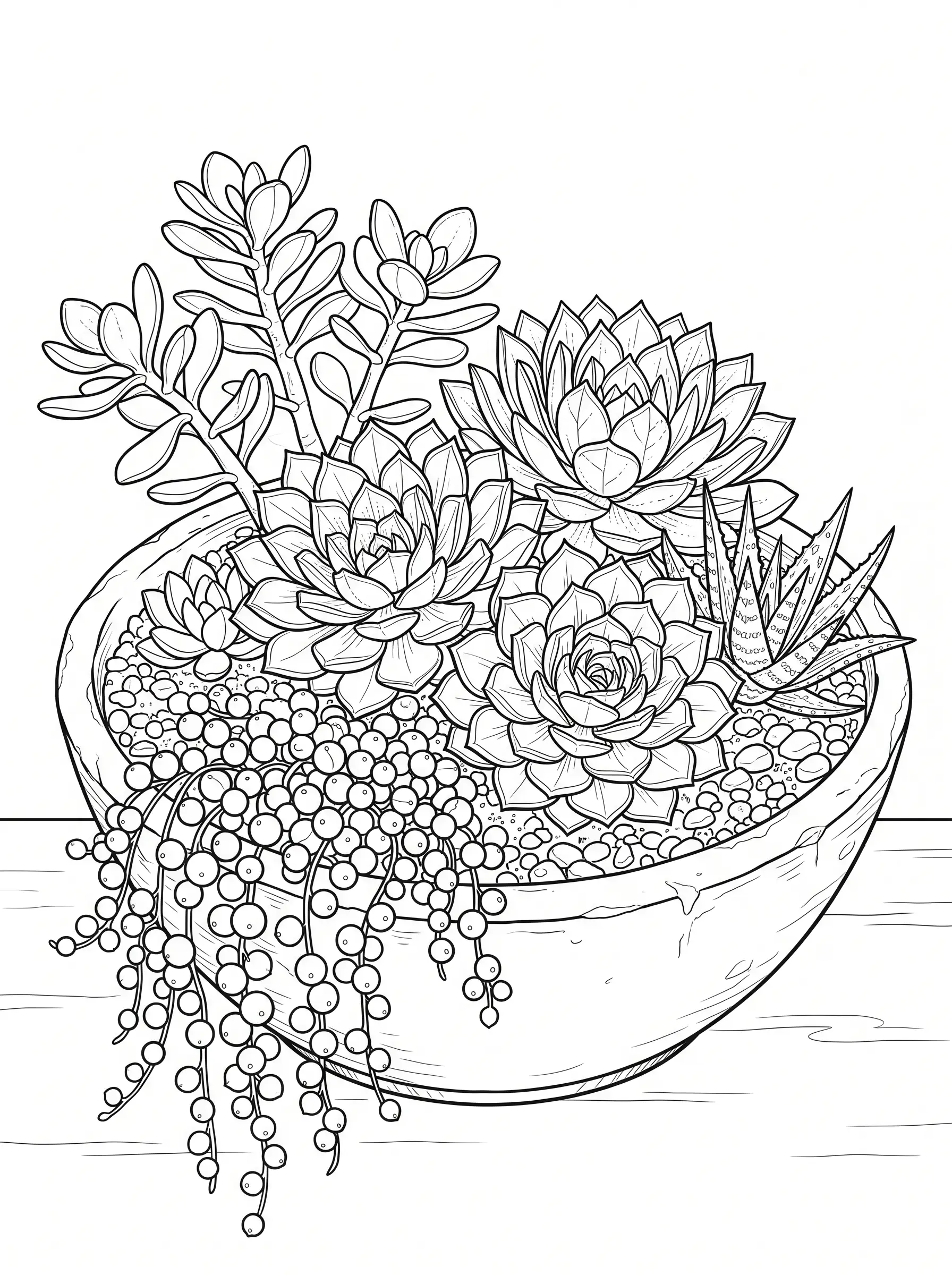
Rosette echeverias, a jade plant, aloe and a string of pearls spilling over a ceramic bowl: a coloring page of succulents with very geometric leaves.
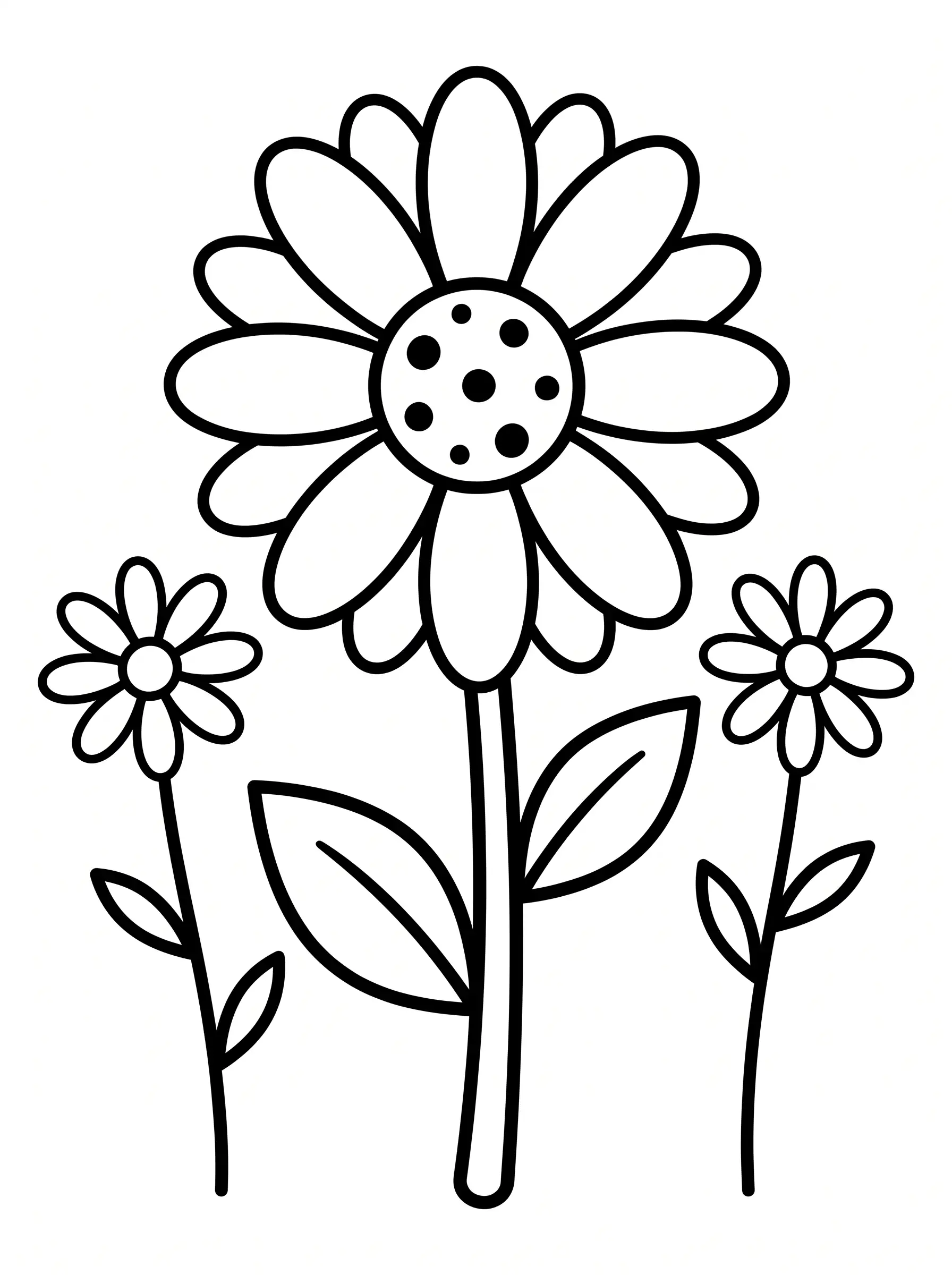
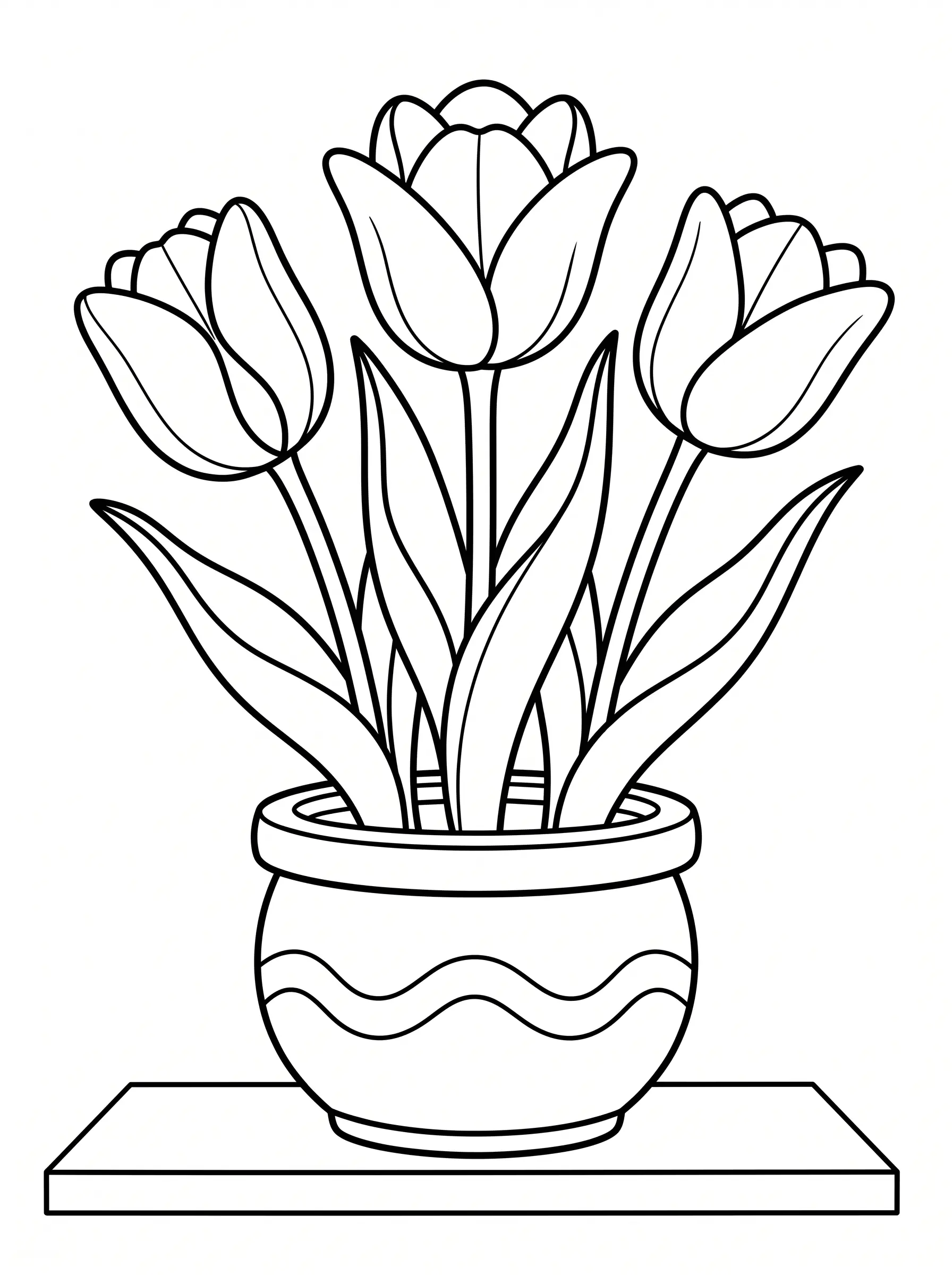
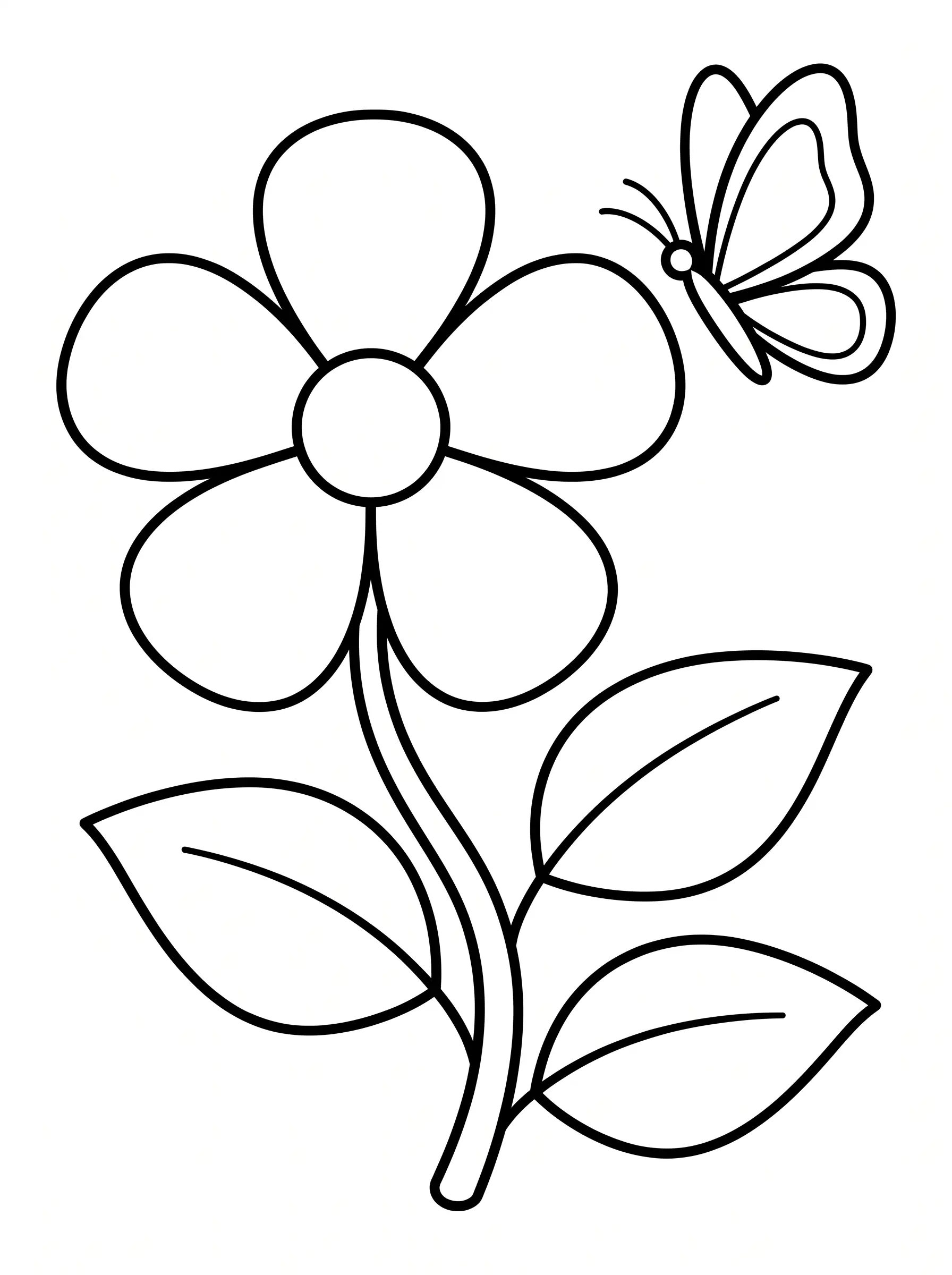
A big daisy, three tulips in a pot and a simple flower with a butterfly: bold outlines, large areas and few details, for easy flower coloring pages you can finish in one sitting.
One big daisy with wide petals and two small ones beside it, with bold outlines and large areas: an easy coloring page to get started.
Three smooth-petaled tulips and their long leaves in a round pot with a wavy band, on a shelf. Large areas to color.
A big flower with five round petals, a curved stem, three large leaves and a butterfly: the simplest coloring page in the collection.
20 exclusive high-resolution flower coloring pages and a practical guide, as a paid download. The coloring pages on this page stay free.
 20 flower coloring pages
20 premium adult botanical coloring pages in high resolution. Elegant and detailed floral compositions — from the imperial rose to the Provençal lavender — for a moment of nature-inspired creativity.
Secure payment • Instant download
Every coloring page downloads for free as a PDF, with no sign-up. The drawing is in high resolution, ready to print on A4 or US letter paper with a regular home printer. Print it as many times as you like.
Each PDF holds the drawing in high definition for sharp lines when printed, on laser and inkjet printers alike. Depending on the design, files weigh 1.6 to 68 MB.
Flowers are one of colorists' favorite subjects. Their shapes, colors and variety make them a theme of their own, different from mandalas and geometric patterns.
Round, pointed or fringed petals, leaves and stems: every flower brings new shapes, so you never color the same thing twice.
Soft pink, carmine red, lavender purple or sunny yellow: flowers suit every color combination, realistic or playful.
Petal outlines guide your pencil along soft, natural lines, freer than geometric patterns.
Coloring a peony or a poppy means looking closely at petals, pistils and stamens. Every drawing helps you know flowers better.
From simple designs to highly detailed compositions: choose the level of detail that suits you.
Lily of the valley, hyacinths and daffodils in spring, poppies and sunflowers in summer, goldenrod in autumn, poinsettia at Christmas: flowers to color for every season.
Learn to color flowers with techniques adapted to floral morphology. From color selection to finishing the stems, each step turns a flower drawing into a realistic botanical composition.
For flowers, unlike mandalas, work from the outside inward. Coloring the large outer petals first establishes your color palette before refining the details of the flower's center.
Natural petals are never uniform: deeper at the base, they lighten toward the tip. Reproduce this transition by layering several shades with colored pencils for a realistic botanical result.
How to blend colored pencils smoothlyColored pencils for delicate flowers (rose, anemone), alcohol markers for graphic flowers (sunflower, daisy), watercolor for a natural luminous effect. 120 g/m² paper is recommended.
Leaves and stems are an integral part of your floral composition. Use multiple greens (yellow-green for lit areas, blue-green for shadows) to add volume and depth when coloring flowers.
Answers to the most common questions: available flowers, printing, free downloads, easy designs and coloring tips.
The collection has 61 coloring pages: bouquets (a bridal bouquet, peonies and roses, a country bouquet, a spring bouquet); roses, tulips and sunflowers, close up or in whole fields; peony, lily, orchid, anemone, amaryllis, calla lily and camellia; cherry blossom, lily of the valley, hyacinth, daffodils, magnolia and primrose for spring; daisies, poppies, lavender and wildflowers; a cottage garden, a greenhouse and a water lily pond; hibiscus, heliconia, protea, poinsettia and Art Nouveau and Art Deco compositions; cacti and succulents; and three easy flowers for beginners. Flower mandalas (lotus, roses, wildflowers) are on our mandala coloring pages, and a hummingbird among tropical flowers on our animal coloring pages.
Click « Download PDF » under the drawing, open the file and print it on A4 or Letter paper with the « Fit to page » option. Files weigh 1.6 to 68 MB: on a phone, download the heaviest ones over Wi-Fi when you can.
Yes. The 61 coloring pages on this page download for free as PDFs, with no sign-up. A paid premium pack of exclusive flower coloring pages is offered separately, for those who want more.
Yes. The "Easy Flowers" category has three designs made for beginners: a big daisy, tulips in a pot and a simple flower with a butterfly, with bold outlines and large areas. The nasturtium from above, the trumpet daffodil and the rose bud also have large petals and few tiny details.
Work from the base to the tip: press harder at the base of the petal, where the color is deeper, then ease off gradually. Layer several shades of one hue with colored pencils for a natural gradient. With watercolor, lay a light first wash and add shadows once it is dry. Draw the veins last, with a slightly darker pencil.
Colored pencils suit delicate flowers like the rose or anemone and allow precise gradients. Alcohol markers give bright, even colors, perfect for sunflowers. Watercolor adds transparency, on 120 g/m² paper or heavier so it does not buckle.
Cherry blossom, lily of the valley, hyacinth, daffodils, star magnolia, auricula primrose and Siberian squill, plus the tulip field, the spring bouquet in a watering can, peony and anemone. These themes are especially popular from February to May.
An easy page has large areas, few inner details and bold outlines: allow 15 to 30 minutes. A detailed page has layered compositions and small areas (stamens, pistils, veins) that call for precision: allow one to two hours.